The selection of heat exchangers in industrial processes is not just an equipment decision, but also a strategic choice that directly impacts energy efficiency, process continuity, maintenance costs, and return on investment. Shell-and-tube and plate heat exchangers are two fundamental solutions that stand out according to different operating conditions and industry needs. Therefore, rather than asking "Which is better?", it is more important to focus on the question "Under which conditions is which one more appropriate?".
Shell-and-tube exchangers excel in heavy industrial applications where high temperature, high pressure, and challenging process conditions exist due to their reliability and durability. They offer long-lasting and process-specific solutions in petrochemical plants, power plants, marine applications, and systems requiring high capacity. Thanks to their flexible structures that can be sized according to process details, produced with special material options, and connected in series or parallel when needed to increase capacity, they are at the center of critical processes.
Plate exchangers, on the other hand, are preferred in systems where space is valuable, energy efficiency is paramount, and flexible capacity management is required, due to their compact designs, high heat transfer efficiencies, and ease of maintenance. They provide efficient solutions in many areas such as air conditioning applications, HVAC systems, food and beverage processes, and heat recovery lines, both in terms of initial investment and operational aspects. The ability to increase the number of plates, easy cleaning and quick service possibilities thanks to the removable structure make these exchangers a versatile heat transfer equipment in modern facilities.
When making the right selection, the temperature and pressure values of the process, the chemical properties of the fluid, hygiene requirements, space constraints within the facility, maintenance culture, and the energy efficiency goals of the business should be evaluated together. While plate exchangers may be the ideal solution in some applications, shell-and-tube exchangers are indispensable in certain critical processes. Since both technologies can be offered under the same roof with Ekin Industrial and MIT engineering infrastructure, the decision-making process can be managed by focusing on the most suitable solution for the project rather than a single product type.
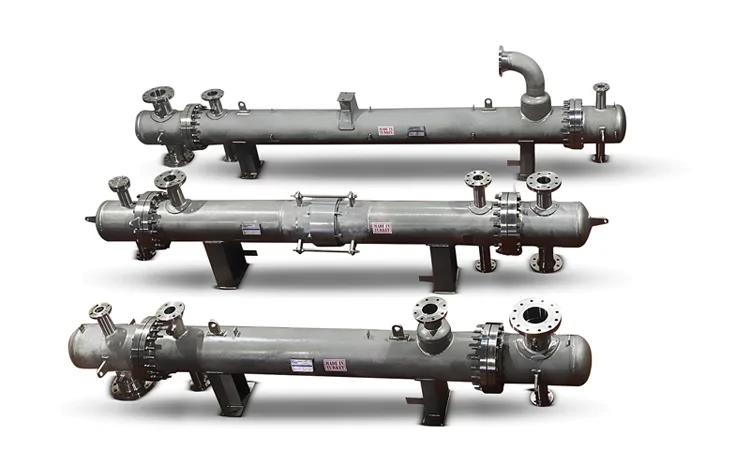
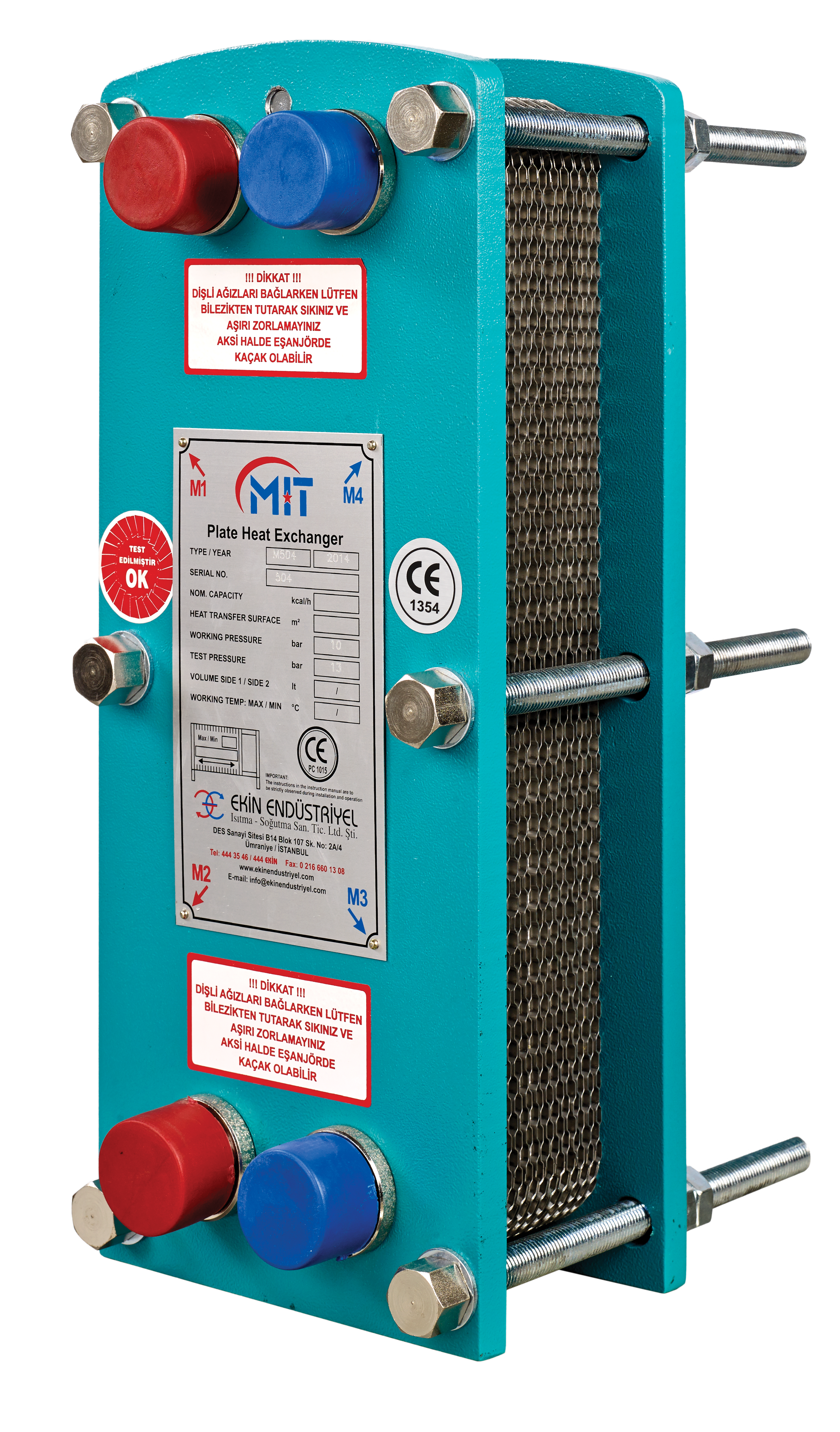
Selecting a heat exchanger correctly is not just about determining a technical piece of equipment; it is a multidimensional engineering decision that directly affects process safety, energy efficiency, maintenance costs, and long-term operational performance. Therefore, both fluid properties and operating conditions should be analyzed in detail during the selection process.
First, the operating temperatures and pressure values of the process should be assessed. In applications requiring high temperature or high pressure, shell-and-tube exchangers are a more reliable option, while plate exchangers stand out with their high efficiency in lower and medium temperature-pressure conditions. The chemical structure of the fluids also plays a critical role in the selection; the material, design, and type of exchanger to be used in corrosive, particulate-containing, or hygiene-requiring fluids should be specifically determined.
Space constraints and installation conditions are also an important part of the selection process. In places where a compact structure is needed, plate exchangers provide significant advantages, while in facilities with ample space, the scalable structure of shell-and-tube exchangers is preferred. Additionally, the maintenance culture of the business and the frequency of service should also be taken into account. For environments requiring regular maintenance and where plate disassembly and assembly can be done frequently, plate solutions are suitable, while shell-and-tube exchangers are more advantageous in heavy industrial applications where long maintenance intervals are desired.
Finally, energy efficiency goals, investment budget, and operational costs should be evaluated in an integrated manner. Both types of exchangers can yield optimal results in different scenarios. Therefore, determining the right exchanger requires a holistic engineering approach that considers not only the device but also all the needs of the process and the long-term expectations of the business. Ekin Industrial's expert engineering team guides businesses in determining the most suitable heat transfer solution for the project by correctly directing this selection process.
Basic Features and Advantages of Shell-and-Tube Heat Exchangers
Shell-and-tube heat exchangers are one of the most preferred heat exchange solutions in industrial applications due to their robust structures that can adapt to challenging process conditions and their wide design flexibility. Heat transfer occurs through the tube bundle located within the shell, allowing two fluids to exchange heat safely without coming into contact with each other. This fundamental principle makes shell-and-tube exchangers indispensable in systems requiring high safety.
Durability is one of the most prominent features of shell-and-tube exchangers. They exhibit long-lasting performance under challenging conditions such as high temperature (up to 350°C), high pressure, and aggressive chemical environments. The reason for their safe use in heavy industries such as petrochemical plants, power plants, marine applications, and metal processing processes is this robust engineering infrastructure. By design, they offer the possibility to be produced in different diameters, thicknesses, and materials, enabling the creation of customizable solutions for each process.
Shell-and-tube exchangers can also be produced entirely project-focused. They offer many configuration advantages such as special tube bundle arrangements according to process requirements, baffle structures, horizontal or vertical design options, and series or parallel connections for increased capacity. This flexibility not only enhances system efficiency in facilities requiring large capacities but also optimizes initial investment costs.
The hygienic versions provide a reliable alternative, especially in the food and chemical industries, under high temperatures and pressures where seals cannot withstand. Removable hygienic shell-and-tube exchangers developed by MIT engineers maintain food safety at maximum levels with smooth welded surfaces and certified production processes.
As a result, tubular heat exchangers are among the critical equipment of industrial facilities due to their durability, high capacity management, wide material options, and process-oriented design flexibility. They create a strategic advantage for businesses by providing long life, reliable performance, and stable heat transfer even under challenging conditions.
Fundamental Features and Advantages of Plate Heat Exchangers
Plate heat exchangers are modern heat transfer solutions that offer high heat transfer efficiency, compact structure, and ease of maintenance. Effective heat exchange is achieved through the counterflow principle, where hot and cold fluids flow through narrow channels between thin metal plates arranged in parallel. The special wavy surface geometry of the plates significantly increases the heat transfer coefficient by enhancing the turbulence of the fluid.
The most notable advantage of plate exchangers is their extremely high heat transfer efficiency. Thanks to their thin plate structure, heat loss is minimized while the large surface area ensures maximum energy recovery. This feature provides a significant advantage, especially for businesses aiming for energy efficiency. Their compact design occupies much less space compared to tubular exchangers, which is particularly beneficial in projects where facility space is limited.
The modular structure makes plate exchangers a flexible and scalable solution. The number of plates can be increased or decreased according to needs, allowing the system's capacity to be easily adjusted. In this regard, they offer great flexibility in both new installations and existing system improvements. Additionally, the ability to disassemble and reassemble the plates makes maintenance and cleaning processes quick and economical. This feature is a critical advantage in hygiene-sensitive sectors such as food, beverage, and chemicals.
Different plate types—standard, wide-spaced, semi-welded, and double-protected—provide optimal performance according to various process requirements. They offer reliable solutions for fluids containing solid particles, aggressive chemicals, or applications where fluid mixing is absolutely undesirable. Additionally, materials with high corrosion resistance, such as stainless steel and titanium, ensure that plate exchangers exhibit long-lasting and safe performance.
In conclusion, plate heat exchangers are indispensable heat transfer equipment in modern facilities due to their features such as high efficiency, low operating cost, compact structure, and flexible capacity management. They provide an ideal choice for businesses aiming for energy savings and space efficiency, significantly enhancing system performance and sustainability.
Comparison of Tubular and Plate Exchangers in Terms of Design and Material Selection
One of the most critical factors determining the performance of heat exchangers is the correct design approach and appropriate material selection. Tubular and plate exchangers are based on different engineering principles, and these differences directly affect which type is more efficient for which application.
Tubular exchangers offer high mechanical strength with structures consisting of a tube bundle within the body. Since heat transfer occurs through the tubes, the distribution of fluids and pressure loads can be managed more controllably. This design provides a safe working environment in processes involving high temperatures and pressures. Additionally, the materials used in production can be freely determined according to process conditions; options like carbon steel, stainless steel, copper, and titanium allow for optimal chemical resistance, thermal conductivity, and cost balance. Special solutions like titanium can be used in highly corrosive environments, while AISI 316L is preferred in hygienic applications.
In plate exchangers, the basic design consists of wavy or embossed thin metal plates that provide high heat transfer. The surface geometry of the plates increases the turbulence of the fluid, raising the heat transfer coefficient. Therefore, the use of thin-walled plates in plate exchangers ensures high efficiency. However, this design may impose limitations under high pressure. For this reason, materials that offer good mechanical strength along with high corrosion resistance, such as stainless steel or titanium, are generally preferred in production.
The chemical structure of the fluid is decisive in material selection. Different material configurations may be required for both tubular and plate exchangers in fluids containing salty water, acidic solutions, aggressive chemicals, or high particulate content. In plate exchangers, the chemical resistance of the gasket is also an important criterion; in environments where the gasket cannot withstand temperature or chemical conditions, tubular exchangers are a more appropriate choice.
In summary, while tubular exchangers excel in durability, design freedom, and material variety, plate exchangers stand out in terms of efficiency, compact structure, and modularity. The design and material selection should be determined through a detailed analysis of process requirements from an engineering perspective.
Which Exchanger Should Be Preferred According to Temperature, Pressure, and Process Conditions?
One of the most critical stages in selecting a heat exchanger is the accurate analysis of the operating temperature, pressure, and process conditions. Both tubular and plate exchangers can offer high performance; however, the limits and strengths of each type differ. Therefore, the process requirements of the business, fluid characteristics, and working environment should be evaluated in detail.
In systems where high temperatures are involved, tubular exchangers provide a distinct advantage. The ability to operate at temperatures of 300°C and above may exceed the endurance limits of the gaskets used in plate exchangers. Therefore, in applications with high heat loads such as steam production, thermal oil systems, power plants, and metal processing lines, tubular exchangers offer a safer and longer-lasting solution.
When evaluated in terms of pressure, tubular exchangers are again more durable. The body-tube structure maintains its resistance in environments with high pressure fluctuations and provides safe operation. Plate exchangers, on the other hand, offer high efficiency at medium and low pressure levels; however, in processes with very high pressure, the gasket and plate structure may be a limiting factor.
Among the process conditions, the chemical structure of the fluid, particle content, and hygiene requirements play a decisive role in the selection. When working with corrosive fluids, high chlorine content, aggressive chemicals, or acidic solutions, material selection in both tubular and plate heat exchangers is of great importance. Nevertheless, in cases where the gasket cannot withstand the chemical, tubular exchangers offer reliable alternatives. For fluids containing solid particles, wide-channel plate exchangers or specially designed tubular exchangers may be preferred.
In hygienic processes, if the temperature levels are high, tubular exchangers should be used; however, if the temperature and pressure are at lower levels, the quick cleanability of plate exchangers provides a significant advantage. In summary, while tubular exchangers are preferred in environments requiring high temperature and pressure, aggressive chemical content, or heavy processes, plate exchangers offer optimal solutions in applications where energy efficiency, compact design, and easy maintenance are prioritized.
In Hygienic Applications, Tubular Exchanger or Plate Exchanger?
In sectors where hygiene is critical, such as food, beverage, pharmaceuticals, and personal care products, the selection of a heat exchanger is not only a technical decision but also a strategic choice that directly affects product safety and process integrity. The cleanability of the equipment used in such applications, the smoothness of the surfaces in contact with the fluid, the reduction of bacterial accumulation risk, and the use of certified materials are priorities. Therefore, the advantages of tubular and plate exchangers in hygienic applications come to the forefront in different scenarios.
Tubular exchangers are preferred in hygienic environments, especially in processes operating under high temperature and pressure. The gaskets used in plate exchangers can pose a risk of deformation when exceeding certain temperature and pressure levels. However, there are no such limitations in tubular exchangers; they can be produced with materials that have high corrosion resistance, such as AISI 316L and titanium, and can operate safely at temperatures reaching up to 350°C. The special welding techniques developed by MIT engineers for hygienic tubular exchangers provide a smooth surface, reduce bacterial retention, and ensure compliance with food safety standards. Additionally, their CIP (Cleaning in Place) compatible structures offer seamless integration with automatic cleaning systems.
Plate exchangers, on the other hand, provide significant efficiency advantages at low and medium temperature levels in hygienic applications. Thanks to their plate structure, which creates high turbulence, heat transfer is quite effective and offers the same capacity in a much more compact design. The removable plate design makes cleaning, maintenance, and inspection processes extremely easy. In processes with frequent stop-and-go operations, such as milk pasteurization, juice cooling, and beverage production, where cleaning cycles are intensive, plate exchangers enhance operational efficiency. Double-protected plate models provide extra safety in critical hygienic applications where the mixing of fluids must be absolutely prevented.
In conclusion, the selection in hygienic applications should be made according to the following principles: If the temperature and pressure are very high, the process is continuous, and the fluid contains aggressive chemicals, tubular exchangers are the most reliable solution. In processes where cleaning cycles are frequent, energy efficiency is prioritized, and operations are in the medium temperature range, plate exchangers offer a more flexible and user-friendly structure. In both cases, the correct choice should be determined by a detailed analysis of the process requirements.
Comparison in Terms of Energy Efficiency, Space Utilization, and Operating Cost
One of the most significant differences between tubular and plate exchangers is their impact on energy efficiency, space utilization, and operating costs. These three parameters directly affect not only the initial investment decision but also the long-term energy expenses, maintenance costs, and facility layout planning of the business. Therefore, comparing these two types of exchangers from these perspectives is an important criterion for making the right choice.
In terms of energy efficiency, plate exchangers stand out. Due to their thin plates and surface geometry that increases turbulence, their heat transfer coefficients are quite high. This means higher heat recovery with lower energy consumption. Especially in HVAC, food processing, and energy recovery lines, this efficiency difference provides significant advantages to businesses. Tubular exchangers exhibit stable performance under high temperature and pressure; however, since they require a larger surface area for the same capacity, their energy efficiency may not be as high as that of plate models. Nevertheless, they are preferred in heavy industrial applications due to their reliability and continuity.
In terms of space utilization, plate exchangers offer a clear advantage. Their compact designs allow them to occupy much less space compared to tubular exchangers for the same heat transfer capacity. Therefore, they are often preferred in projects where facility space is limited and in modern industrial plants. Tubular exchangers have a larger structure; although they can be mounted horizontally or vertically, they still require a wide area. While this may be acceptable in large-capacity processes, it can create design limitations in facilities that require compact systems.
When examining operating costs, both types of exchangers have different advantages. Maintenance procedures for plate exchangers are faster and more economical; the ease of disassembling and cleaning the plates particularly reduces maintenance costs. However, since gaskets may need to be replaced periodically, gasket costs should be considered in the long term. In tubular exchangers, maintenance intervals are longer, and due to their robust structures, they can operate smoothly for extended periods. However, since the cleaning process can be more detailed, the maintenance process may take longer.
In conclusion, if energy savings, space optimization, and low maintenance costs are the goals, plate exchangers offer a strong option. In projects requiring high capacity, challenging operating conditions, and long-term stable performance, tubular exchangers are the more appropriate choice. The correct type of exchanger is shaped according to the priorities of the business in which criteria are emphasized.
Sectoral Applications: Correct Exchanger Selection in Food, HVAC, Energy, Petrochemical, and Pool Systems
Heat exchanger selection shows significant differences based on the needs of the industry, process conditions, and fluid properties. Therefore, the expectations of each industry should be evaluated separately. Although both tubular and plate exchangers have wide application areas, the performance criteria required by each sector are different, making the determination of the correct exchanger type critical for process efficiency and operational safety.
In the food and beverage industry, hygiene and product safety are the primary priorities. In processes like pasteurization, where temperature levels are high, hygienic tubular exchangers are preferred as the endurance limit of gasketed plates may be exceeded. However, in processes that require frequent cleaning at medium temperature levels, removable plate exchangers provide operational advantages. Therefore, the temperature range, cleaning frequency, and product type should be evaluated together.
In HVAC systems, energy efficiency and compact design are paramount. For this reason, plate exchangers are widely used due to their high heat transfer coefficient and small space requirements. In many HVAC applications such as chiller-boiler separation and heat recovery systems, plate exchangers offer both efficient and economical solutions.
In energy production and cogeneration facilities, process conditions generally involve high temperature and high pressure. Therefore, tubular exchangers are a safer and more durable alternative. The scalable structure of tubular exchangers and their resistance to harsh operating conditions provide significant advantages in these facilities that require high capacity.
Aggressive chemicals, high temperatures, and corrosive fluids are common in the petrochemical and chemical industries. In these facilities, where material selection is critical, the special alloy compatibility and high endurance capacity of tubular exchangers come to the forefront. While plate exchangers can provide high efficiency with certain chemicals, they may not be suitable for every application due to gasket durability.
In pool heating systems, both energy efficiency and corrosion resistance are important. Tubular pool exchangers made of titanium or stainless steel are the ideal solution in this area. The durable structure of tubular exchangers provides long life and high performance in systems that come into direct contact with chlorine, salt, and chemicals. MIT's spiral and coiled tube designs enhance heat transfer in pool systems, allowing for faster heating with less energy consumption.
As a result, since the needs of each sector are different, exchanger selection cannot be determined by a single criterion. The operating conditions of the process, fluid structure, hygiene requirements, energy goals, and maintenance habits should be considered to decide which type of exchanger is appropriate. The industry experience of Ekin Industrial and MIT engineers facilitates the identification of the correct solution tailored to different applications.
Engineering Approach for Accurate Capacity Calculation and Sizing
Correct capacity selection and sizing of heat exchangers is a critical engineering process that directly affects system performance, energy consumption, and equipment lifespan. An incorrectly sized exchanger can lead to serious problems; if selected too large, it incurs high investment costs, while if too small, it results in low efficiency, excessive pressure losses, inadequate heating/cooling performance, and frequent failures. Therefore, engineering calculations must be performed meticulously, taking into account all process details.
When calculating capacity, the first parameter to be determined is the total heat load required by the process. This load is determined based on the inlet-outlet temperatures, flow rates, specific heats of the fluids, and the targeted temperature change in the system. Subsequently, the physical properties of the fluid—such as viscosity, density, and thermal conductivity—are included in the calculation as they directly affect the heat transfer coefficient. At this stage, the efficiency difference between tubular and plate exchangers should be carefully evaluated; while plate exchangers achieve a higher transfer coefficient due to the high turbulence provided by surface geometry, the arrangement of tubes and baffle structure in tubular exchangers plays an important role.
Another critical step in sizing is the pressure loss analysis. Pressure losses occurring on both fluid sides directly affect the energy consumption of pumps and the operability of the system. During the design phase, pressure loss should be kept at acceptable levels; however, if the fluid velocity is too low, it may lead to sediment accumulation, so optimal values should be determined. This balance is one of the points where engineering experience is crucial.
Material selection is also an integral part of capacity calculation. The material durability should be examined according to the process's temperature, pressure, chemical structure, and hygiene requirements; the correct option should be determined among titanium, stainless steel, copper, or special alloys. Additionally, the compatibility of gasket material with the process in plate exchangers and the tube thickness and body strength in tubular exchangers are critical evaluation points.
The final stage is the analysis of operating scenarios. Questions such as whether the process will operate continuously, whether there will be frequent stops and starts, whether the fluid flow rate will change over time, and how cleaning cycles will be planned directly affect sizing. Therefore, capacity calculation should be optimized not only based on theoretical data but also according to actual operating conditions.
The engineering team at Ekin Industrial and MIT applies this detailed engineering approach in every project, providing both high-performance and long-lasting exchanger solutions. Accurate capacity calculation optimizes investment costs and ensures the safe and efficient operation of the business for years to come.
Determining the Most Suitable Exchanger for Your Project with Ekin Industrial and MIT Solutions
Choosing a heat exchanger is not just a technical device preference; it is a strategic decision that directly affects the efficiency of the process, operational safety, and long-term costs. Therefore, the needs of each project should be evaluated individually, and a process-focused engineering approach should be adopted instead of standard solutions. Ekin Industrial and MIT offer comprehensive solutions tailored to different industries in both tubular and plate exchangers, thanks to their wide product range and technical expertise.
Plate heat exchangers produced under the MIT brand provide ideal solutions in HVAC, food, chemical, and energy recovery systems with advantages such as high heat transfer efficiency, compact structure, and easy maintenance. Thanks to standard, wide-range, semi-welded, and double-protected plate options, they can be safely used in processes involving both hygienic and aggressive chemicals. Their modular structure allows for rapid adaptation of system capacity and minimizes maintenance times.
The tubular exchangers developed by Ekin Industrial are designed to be suitable for high temperature, high pressure, and heavy operating conditions. They offer long-lasting and reliable performance in challenging processes such as petrochemical plants, power plants, marine applications, and metal processing lines. Special material selections, horizontal/vertical design options, baffle structures, and wide capacity ranges allow for customized solutions for each project. Hygienic tubular models provide unique advantages in critical processes in the food and chemical sectors with high-temperature resistance.
The engineering team at Ekin Industrial masters both technologies by thoroughly analyzing project conditions to determine which type of exchanger is more appropriate. All parameters such as the chemical composition of the fluid, operating temperature and pressure, hygiene requirements, space constraints, energy efficiency goals, and maintenance habits are evaluated. This holistic approach enables businesses to optimize investment costs and achieve the most accurate solution in terms of long-term performance.
The experience of Ekin Industrial and MIT, combined with special design capabilities for each project, high-quality production standards, and engineering support, creates reliable, efficient, and sustainable solutions for businesses' processes. Thanks to project-specific analysis, product diversity, and technical expertise, optimal exchanger selection becomes possible in every application.