Brazed heat exchangers are special equipment that combine high heat transfer performance with compact design in modern industrial and commercial applications. Today, the critical importance of energy efficiency, system reliability, and space savings has made brazed exchangers a preferred choice for many industries.
The most important feature of these products is the joining of stainless steel plates inside them with a special brazing material like copper or nickel in a vacuum environment. Thus, the exchanger body gains a one-piece and highly leak-proof structure. Thanks to this design, system safety is ensured even under high pressure and temperature conditions, allowing for long-lasting use.
The structure of brazed exchangers allows fluids to move along narrow channels between the plates. These narrow channels increase the heat transfer coefficient by allowing the fluid to progress in a more turbulent regime. Thus, large capacity heat exchange can be achieved with a much smaller volume. The compact structure – high performance balance increases the value of brazed exchangers, especially in tight spaces or portable systems.
Compared to gasketed plate exchangers, the standout advantage of brazed models is their leak-proof nature. The elimination of the need for gaskets provides significant safety and efficiency, especially in applications with high temperatures, pressures, or aggressive conditions. Additionally, maintenance requirements are minimized as there is no risk of gasket wear or leakage.
These features have made brazed heat exchangers usable in a wide range of areas, from HVAC systems to cooling technologies, food processing lines to chemical processes, maritime to energy recovery projects. With their small volumes, low maintenance requirements, and high reliability, they offer significant advantages in both newly established facilities and the modernization of existing systems.
In short, brazed heat exchangers stand out in today's engineering solutions not only as equipment but also as the key to energy savings, reliability, and sustainability.
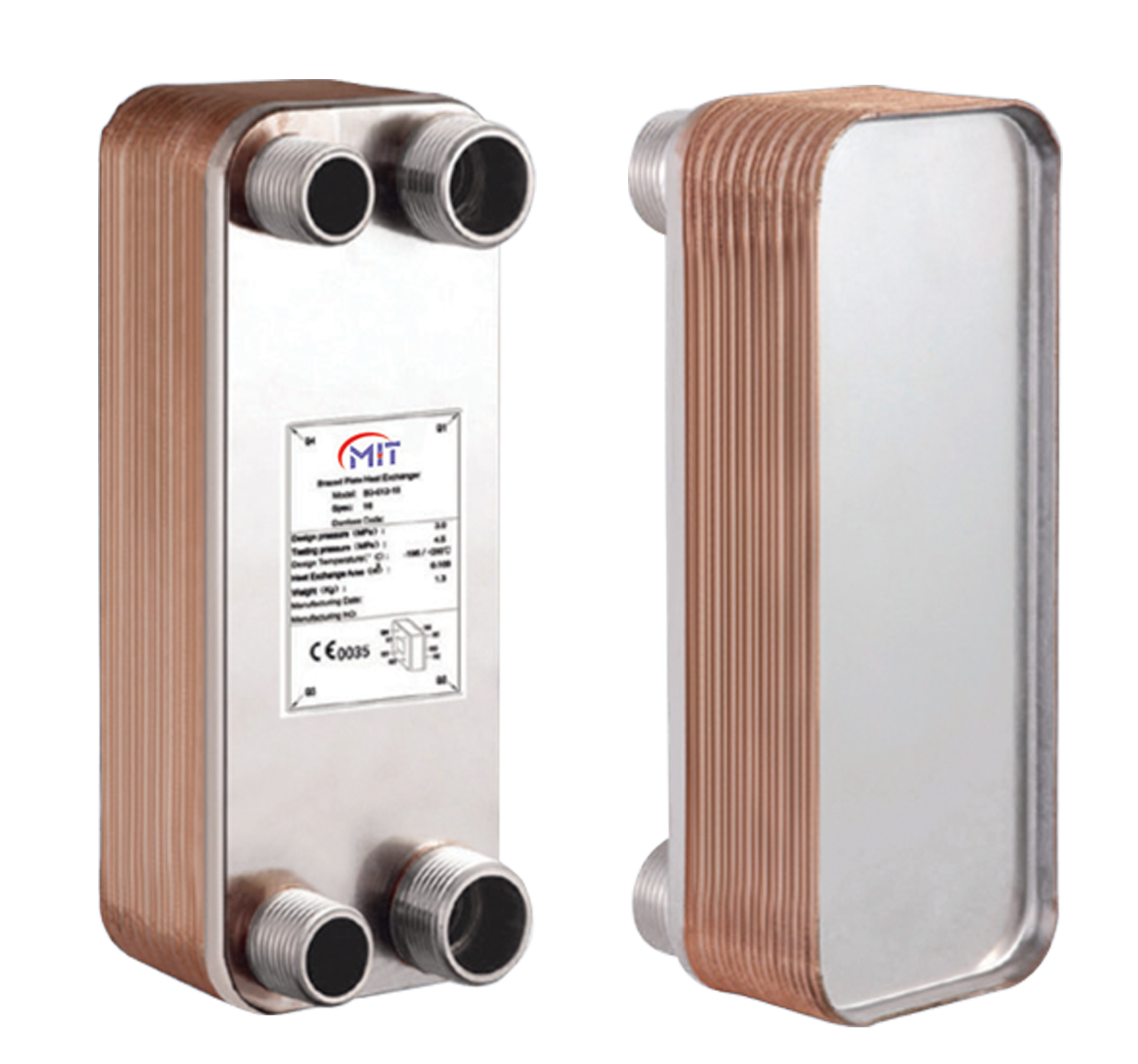
Brazed plate heat exchangers are modern equipment that provide high efficiency in heat transfer while standing out with their compact and durable structure. At their core, thin stainless steel plates are stacked in a specific arrangement and these plates are joined in a vacuum environment with special brazing materials like copper or, in some cases, nickel. As a result of this production technique, a monoblock body is obtained that is extremely resistant to external factors. Thus, an exchanger emerges that does not require gaskets and offers high assurance in terms of leak-proofing.
The plates used in the structure of the exchanger are not just simple metal parts that contact each other with flat surfaces. Each plate has specially designed embossments and grooves on it. These geometric patterns enable the direction of the fluids, increase their speeds, and create turbulence during flow. Turbulent flow allows the fluid to contact the plate surface more homogeneously, thus enabling faster heat transfer. As a result, very high heat transfer coefficients are achieved while flow occurs along narrow channels.
The working principle is extremely simple yet effective: Hot and cold fluids are passed through channels arranged alternately between the plates. The counter-flow principle is usually preferred, meaning the flow direction of the hot fluid is opposite to that of the cold fluid. This arrangement maximizes heat transfer efficiency because the temperature difference between the two fluids is maintained throughout the exchanger. Thus, very small differences can be obtained between the inlet and outlet temperatures of the fluids, which increases system efficiency.
One of the most important features of brazed plate exchangers is that they can offer a very large heat transfer surface despite their compact structure. The numerous channels formed by stacking thin plates significantly increase the surface area. This allows for large capacity heat exchange within a small body. Additionally, thanks to the robustness of the brazed structure, they can operate safely under high pressure and temperature.
Another consideration in the design of these devices is the distribution of fluids. The inlet and outlet regions of the plates are arranged in a way that ensures the fluid is evenly distributed to each channel. Thus, "dead zones" do not form during flow, and heat transfer occurs continuously and evenly. The efficiency of the exchanger remains stable for a long time thanks to this balanced distribution.
In the working principle of brazed plate exchangers, direct transfer of heat energy is involved. While one fluid loses its temperature, the other gains it. This process occurs without the fluids mixing, only through the plate surfaces. In other words, the exchanger acts as a "heat bridge" between the fluids. This is a great advantage in terms of both energy savings and system safety.
In summary, brazed plate exchangers operate based on a simple but effective principle: The wide surface area provided by thin plates, the counter-flow arrangement of fluids, and the turbulence in the channels make maximum heat transfer possible in a compact design. This engineering approach has made them an indispensable solution in today's HVAC, cooling, food processing, energy recovery, and many other industries.
Where Are They Preferred? Prominent Application Areas
Brazed heat exchangers are used in a wide range of applications due to their compact structure, high efficiency, and leak-proof designs. These devices, which can meet different needs in both commercial and industrial systems, are among the indispensable equipment of many sectors in terms of both energy savings and reliability.
Cooling Units: Evaporator and Condenser Brazed heat exchangers are one of the most commonly encountered solutions in cooling technologies. Especially when used as evaporators and condensers, they allow systems to operate with lower energy consumption thanks to their high heat transfer efficiency. Their compact structures help cooling units take up less space and gain flexibility in design. These features are a great advantage in air conditioning systems, commercial cooling devices, and industrial cooling units.
Heating in Instant Heaters: Domestic Water and Return Line Heating Brazed exchangers are frequently preferred in systems where the need for hot water is met instantly. By bringing domestic water directly and quickly to the desired temperature, they provide both energy savings and reduce the need for storage tanks. Additionally, they can be used in return line heating applications. This feature especially enhances comfort in central heating systems and helps maintain the water at a constant temperature.
HVAC Systems and Heat Pumps: Compact, Quiet, and Efficient Solutions Brazed exchangers are widely used in heating, ventilation, and air conditioning (HVAC) applications. Especially in heat pumps, they allow temperature changes to be managed with high efficiency. Their small sizes make the design of devices compact, and their quiet operation increases user comfort. The increasing demand for energy efficiency today has made the preference for brazed exchangers in HVAC systems even more widespread.
Industrial Processes: Food, Chemical/Pharmaceutical, Energy Recovery, and Oil Cooling Brazed heat exchangers offer versatile solutions in industrial applications. They perform reliably during pasteurization, cooling, and liquid product processing in the food industry. Thanks to their hygienic designs, they preserve product quality in the production of dairy products, fruit juices, and beer. In the chemical and pharmaceutical industries, they are preferred in reaction processes requiring precise temperature control. When materials resistant to high pressure and aggressive chemical environments are used, they offer a long-lasting and safe solution. Additionally, in energy recovery applications, they provide significant savings to businesses by allowing the reuse of waste heat from processes. In oil cooling applications, their compact structures provide both low cost and high performance.
Maritime, Automotive, and Textile Sectors: High Reliability in Challenging Environments The durable structure of brazed heat exchangers ensures reliable performance even in challenging environmental conditions. In the maritime sector, they are used in critical applications such as cooling ship engines, air conditioning systems, and even converting seawater to fresh water. They offer long-lasting use in corrosive environments like saltwater with special material options. In the automotive sector, they are preferred for temperature control in production lines, paint facilities, and test systems. Their compact sizes, high pressure resistance, and quick response features are their biggest advantages in this field. In the textile industry, they enhance production quality by precisely controlling temperature in energy-intensive processes like dyeing, finishing, and drying.
Design Features: Plate Geometry, Channel Structure, and Flow Arrangement
One of the most critical factors determining the performance of brazed heat exchangers is the geometry of the plates and the path the fluids follow between these plates. The embossments and grooves engraved on the surface of the plates not only increase mechanical strength but also change the direction of the fluid to create more intense turbulence. This turbulence maximizes the contact of the fluid with the plate surface, thus increasing the heat transfer coefficient.
The Importance of Plate Geometry The patterns on the plates can be designed in different depth and angle combinations according to the system's needs. Sharper angles or denser embossments increase the speed of the fluid, achieving a high heat transfer coefficient; however, in this case, the pressure drop also increases. Flatter and wider grooves reduce the pressure drop but may slightly decrease heat transfer efficiency. Therefore, the design of plate geometry should be done considering the desired efficiency-pressure balance in the system.
Channel Structure and Flow Arrangement When plates are stacked in brazed exchangers, numerous thin channels form between them. The arrangement of these channels determines how fluids will progress throughout the system. The counter-flow principle is generally preferred because this arrangement keeps the temperature difference between the hot and cold fluid high throughout the exchanger, providing maximum efficiency. Parallel flow or cross-flow arrangements can also be used in some special applications, but counter-flow stands out in terms of overall efficiency.
Another critical feature of the channel structure is the homogeneity of fluid distribution. The inlet and outlet regions of the exchanger are designed to ensure that the fluid is evenly distributed to each channel. This way, "dead zones" do not form, and the entire surface is used effectively. It is very important for this distribution to be balanced for the exchanger to work efficiently in the long term.
Asymmetric Channel Designs In some applications, the flow rate or viscosity of the fluids circulating on both sides may differ. For example, low-viscosity water may circulate on one side, while a denser oil circulates on the other. In this case, classic symmetric channel designs may not provide the same performance for both sides. This is where asymmetric channel designs come into play. By creating channels of different depths or widths on different sides of the plates, both fluids can progress under optimal conditions. This significantly increases heat transfer performance and ensures the system operates more balanced.
Pressure Loss and Efficiency Balance In exchanger design, a balance always needs to be established between two main parameters: heat transfer coefficient and pressure loss. High turbulence increases heat transfer while also creating resistance to fluid passage. This raises the need for pump power. Therefore, the plate geometry, channel depth, and flow arrangement of the exchanger should be optimized considering the energy efficiency and operating costs required by the application.
In Conclusion Plate geometry, channel structure, and flow arrangement directly determine the efficiency, energy consumption, and long-term performance of brazed heat exchangers. A well-designed exchanger allows for high-capacity heat transfer in small volumes while minimizing the system's energy costs. Therefore, selecting the appropriate channel structure and plate geometry for the characteristics of the application is the most critical step in achieving the correct exchanger performance.
Material Selection: Stainless Steel, Brazing Types, and Special Alloys
• Plates: AISI 316 (1.4401) stainless steel is a common and safe choice.
• Brazing: Copper for standard waters and oils; nickel in environments with high chloride/chemical risk.
• Special environments: Nickel/titanium-based alloys or protective coatings reduce the risk of corrosion and stress cracking.
Advantages: Efficiency, Compactness, Durability, and Low Maintenance
• High efficiency: Narrow channels + turbulent flow
• Compact design: High capacity in a small volume
• Leak-proof: Eliminates gasket-related leakage risks with brazed body
• Durability: High pressure/temperature tolerance, resistance to vibration
• Low maintenance: Long-term stable performance with proper filtration and water conditioning
Limitations and Proper Usage Conditions
Brazed exchangers cannot be disassembled and cleaned on a plate basis; therefore, filtration and fluid quality are critically important. Fibrous particles and large solids lead to rapid clogging. Copper brazing is not suitable in some chemical environments; material/brazing should be selected according to the application.
Fluid Quality and Limit Values (guide)
• Particles: < 0.6 mm spherical, total < 10 mg/L; fibrous particles should be avoided
• Temperature range: ~ −196 °C … 200 °C (freezing/boiling limits should be considered)
• Pressure: Max. operating 30 bar; test 45 bar (varies by model)
• pH: 7 – 10
• Free chlorine (Cl₂): < 0.5 ppm
• Chloride (Cl⁻): < 700 ppm at 20 °C; < 200 ppm at 50 °C
• Sulfate (SO₄²⁻): < 100 ppm
• [HCO₃⁻]/[SO₄²⁻] ratio: > 1 These limits are aimed at reducing the risk of corrosion and stress cracking; water analysis should be part of the design.
Selection Criteria: Capacity, Pressure, Temperature, Fluid Compatibility
• Target heat load, inlet/outlet temperatures, and desired approach ΔT
• Flow-pressure drop balance (pump power vs. efficiency)
• Operating/peak pressures and temperatures; expansion/safety equipment
• Fluid properties: viscosity, contamination, glycol ratio, etc.
• Material-brazing compatibility: Correct combination according to corrosion and chemical content
Circuit Design and Installation Tips
• Filtration: Strainer at the inlet (0.5–0.8 mm mesh for most clean lines)
• Bypass line: Provides flexibility for service/cleaning
• Freeze protection: Glycol ratio, minimum flow, sensor-controlled shutdowns
• Venting & drainage: Vent at the top, drainage points at the bottom
• Expansion & safety: Mandatory in closed circuits
• Flow direction: Prefer counter-flow; efficiency increases
Maintenance-Monitoring-Cleaning
• Indicators to monitor: ΔP trend, outlet temperatures, energy consumption
• On-site cleaning (CIP-like): Verify chemical compatibility with brazing/material
• Periodic checks: Filter cleaning, connection/sealing, vibration
• Preventive approach: Reduce the source of contamination, do not neglect water conditioning
Energy Efficiency and Sustainability: Waste Heat Recovery
Today, the constant rise in energy costs and the increasing importance of environmental sustainability are directing businesses and engineering solutions towards technologies that enhance energy efficiency. At this point, brazed heat exchangers stand out as equipment, especially in systems where waste heat recovery is required, with their compact structures and high heat transfer coefficients.
The Importance and Sources of Waste Heat In industrial facilities, energy production, or cooling/heating applications, significant amounts of waste heat are generated. At the outputs of boilers, compressors, cooling systems, or process lines, there are often hot gases or liquids that can be evaluated in terms of energy. This energy source is often released into the atmosphere and wasted. However, this heat can be recovered and utilized in another process by using a suitable heat exchanger.
The Role of Brazed Exchangers Brazed exchangers can perform heat transfer with high efficiency even with low temperature differences, thanks to the wide surface area provided by their plates. Waste heat taken from exhaust gases or process liquids can be used to heat domestic water, preheat another process fluid, or even be utilized in building heating systems. In this way, both energy consumption is reduced, and significant reductions in operating costs are achieved.
Reducing Energy Costs Waste heat recovery is a method that directly reduces energy bills. For example, the reuse of heat from processes in a production facility allows production lines to be fed without the need for an additional energy source. This situation becomes a solution that pays back the investment cost in a short time, especially in energy-intensive sectors.
Reducing Carbon Footprint Energy efficiency is not only an economic gain; it is also a fundamental element of environmental sustainability. Systems that utilize waste heat directly contribute to less fossil fuel consumption as they reduce the need for additional energy. This helps reduce carbon emissions. Especially today, when environmental regulations are tightening, brazed heat exchangers help businesses adapt to environmentally friendly technologies.
Compactness and Flexible Use The compact structure of brazed exchangers makes them easily integrable into existing facilities. They can be easily added between existing pipelines in tight spaces, allowing waste heat recovery without the need for major infrastructure changes. This flexibility is a great advantage in retrofit projects, i.e., the modernization of old systems.
Contributing to a Sustainable Future The use of brazed heat exchangers in waste heat recovery not only reduces today's energy costs but also contributes to long-term sustainability goals. They can work alongside renewable energy systems, making energy obtained from sources like solar or geothermal more efficient. This versatility makes them a strategic tool in future energy management.
Oil Cooling Applications: When to Use Brazed, When to Use Tubular?
Oil cooling is a critical process, especially in industrial machines, hydraulic systems, compressors, and power transmission elements. The high temperatures generated during operation directly affect both the viscosity of the oil and the performance of the system. Therefore, the oil used needs to be kept within a certain temperature range continuously. This is where heat exchangers come into play, controlling the temperature of the oil, extending the life of the equipment, and ensuring the system operates safely.
Advantages of Brazed Heat Exchangers in Oil Cooling In oil cooling applications, brazed heat exchangers are generally the first choice. The main reasons for this are:
• Compact design: Brazed exchangers offer high capacity despite their small volumes. They can be easily mounted even in tight spaces.
• High efficiency: Thanks to narrow channels and turbulent flow, very fast and effective heat transfer is achieved between the oil and the cooling fluid.
• Easy integration: Since pipe connections are compatible with standard sizes, they can be easily added to existing systems.
• Low maintenance requirement: Their gasket-free and monoblock structures mean they have a low risk of leakage and can operate stably for a long time.
These features make brazed exchangers an ideal solution, especially in medium-capacity oil cooling applications. They can be safely used in many areas such as hydraulic units, plastic injection machines, compressors, and machine tools.
Situations Where Tubular Heat Exchangers Are Preferred Although brazed exchangers offer many advantages, tubular type heat exchangers may be a more suitable option in some conditions.
• Very high capacities: In applications with large energy densities, tubular types that can offer a wide heat transfer surface stand out.
• High viscosity oils: In the circulation of oils with high density and flow resistance, tubular exchangers with wider channels work more smoothly.
• Exceeding temperature limits: If the maximum temperature values of brazed exchangers are exceeded, specially designed tubular models offer a safer solution.
• Systems with high contamination rates: In circuits where there is a possibility of particles or sludge, more easily cleanable tubular types may be advantageous.
Points to Consider for Performance Regardless of which type of exchanger is chosen, a few critical issues should be considered in oil cooling applications:
• Filtration: Effective filtering should be done in the oil circuit to prevent particles from clogging the exchanger channels.
• Flow adjustment according to viscosity: Since the viscosity of the oil changes depending on the temperature, the correct flow adjustment should be made. Incorrect flow can lead to insufficient cooling or increased pressure losses.
• Temperature control: If the oil reaches very high temperatures, it loses its properties; if it is too low, its fluidity decreases. Therefore, it is critically important to select the exchanger to maintain the target temperature.
Sectoral Scenarios
HVAC: Condenser/evaporator, domestic water heating—compact and silent solution. Food: Pasteurization/cooling; cleanable, hygienic circuit designs. Chemical/Pharmaceutical: Reaction heat control; suitable material/brazing for corrosive fluids. Maritime: Corrosion management in saltwater, low maintenance. Automotive: Test benches, paint lines; stable temperature control. Energy: Cogeneration and heat recovery; continuous operation reliability. Textile: Dyeing/finishing/drying; precise temperature and energy savings.
Common Mistakes and Ways to Avoid Them
• Insufficient filtration → Rapid clogging, high pressure drop
• Incorrect material/brazing → Corrosion, premature failure
• Excessive ΔP design → Unnecessary pump energy
• Ignoring freeze risk → Plate cracking
• Incorrect installation/flow direction → Air pocket, efficiency loss
FAQs
Brazed or gasketed? Gasketed for lines requiring frequent disassembly/cleaning; brazed for compact applications where high pressure-temperature and leak-proofing are critical. Glycol use? Yes. Adjust the ratio according to the freezing point; consider viscosity increase in design. How is cleaning done? Circulation on-site with compatible chemicals; regular maintenance of filters is essential. How to reduce corrosion risk? Maintain pH/chloride/free chlorine limits; choose nickel brazing/special alloy if necessary.
Conclusion
Brazed heat exchangers are a powerful player in modern systems with high efficiency, compact design, and low maintenance needs. With the right material-brazing selection, fluid quality, good circuit design, and filtration, long life, low energy cost, and high operational continuity are achieved. MIT brazed heat exchangers offer high mechanical strength and efficient heat transfer with AISI 316 stainless steel plates and copper (nickel when necessary) brazing structure made under vacuum. With a 2-year warranty, a wide range of applications, and technical support under the assurance of Ekin Industrial, they are a solution you can confidently choose for your projects.