Storage tanks used in industrial processes play a critical role in the safe storage, heating, cooling, or transportation of fluids. The efficiency of a tank and the long-term benefits it provides to the operation are directly linked to the material composition, manufacturing technique, and the conditions under which the tank will operate. Therefore, understanding the difference between stainless steel tanks and carbon steel (black sheet) tanks is of great importance for both the healthy management of the engineering process and making the most accurate investment in the specific application.
The chemical composition of the fluid to be stored, operating temperature, pressure level, environmental conditions, hygiene requirements, and the maintenance capabilities of the operation are the key factors affecting tank selection. Incorrect material selection can lead to serious problems such as corrosion, leakage losses, process inefficiency, increased maintenance costs, and operational downtime. Therefore, tank selection should be viewed not only as a cost item but also as a decisive decision that impacts the sustainability, safety, and product quality of the operation.
Stainless steel tanks stand out particularly in applications requiring hygiene, corrosion resistance, and longevity; while carbon steel tanks may be preferred in certain processes due to their high mechanical strength and low initial investment cost. A selection made without evaluating the advantages, limitations, and sectoral usage areas of both materials can impose significant burdens on the operation in the future.
This article discusses in detail the fundamental differences between stainless tanks and carbon steel (black sheet) tanks, their advantages according to their areas of use, and under what conditions which type of tank should be preferred. The aim is to assist businesses in technically assessing the type of tank they need and to create a roadmap in the right direction at the initial stage of the process.
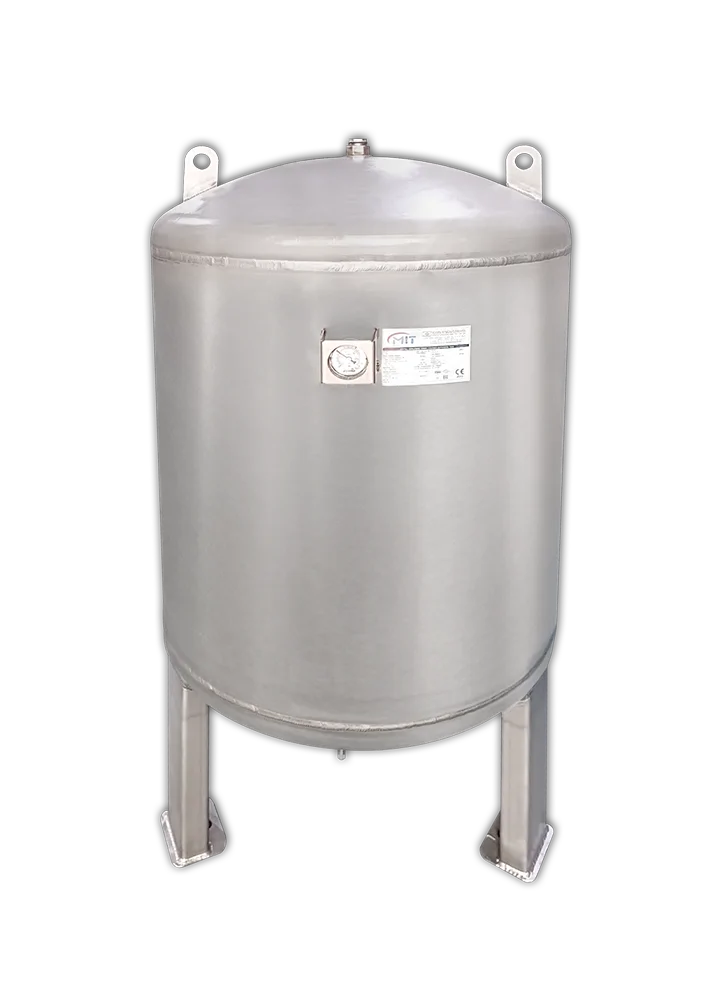
Stainless steel tanks are produced from specially alloyed steels that provide high strength and corrosion resistance. The most commonly used quality grades are AISI 304, AISI 316, and AISI 316Ti, which offer superior performance in different chemical environments and temperatures. The stainless steels used in tank production create a natural protective layer against oxidation due to elements such as chromium, nickel, and molybdenum. This layer has the characteristic of self-renewal even if it suffers mechanical damage. Therefore, stainless tanks are safely preferred in applications requiring chemical resistance and long service life.
One of the most important structural properties of stainless tanks is the high quality requirement for welding during the production process. The welds must be processed flawlessly for the tank to withstand pressure, temperature differences, and vibration loads. Therefore, it is common practice to inspect the weld areas by X-ray in tanks used particularly in the food, beverage, pharmaceutical, and chemical industries. Since hairline cracks, undercut errors, or the use of inappropriate filler metals can lead to serious safety issues in the long term, the production of stainless tanks is a process that requires expertise.
Stainless tanks are also produced in accordance with hygienic design criteria. The surfaces in contact with the fluid must be smooth, designed to be bacteria-repellent, and offer easy-to-clean surface geometries, making these tanks indispensable in the food and health sectors. Stainless tanks can be designed to be compatible with CIP (Clean-In-Place) systems, providing uninterrupted cleaning in processes requiring high hygiene.
Structurally, stainless tanks exhibit stable performance at both high and low temperatures. Their resistance to thermal shocks, compatibility with aggressive chemicals, and minimal impact from atmospheric conditions allow these tanks to be safely used in challenging industrial environments for many years. Additionally, the aesthetic appearance of stainless steel and its compatibility with modern facility architecture are also additional reasons for preference by many businesses.
In conclusion, stainless tanks offer superior performance in industrial storage solutions with high strength, hygiene, corrosion resistance, long service life, and low maintenance requirements, making them products that require high engineering.
Fundamental Structural Properties of Carbon Steel (Black Sheet) Tanks
Carbon steel is often preferred in industrial storage tanks as a construction material that offers high mechanical strength and a wide range of applications. Carbon steel (black sheet) tanks provide high strength, durability, and impact resistance due to their carbon content. They are particularly prominent in applications where systems operate under high pressure or require a robust body structure against external influences.
One of the most notable structural features of carbon steel tanks is that shaping and welding processes during production are relatively easy. The bending, rolling, and joining of sheet metal can be carried out quickly. This makes the production costs of carbon steel tanks more economical compared to stainless steel. Therefore, the use of black sheet in the production of large diameter, high volume, and high-pressure tanks is common.
However, since carbon steel does not contain elements such as chromium or nickel that prevent corrosion, this material is naturally prone to rusting. Therefore, the use of protective coatings on the inner and outer surfaces of carbon steel tanks becomes mandatory. Epoxy paint, galvanizing, special resin-based coatings, or cathodic protection systems are applied to extend the life of the material. The type of coating is determined based on the chemical properties of the fluid to be stored in the tank.
Carbon steel tanks have high temperature resistance, and their thermal expansion behavior is compatible with many heavy industry applications. Therefore, they are preferred in applications exposed to high heat and pressure, such as energy production, process industry, petrochemicals, and metal processing. The body structure of the tank is minimally affected by external impacts and mechanical loads.
These tanks have limitations in terms of cleanability and hygiene requirements. The surface roughness is greater compared to stainless steel, and since the coating surfaces can wear over time, regular maintenance is necessary. For these reasons, carbon steel tanks are generally not preferred for food, pharmaceutical, or drinking water applications; however, they are quite suitable for process water, fuel, oil, chemical solutions, and industrial fluids.
As a result, carbon steel tanks are a strong alternative in industrial storage due to their high mechanical strength, economical production cost, and wide volume options. However, since there are limitations in terms of corrosion resistance and hygiene, the working conditions must be thoroughly evaluated when selecting materials.
Corrosion Resistance and Material Life Comparison
One of the most significant differences between stainless steel and carbon steel tanks is their resistance to corrosion. This difference directly affects the lifespan of the tank, maintenance needs, and process safety. Therefore, corrosion behavior is one of the most critical engineering criteria when selecting materials.
Stainless steel tanks form a thin passive oxide layer on the surface that can self-renew due to elements such as chromium, nickel, and molybdenum. This layer naturally forms when the metal comes into contact with oxygen and provides resistance to chemical reactions. Whenever any scratches or surface damage occur, this layer can repair itself. Thanks to this feature, stainless tanks can be safely used for many years in applications exposed to corrosion, such as water, beverages, chemical solutions, aggressive gases, and high-humidity environments.
On the other hand, carbon steel tanks do not have a natural passive protective layer. Therefore, the material is prone to rusting quickly when exposed to water, moisture, chemicals, and external environmental conditions. To prevent corrosion, the surfaces of the tanks must be isolated with protective coatings. However, these coatings can wear, crack, or lose their properties over time due to chemical effects. In this case, the steel's surface remains unprotected, and corrosion can progress rapidly. Therefore, regular maintenance, coating renewal, and periodic inspections are critically important for carbon steel tanks.
In terms of corrosion resistance, stainless tanks have a much longer lifespan. In most applications, the need for maintenance is minimal, and the tank structure remains stable for many years. In carbon steel tanks, however, the lifespan can vary significantly depending on the quality of the applied coating, environmental conditions, chemical interactions, and operational discipline. Incorrect coating selection or irregular maintenance can significantly shorten the tank's lifespan.
As a result, in processes requiring high humidity, chemical interactions, temperature changes, or hygiene, stainless steel undoubtedly provides superiority. Carbon steel tanks can be made long-lasting with appropriate coatings and a proper maintenance program, but due to the natural structure of the material, it is not possible to completely eliminate the risk of corrosion. This difference is one of the most fundamental determining criteria when selecting a tank.
Evaluation in Terms of Hygiene and Cleaning Requirements
The hygiene requirement in storage tanks is a critical parameter that directly affects product quality, especially in sectors such as food, pharmaceuticals, drinking water, and cosmetics. Therefore, the performance offered by stainless steel and carbon steel tanks in terms of hygiene presents significant differences.
Stainless steel tanks are an ideal solution in hygiene-focused processes due to their structure. Stainless steel grades such as AISI 304 and AISI 316 offer easy cleanability due to their smooth surfaces, non-bacterial structures, and high resistance to chemicals. The surface roughness of these materials is much lower than that of carbon steel, minimizing the likelihood of microorganisms adhering to the surface. Cleaning and sterilization processes (CIP/SIP systems) can be safely carried out with minimal intervention in stainless tanks. Additionally, since stainless steel does not react with detergents and disinfectants, there is no concern about the release of any substances after cleaning.
Carbon steel tanks, however, have limited use in applications requiring hygiene. The surface roughness of this material is higher, and wear that may occur in coatings over time can increase hygiene risks. Additionally, carbon steel is naturally sensitive to chemical interactions and moisture; therefore, the use of protective coatings on the inner surfaces is mandatory. Since the brightness, integrity, and chemical resistance of the coating may decrease over time, the use of these tanks in sensitive applications such as food and drinking water is generally not preferred. Chemicals used during cleaning can cause surface degradation in inappropriate coating types, further increasing hygiene risks.
Stainless steel tanks also do not interfere with the taste, smell, or chemical structure of the product due to their odorless, neutral, and inert surface properties. Therefore, they have been considered the standard for many years in processes such as beverage production, dairy processes, juice lines, beer fermentation tanks, chemical solvents, and processes requiring high purity. Carbon steel tanks are generally preferred for storing process water, oils, fuels, waste fluids, or chemicals that do not require hygiene.
As a result, in terms of hygiene, stainless tanks offer a much safer, easier-to-clean, and more suitable structure in terms of surface integrity. Carbon steel tanks can be an economical and sufficient alternative in processes where hygiene priority is low, but their use in applications requiring hygiene is risky. Therefore, businesses must consider the hygiene requirements of their processes when selecting tanks.
Differences in Pressure, Temperature, and Mechanical Strength
The operating conditions of storage tanks directly determine the needs for pressure, temperature, and mechanical strength. Therefore, the engineering performance of stainless steel and carbon steel tanks should be evaluated according to the physical properties of the fluid to be used and the process requirements.
Stainless steel tanks, especially show stable performance over a wide temperature range. AISI 304 and AISI 316 grades maintain their strength at both low and high temperatures and exhibit better resistance to thermal shocks compared to carbon steel. This feature provides a significant advantage in food processes where temperature changes are frequent, such as pasteurization, fermentation, or hot-cold water applications. Additionally, stainless steel can maintain its structural integrity when working with aggressive fluids at high temperatures due to its resistance to chemical reactions.
Carbon steel tanks, on the other hand, excel in applications requiring high mechanical strength. Black sheet material offers a robust body structure in large-volume tanks exposed to high pressure. Therefore, they are often preferred in industries such as heavy industry, energy production, petrochemicals, and metal processing for high-pressure tank applications. Carbon steel can exhibit a more rigid behavior in terms of structural strength compared to stainless steel; however, it should be noted that corrosion effects may lead to a loss of strength over time.
When evaluated in terms of temperature resistance, carbon steel is a relatively stable material within certain ranges; however, the acceleration of oxidation at high temperatures and the degradation of protective coatings can pose significant risks. Therefore, special coatings or surface treatments are required to protect carbon steel tanks in high-temperature environments.
The difference in mechanical strength between the two materials directly determines their areas of use. Although stainless steel tanks are structurally lighter, they offer high strength; however, for very high-pressure applications, carbon steel is often a more economical and suitable option. Nevertheless, the tensile strength, impact resistance, and fatigue resistance of stainless steel are sufficient for many applications, especially in processes that require hygiene, this level of durability is more than adequate.
In summary, stainless steel tanks provide high resistance to temperature changes, chemical stability, and long life, while carbon steel tanks offer high mechanical strength and a strong solution in large-volume pressurized tanks. However, the performance of both materials should be evaluated with appropriate engineering design according to operating conditions.
Maintenance Costs and Impact on Operational Continuity
The total benefit a tank system provides to operations should be evaluated not only by the initial investment cost but also by its long-term maintenance requirements and impact on operational continuity. At this point, there are significant differences between stainless steel and carbon steel tanks.
Stainless steel tanks are low-maintenance systems. Thanks to the material's natural corrosion resistance, rusting, coating peeling, or degradations due to chemical interactions on the surface are minimal. Therefore, there is no need for periodic coating renewal on the tank surface. A properly manufactured stainless tank can operate for years without requiring additional maintenance. Cleaning processes can be carried out quickly and safely with CIP (Clean-In-Place) systems, reducing production downtimes and maintaining operational continuity. This situation provides high efficiency, especially in food, pharmaceutical, and drinking water processes.
In carbon steel tanks, however, maintenance processes are more intensive. The high risk of corrosion, the wear of protective coatings used on the inside and outside surfaces of the tank over time, and the formation of cracks or surface degradations on surfaces exposed to chemicals necessitate regular maintenance programs. If coating peels or corrosion stains are not detected early, the tank's durability may decrease, and operational safety may be jeopardized. Therefore, periodic coating renewal, surface repair, and corrosion control in carbon steel tanks increase operational costs.
From the perspective of operational continuity, the advantages offered by stainless tanks are evident. Since cleaning times are short, production line stoppages remain at a minimum level. In contrast, during maintenance operations such as coating renewal or corrosion repair in carbon steel tanks, the tank must be taken out of service; this can lead to production loss and increased operational costs.
Additionally, the long-lasting structure of stainless steel significantly increases the economic lifespan of the tank. If carbon steel tanks are not properly maintained, they may require renewal sooner. This situation is an important factor in the long-term cost planning of the business.
As a result, in terms of maintenance costs and operational continuity, stainless steel tanks offer a much more advantageous, long-lasting, and low operational cost solution; while carbon steel tanks should be evaluated with higher maintenance costs and potential operational downtimes due to their need for regular inspection and protective applications.
Preference of Stainless and Steel Tanks in Sectoral Applications
The properties of the fluid to be stored, process requirements, hygiene needs, and operating conditions directly determine which type of tank should be preferred. The differences between stainless steel and carbon steel tanks create a clear distinction in sectoral applications. Therefore, the needs of each sector should be evaluated separately.
Food and Beverage Industry
Hygiene is the most critical element in food and beverage processes. Stainless steel tanks have become the standard material in this sector due to their smooth surfaces, non-bacterial structures, and high chemical resistances. Stainless tanks are by far the most suitable choice for storing milk, fruit juice, beer, drinking water, and liquid food products. Carbon steel tanks are not used in food processes due to hygiene requirements.
Chemical and Petrochemical Sector
Both stainless and carbon steel tanks find application in the chemical industry. If aggressive chemicals, high temperature variations, or acidic solutions are involved, stainless steel is preferred. However, for high-pressure large-volume storage, carbon steel tanks may be more suitable for solvents, oils, or fuels. The choice entirely depends on the chemical composition, temperature, and storage conditions of the fluid.
Energy and Cogeneration Systems
In energy facilities, high pressure, temperature, and mechanical loads are involved. For this reason, carbon steel tanks are frequently used in power generation, steam systems, pressure storage applications, and heat recovery units. Stainless steel, on the other hand, comes into play in sections where aggressive fluids or a high risk of corrosion is present.
HVAC and Industrial Installations
While stainless steel tanks are preferred for hot-cold water applications in heating-cooling systems, carbon steel solutions may be sufficient for process water, closed circuit water, or large volume heating-cooling tanks. The higher the hygiene requirement, the more important stainless steel becomes.
Metal Processing and Manufacturing Industry
In the metal sector, high mechanical strength and large volume storage are important. Carbon steel tanks have been used as a standard solution for such heavy processes for many years. Stainless steel is preferred in chemical baths, acidic solutions, or sensitive processes.
Maritime and Harsh Environmental Conditions
In highly corrosive environments such as saltwater, stainless steel is much more durable than carbon steel. Therefore, onboard water tanks and certain process tanks are made of stainless steel. For fuel storage or large volume solutions, carbon steel may be applicable.
Textile, Paint, and Paper Industry
In textile, paint, and paper processes where temperature control and chemical stability are important, the choice is made according to the chemistry of the fluid. Stainless tanks are suitable for reactive or corrosive chemicals, while carbon steel tanks are appropriate for process water or auxiliary fluid storage.
In conclusion, the choice in sectoral applications should be determined based on hygiene, corrosion resistance, pressure-temperature requirements, and the chemical structure of the fluid. Both tank types can offer high performance in the right application; however, accurately analyzing the needs is critical for the long-term success of the business.
When Should Stainless Tanks Be Preferred?
Stainless steel tanks are an ideal storage solution for applications that require high hygiene, operate in corrosive environments, and have a long life expectancy. The material's inherent corrosion resistance and surface properties make stainless tanks indispensable in many sectors.
Using stainless tanks is technically the most correct option in the following situations:
Processes with high hygiene requirements
In food, beverage, pharmaceutical, cosmetic, and drinking water applications, all surfaces in contact with the product must be hygienic. Stainless steel is considered standard in these sectors due to its smooth surface and bacteria-repelling structure.
Corrosive or chemically aggressive fluids
Acidic solutions, chemical reagents, waters with high chlorine content, or process chemicals are stored more safely with stainless steel. Classes with molybdenum additions, such as AISI 316 and 316Ti, offer particularly high resistance to aggressive chemicals.
Processes with frequent temperature changes
In industrial processes such as pasteurization lines, hot-cold water circuits, fermentation tanks, or processes where thermal shocks occur, the thermal stability of stainless steel provides a critical advantage.
Expectations for long life and low maintenance needs
Stainless tanks do not require coatings due to their corrosion resistance, and maintenance costs are low. They support business continuity by providing stable performance for many years.
Aesthetic and modern architectural expectations within the facility
Stainless steel surfaces are preferred in modern facilities, especially in tanks used in visible areas, providing an aesthetic advantage.
Processes where minimum contamination risk is desired
Due to its neutral and inert nature, it does not affect the taste, smell, or chemical structure of the stored fluid. Therefore, it is safely used in sensitive processes.
Need for tanks compatible with CIP/SIP systems
Stainless steel tanks can withstand high-temperature cleaning and sterilization processes, which is a significant advantage in facilities with continuous production.
In summary, stainless tanks are the most reliable solution in all applications where hygiene, durability, chemical stability, and low maintenance requirements are prioritized. Considering the properties of the stored fluid and process requirements, stainless steel often represents the most accurate long-term investment.
In Which Situations Are Carbon Steel Tanks More Suitable?
Carbon steel (black sheet) tanks have been used as a standard solution for many years in processes that require high mechanical strength and have low hygiene needs. Choosing this type of tank in the right applications provides both economic advantages and meets process needs. However, if the correct conditions are not defined, the use of carbon steel tanks can increase maintenance costs. Therefore, it is necessary to accurately analyze in which situations carbon steel is a more suitable option.
Carbon steel tanks may be preferred in the following situations:
Systems operating under high pressure
Due to its natural structure, carbon steel offers high strength. Pressure-resistant large volume tanks, steam boilers, process pressure tanks, or high-pressure circuits can be more economical and safer solutions with carbon steel bodies.
Applications with low hygiene requirements
In areas where hygiene is not a priority, such as fuel, oils, process water, wastewater, chemical solutions, cooling water, and fire water storage, carbon steel tanks have been safely used for many years.
Need for large volume storage
Producing tanks in large volumes is a costly process. Carbon steel offers a more cost-effective alternative in very large volume process tanks or field-type storage compared to stainless steel.
Environments requiring high mechanical strength and impact resistance
In heavy industrial facilities where external effects are significant, the rigid body structure of carbon steel tanks provides an advantage. They have high resistance to physical impacts, vibration loads, and outdoor conditions.
Processes where temperature control is stable and chemical interaction is low
Carbon steel tanks protected with coating provide sufficient performance for fluids that do not pose a risk of chemical attack or have a low risk. Therefore, they are frequently used in energy facilities, metal processing lines, or industrial processes.
Facilities where initial investment cost is critical
Being less costly compared to stainless steel is a reason for preference, especially in large projects. With the right coating and a regular maintenance program, it can provide a non-temporary solution for operation.
Applications where coating and surface protection solutions are applicable
The lifespan of carbon steel can be significantly extended with methods such as epoxy, galvanization, resin coating, or cathodic protection. In cases where coating applications are suitable for operational conditions, carbon steel tanks can be used for a long time.
In summary, carbon steel tanks are a correct choice in environments where high mechanical strength, economical production cost, and large volume needs are present. However, in processes where the risk of corrosion is high or hygiene requirements are paramount, stainless steel offers a much more reliable option. Therefore, both materials provide the highest efficiency when evaluated in the right application area.
Conclusion: Determining the Most Suitable Tank Type According to Needs
Selecting the right tank type in industrial storage processes is not just a choice of equipment; it is a strategic decision in terms of operational safety, product quality, maintenance costs, and long-term efficiency. Considering the fundamental characteristics, usage areas, and performance differences of stainless steel and carbon steel tanks, it is clearly seen that both materials offer specific advantages but cater to very different applications.
Stainless steel tanks provide a clear advantage in sectors requiring hygiene, corrosion resistance, chemical stability, and long lifespan. Especially in applications involving food, pharmaceuticals, beverages, drinking water, chemical processes, and high temperature fluctuations, the reliability and minimum maintenance needs of stainless tanks significantly enhance operational continuity. The material's naturally passivating structure, resistance to aggressive environmental conditions, and CIP/SIP compatibility create significant long-term advantages.
On the other hand, carbon steel tanks are the right choice for applications requiring high mechanical strength, large volume solutions, and economical production costs. Carbon steel body structures have continued to be the standard solution for systems operating under high pressure, process water storage, fuel and oil tanks, and heavy industry applications for many years. However, in processes where the risk of corrosion is high, regular maintenance, surface protection, and coating renewal processes are the most critical factors determining the lifespan of the tank.
As a result, the ideal tank material should be determined according to the chemical properties of the fluid to be stored, operating temperature, pressure level, hygiene requirements, and the facility's maintenance capabilities. Decisions made without proper engineering analysis can lead to risks such as operational downtimes, increased maintenance costs, process inefficiencies, and declines in product quality. Therefore, it is critically important to thoroughly evaluate material properties during the tank selection process, design the tank suitable for operational conditions, and consider long-term needs.
With our experience in the production of stainless and carbon steel tanks at Ekin Industrial, we offer solutions tailored to the special process requirements of each sector, providing engineering support at all stages from tank design to production. Thus, we contribute to businesses' ability to select the right tank type and establish a safe and efficient storage infrastructure.