Fan-cooled oil coolers are one of the most effective and economical heat transfer equipment used in industrial systems. Their primary function is to keep the temperature of the circulating oil in the system under control, ensuring that the equipment operates more efficiently, safely, and with a longer lifespan. Oil carries heat generated by friction in hydraulic systems, gearboxes, engines, and various industrial equipment. If this heat is not removed from the system, the viscosity of the oil decreases, its lubricating properties weaken, and the equipment may overheat and become damaged. This is where fan-cooled oil coolers come into play, reducing the temperature of the hot oil in a controlled manner.
Unlike other cooling equipment, fan-cooled oil coolers use air flow as a cooling medium. This eliminates the need for an additional cooling source like water. Heat is removed from the system by directing air naturally or with the help of a fan, bringing the oil to its optimal operating temperature. This reduces maintenance needs and lowers operating costs.
Thanks to their compact designs, fan-cooled oil coolers offer significant advantages, especially in facilities with limited space. They occupy much less space compared to other types of heat exchangers and are quite easy to install. Additionally, because their investment and operating costs are low, they provide extremely economical solutions for heat transfer. These systems, which are highly energy-efficient, contribute to sustainable production goals while minimizing environmental impacts.
In modern industries, fan-cooled oil coolers have become indispensable equipment due to their compact structure, ease of maintenance, low-cost operation, and high performance. Their wide range of applications makes them not just a cooling device but a strategic investment in terms of system safety and continuity.
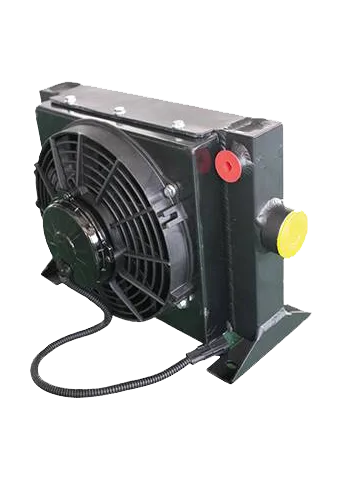
The working principle of fan-cooled oil coolers is simple yet highly effective. As the hot oil circulating in the system passes through the pipes, it comes into contact with the air flow provided from the external environment. This air flow is continuously and controllably provided with the help of fans. Specially designed fins on the surface of the pipes increase the heat transfer surface area and accelerate the heat exchange between the oil and the air. As a result, the temperature of the oil decreases, and the system continues to operate efficiently.
This principle is extremely economical and environmentally friendly as it does not require an additional cooling fluid. It offers significant advantages in facilities where access to water resources is limited or where water use is not desired. Moreover, issues such as corrosion, sediment accumulation, and maintenance problems that can be seen in water-based systems do not occur in fan systems.
Fan-cooled oil coolers provide advantages not only in terms of energy efficiency but also in terms of operational safety. Keeping the oil at the ideal temperature prevents the equipment from overheating and minimizes failures. This reduces downtime, decreases maintenance frequency, and extends the lifespan of the equipment.
Another important advantage is the ease of installation and integration due to the system's compact structure. Fan-cooled oil coolers, which can be produced with various size and capacity options, can easily adapt to a wide range of applications in different sectors. Low energy consumption reduces operating costs, providing significant savings in the long term.
In conclusion, the working principle of fan-cooled oil coolers is both simple in terms of engineering and extremely effective in terms of performance. Thanks to these features, they have become one of the most preferred cooling solutions in modern industries.
Parts of Fan-Cooled Oil Coolers and Their Functions
The efficiency and performance of fan-cooled oil coolers depend on the quality and design of their components. Although these systems have different designs, they basically consist of similar parts, each playing a critical role in the cooling process:
Fins and Tubes: One of the most important components that increase heat transfer efficiency. Finned tubes increase the surface area, accelerating the heat exchange between the oil and the air. Thus, heat is removed much more quickly and effectively.
Fan(s): The main element that allows air to pass over the cooler. Fans powered by electric motors create a continuous air flow, ensuring the continuity of the cooling process.
Motor and Drive System: The motor and power transmission components that enable the fans to operate. A strong and efficient motor system supports the long-lasting and trouble-free operation of the fans.
Mounting Brackets and Feet: Ensure the cooler is securely mounted to the equipment or system. They reduce vibrations and contribute to the safe operation of the system.
Inlet and Outlet Connections: Ports that allow the oil to enter and exit the system. These connections regulate the flow of oil, ensuring efficient cooling.
Temperature Control Elements (Thermostats): Detect the temperature of the oil and control the activation time of the fans. This increases the energy efficiency of the system and prevents unnecessary operation.
Protective Grills and Housing: Prevent foreign objects from the external environment from damaging the cooler. They increase the safety of the equipment and extend its lifespan.
The harmonious operation of these parts ensures that fan-cooled oil coolers operate with high performance and longevity. Each component directly contributes to system efficiency and supports the uninterrupted continuation of processes.
High Heat Transfer Efficiency with Finned Tubes
One of the most important components that directly determine the performance of fan-cooled oil coolers is the finned tubes. These parts are specially designed to accelerate the heat transfer process between the hot oil circulating in the system and the cooling medium, which is air, and to maximize efficiency. The basic principle of finned tubes is to increase the surface area, allowing more heat to be transferred in a shorter time. This ensures that the system operates more efficiently, the cooling time is shortened, and energy consumption is reduced.
Fins are thin and protruding structures mounted on the outer surface of the tubes. As the oil passes through the tubes, the surface temperature is transferred outward, and a wider contact with the air is achieved thanks to the surface area of the fins. The air flow created by the fans quickly takes the heat over these fins and removes it from the environment. In this process, the material, geometry, and arrangement of the fins play a decisive role in heat transfer efficiency. Materials with high thermal conductivity, such as aluminum or copper, are generally used. These materials increase system performance by allowing heat to be transferred quickly.
Fin design is as important as material selection. Different geometric shapes, such as wavy, flat, or spiral, are preferred according to different application requirements. For example, wavy fin designs create turbulent air flow, increasing the heat transfer rate, while flat fins create less air resistance, providing low energy consumption. Thus, the most suitable fin structure is selected for each application, maximizing system efficiency.
Another advantage of finned tubes is that they offer high heat transfer capacity in a compact structure. In other words, they can remove much more heat in a small area. This contributes to the overall compact design of fan-cooled oil coolers, making them easily usable even in facilities with limited space.
Additionally, finned tubes keep the thermal performance of the system stable. Since they can respond quickly to temperature changes, the oil temperature is brought to the desired level in a short time. This not only prevents the equipment from overheating but also ensures the maintenance of the oil's optimal viscosity. Maintaining viscosity contributes to less wear on the equipment and a longer lifespan.
In summary, finned tubes are the heart of fan-cooled oil coolers. They increase the heat transfer rate by increasing the surface area, enhance energy efficiency, and elevate system performance to the highest level. With the right material, design, and engineering approach, finned tubes form the basis for the reliable, economical, and high-performance operation of fan-cooled oil coolers.
Fan and Motor Unit: The Heart of Cooling Performance
The foundation of the high-efficiency operation of fan-cooled oil coolers lies in a powerful fan and motor system. These two components are the most critical elements determining the system's "active cooling" capacity. The heat transfer advantage offered by finned tubes and large surface areas becomes fully functional only when sufficient air flow is provided. At this point, the fan and motor unit comes into play, providing continuous and controlled air flow, allowing the system to operate at maximum performance.
Fans are mechanical elements designed to direct air over the cooling surface and remove the heat carried by the oil from the environment. This air flow is much stronger than the flow that could occur naturally, thus accelerating the heat transfer process. The rotating blades of the fan take the air from the environment and pass it over the finned tubes, transferring the heat carried by the oil to the external environment. Thus, the oil temperature is rapidly reduced, and the optimal operating temperature of the equipment in the system is maintained.
The efficiency of the fan system is directly related to the power and design of the motor. The electric motor rotates the fan blades at a certain speed and continuously to create air flow. The power of the motor is determined according to the needs of the system; high-power motors are preferred in large industrial applications, while smaller motors may be sufficient in compact systems. This avoids unnecessary energy consumption and increases efficiency.
Fans can generally be mounted in two different ways: directly integrated into the cooler body or remotely connected. Direct mounting offers a compact and integrated solution, while remote mounting is preferred especially in high-temperature operating equipment to prevent the motor from being affected by heat. This flexibility offers solutions suitable for different working conditions, making it possible to use fan-cooled oil coolers in various sectors.
Another important aspect of fan and motor design is quiet and vibration-free operation. Especially in food, pharmaceutical, or sensitive production lines, a fan system that operates quietly and stably provides great advantages in terms of both comfort and process safety. Modern fan-cooled oil coolers are produced to meet these requirements with optimized blade designs and vibration-preventing mounting systems.
Moreover, in advanced models, the fan and motor system works integrated with temperature sensors and control devices, activating or stopping when needed. This smart control system optimizes energy consumption while extending the lifespan of the equipment. For example, when the oil temperature reaches a certain level, the fan automatically activates, and when the temperature drops to the desired range, it stops. Thus, the system operates only when necessary, and unnecessary energy is not consumed.
In conclusion, the fan and motor unit is at the center of the efficient and reliable operation of fan-cooled oil coolers. It accelerates heat transfer by providing sufficient air flow, maximizes the cooling capacity of the system, and contributes to the long-lasting, uninterrupted operation of the equipment. A well-chosen and well-designed fan-motor combination is one of the most critical factors determining cooling performance.
Thermostats and Temperature Control: Smart Cooling Management
One of the most important elements for the efficient, safe, and energy-saving operation of fan-cooled oil coolers is the temperature control systems. At the heart of these systems are thermostats and control elements that ensure the cooling process is activated only when necessary and at the right capacity. This increases energy efficiency and extends the lifespan of the equipment.
In industrial systems, keeping the oil temperature under control is of vital importance. Overheated oil loses its viscosity and cannot adequately perform its lubrication function, leading to equipment wear, efficiency loss, and even failures. Conversely, excessive cooling of the oil also negatively affects system performance and leads to energy waste. Therefore, fan-cooled oil coolers are equipped with thermostats that continuously monitor specific temperature ranges and adjust the cooling capacity accordingly.
The working principle of thermostats is based on detecting the temperature of the oil in the system and controlling the fan and cooling process. When the oil reaches the specified temperature threshold, the thermostat activates the fan and starts the cooling process. When the oil temperature drops to the desired level, it stops the fan and puts the system in standby mode. This automatic control loop keeps the system continuously at the optimum temperature and eliminates the need for human intervention.
The biggest advantage of this approach is energy savings. Since the fan operates only when needed, unnecessary energy consumption is prevented. Especially in large-scale facilities, this savings provides a significant cost advantage. Additionally, the fact that the fan and motor do not operate continuously reduces the wear of mechanical parts and extends the equipment's lifespan.
Thermostat and temperature control systems do not only operate with an on-off logic; proportional control principles are also applied in advanced models. In these systems, the fan speed is automatically adjusted according to the oil temperature. For example, when the temperature increases slightly, the fan operates at low speed, and when the temperature rises to high levels, the fan speed increases. This provides more precise temperature control and further enhances the system's energy efficiency.
Moreover, modern fan-cooled oil coolers can be integrated into remote monitoring and automation systems through temperature sensors and control panels. This allows operators to monitor system temperatures in real-time and intervene when necessary. Especially in complex industrial facilities, such automation solutions ensure the continuity and safety of production processes.
Temperature control devices also play a critical role in terms of system safety. In the event of excessive oil temperature, they activate alarms or emergency shutdown mechanisms to protect the equipment. This feature prevents potential failures and shutdowns, especially in applications operating at high pressure and temperature.
In conclusion, thermostats and temperature control systems are not just a component of fan-cooled oil coolers but are like their brain. By monitoring and managing the temperature precisely, they ensure the efficient operation of the system, minimize energy consumption, and enhance equipment safety. Modern fan-cooled oil coolers equipped with smart control solutions offer sustainable, reliable, and economical cooling management in industrial facilities.
Compact Design and Low Cost Advantage
One of the most striking features of fan-cooled oil coolers is their compact design and economic usage advantage. In modern industrial facilities, efficient use of space and optimization of investment costs are of great importance. At this point, fan-cooled oil coolers offer significant advantages over their competitors due to their small size, easy installation features, and low operating expenses.
Firstly, let's discuss the advantages brought by compact design. Fan-cooled oil coolers occupy much less space compared to other types of heat exchangers. This feature makes a big difference, especially in facilities where production space is limited. Devices are generally designed to be positioned vertically or horizontally and can be easily integrated into existing systems with different mounting options. This allows them to be used comfortably in both new facility installations and the modernization of existing systems.
The compact structure also provides ease of maintenance. Since all parts are accessible and positioned in an orderly manner, periodic cleaning, part replacement, or inspection processes can be completed in a short time. This reduces maintenance time and costs while contributing to the uninterrupted operation of the system. Additionally, the ability to produce mobile and portable models allows fan-cooled oil coolers to be easily used in temporary systems or different locations.
Another important advantage is the low initial investment and operating cost. Fan-cooled oil coolers, as they cool with air, do not require infrastructure investments such as water supply, pumps, or additional piping. This both simplifies installation and reduces costs. At the same time, they offer much more economical solutions compared to alternative systems as they can operate without additional resources in areas where water is not available or difficult to use.
In terms of operating costs, fan-cooled oil coolers are quite advantageous. Thanks to high-energy-efficiency fan and motor systems, they only operate when needed, minimizing energy consumption. Thermostat-supported automatic control systems prevent the cooler from remaining active unnecessarily, providing significant savings in the long term. Additionally, in air-operated systems, additional expenses such as water evaporation, purification, or chemical additive use are eliminated.
The combination of compact structure, low investment cost, and low operating expenses makes fan-cooled oil coolers particularly attractive for small and medium-sized enterprises. However, these advantages also show their effect in large-scale facilities; because low energy consumption and ease of maintenance play a direct role in reducing production costs.
In conclusion, fan-cooled oil coolers are not only an efficient cooling solution but also a smart investment in terms of cost for businesses. They optimize space usage with their compact designs, offer easy installation and maintenance advantages, eliminate the need for additional infrastructure, and provide energy savings. With these features, they have become a prominent solution in today's industries in terms of both technical performance and economic efficiency.
Where Are Fan-Cooled Oil Coolers Used? Sectoral Application Areas
Fan-cooled oil coolers are used in a wide range of industrial applications due to their high efficiency, compact design, low operating cost, and ease of maintenance. These systems, which are reliably preferred wherever oil temperature needs to be controlled, can be specially designed and adapted according to the needs of different sectors. The diversity of application areas is the most important indicator of how flexible and versatile solutions fan-cooled oil coolers offer.
One of the most common application areas of these coolers is the food industry. In applications such as dairy products, fruit juices, beer, beverages, and processing lines, hygiene, safety, and process efficiency are of critical importance. Fan-cooled oil coolers, produced with stainless steel material and easy-to-clean designs, meet the strict hygiene standards of this sector. They control the temperature without affecting product quality, ensuring the continuity of production processes and guaranteeing product safety.
Another important application area is the automotive sector. In this sector, production lines, test systems, paint applications, and hydraulic presses require precise temperature control. Overheating can lead to downtime and equipment failures in production lines, so maintaining stable oil temperature is critically important. Fan-cooled oil coolers support energy efficiency and operational continuity in automotive production processes with their compact structures and high durability.
The maritime sector is also one of the areas where fan-cooled oil coolers are extensively used. Engines, hydraulic systems, and various mechanical equipment used on ships are exposed to high temperatures and harsh environmental conditions. Fan-cooled oil coolers provide reliable performance in these environments with their resistance to saltwater and corrosion. Additionally, their low maintenance requirements allow for uninterrupted operation in ship operations.
HVAC (Heating, Cooling, and Ventilation) systems are another important application area for fan-cooled oil coolers. In building technologies, energy efficiency and long-lasting operation are extremely important for comfort climate control and hot water supply systems. Fan-cooled oil coolers reduce energy consumption and increase system performance by regulating oil temperature in these systems. Thus, they offer more comfortable and sustainable climate control solutions in buildings.
Fan-cooled oil coolers also play an important role in high-temperature and high-pressure sectors such as petrochemical and pharmaceutical industries. The fluids used in these areas are often corrosive and aggressive. Fan-cooled oil coolers are produced with material and design features that can withstand these harsh conditions. They increase process safety, prevent system failures, and ensure uninterrupted production.
The metal industry also benefits from the advantages provided by fan-cooled oil coolers. In production lines exposed to high heat and pressure, temperature control is of vital importance for process stability. Fan-cooled oil coolers support production continuity by preventing equipment from overheating and increase process efficiency.
In energy production, cogeneration, and heat recovery systems, fan-cooled oil coolers also have an important place. In these systems, efficiency is the key to economic and sustainable energy production. Fan-cooled oil coolers help reduce energy costs by optimizing heat management and ensure the long-lasting operation of systems.
Finally, fan-cooled oil coolers are widely used in areas where temperature control is critical in production processes, such as the textile sector. In processes such as printing, dyeing, finishing, and drying, maintaining heat balance is of great importance for production quality and energy efficiency. Fan-cooled oil coolers increase production efficiency and reduce energy consumption by providing optimal temperature in these processes.
In summary, fan-cooled oil coolers offer reliable, economical, and high-performance cooling solutions in many different areas, from food to automotive, maritime to the energy sector. Their ability to adapt to the specific requirements of different sectors and their wide range of applications have made them an indispensable part of industrial processes.
Hygienic and Safe Cooling Solutions in the Food Industry
The food industry is one of the leading sectors that require the highest level of hygiene, safety, and quality standards in production processes. Therefore, it is of vital importance that every piece of equipment used is designed to meet these requirements. Fan-cooled oil coolers contribute to the safe and uninterrupted operation of production lines by offering solutions with features that meet the stringent hygiene and safety standards of the food sector.
Temperature control in food production is a critical factor for product quality and safety. Especially in products such as dairy products, beverages, fruit juice, beer, and processed foods, the equipment used during production can become intensely hot. Overheating can disrupt the balance of processes and negatively affect product quality. Fan-cooled oil coolers come into play at this point, ensuring that the equipment operates within the optimal temperature range. This increases process efficiency and preserves the physical and chemical properties of the products.
One of the most important features of cooling equipment used in the food sector is having a hygienic design. Fan-cooled oil coolers are generally made of stainless steel to meet this requirement. Stainless steel provides high corrosion resistance and prevents the formation of bacteria and microorganisms on its surface. Additionally, since the surfaces of the devices are designed to be smooth and easy to clean, cleaning processes can be carried out quickly and effectively. These features help maintain food safety standards and eliminate the risk of cross-contamination.
Moreover, fan-cooled oil coolers, as air-cooled systems that do not use water, minimize the risk of bacterial growth and biofilm formation. Such problems encountered in water-based cooling systems can lead to serious hygiene issues in food production processes, whereas there is no such risk in air-operated fan systems. This contributes to the safer and smoother operation of the production line.
Food production facilities often require 24/7 uninterrupted operation. Therefore, the cooling systems used must offer high reliability and low maintenance needs. Fan-cooled oil coolers meet these expectations with their robust and long-lasting structures. Motor and fan systems suitable for continuous operation ensure that production lines run without interruption. This increases production efficiency and prevents costs that may arise from unplanned downtimes.
Additionally, fan-cooled oil coolers provide significant contributions to the food sector in terms of energy efficiency. Smart fan systems working integrated with temperature control devices activate only when needed. This prevents unnecessary energy consumption and reduces operating costs. In the long run, this savings creates significant economic advantages for production facilities.
In conclusion, fan-cooled oil coolers offer ideal solutions that support both product safety and process efficiency in the food industry. With their hygienic designs, easy-to-clean structures, systems that do not use water, and energy efficiency, they contribute to the safe, sustainable, and economical conduct of food production processes. With these features, fan-cooled oil coolers are not just a cooling device in the food sector but also a fundamental element of quality assurance and production continuity.
The Importance of Temperature Control in Automotive Production Lines
The automotive industry is one of the leading sectors that require high precision, continuity, and energy efficiency in production processes. At every stage of vehicle production – such as pressing, painting, assembly, testing, and quality control – the machines and systems used generate a high amount of heat. Failure to control this heat can lead to wear and deformation in equipment and negatively affect production processes. Fan-cooled oil coolers come into play at this critical point, ensuring that systems operate at optimal temperature and contributing to the efficient, safe, and uninterrupted operation of production lines.
Equipment such as hydraulic presses, gearboxes, test benches, and paint ovens used in automotive production generate a significant amount of heat as they operate under high pressure and speed. If the oil temperature exceeds certain limits, the viscosity of the oil decreases, and the equipment cannot provide adequate lubrication. This increases friction, leading to premature wear of the equipment, performance loss, and unexpected failures. Fan-cooled oil coolers effectively reduce the heat of the hot oil with air flow, maintaining the ideal operating viscosity of the oil. Thus, the efficiency and lifespan of the equipment increase.
Moreover, process continuity is extremely critical in automotive production lines. Even the slightest malfunction or downtime can disrupt the production plan and lead to significant costs. Fan-cooled oil coolers prevent such downtimes by continuously keeping the oil temperature under control. Stable temperature ensures the uninterrupted operation of production lines and increases production capacity.
Temperature control is also extremely important in processes such as paint lines and surface treatments. Temperature fluctuations in paint applications can negatively affect surface quality and lead to defective production. Fan-cooled oil coolers ensure product quality by keeping the temperature stable in such processes. Similarly, in testing and quality control processes, the stable operation of equipment is necessary to obtain accurate results. Stable temperature increases the reliability of test results and ensures the maintenance of quality standards.
Another advantage of fan-cooled oil coolers in the automotive sector is their compact design and flexible integration capability. Space-saving is extremely important in environments where production lines are filled with dense equipment. Fan coolers can be easily integrated into existing systems with their space-saving structures and do not require additional infrastructure for new investments. This reduces investment costs and speeds up the commissioning process.
Energy efficiency is another important factor to consider in automotive production. Fan-cooled oil coolers, thanks to their thermostat-controlled systems, activate only when needed and prevent unnecessary energy consumption. This reduces operating costs while minimizing environmental impacts. Additionally, by using air instead of water, they eliminate water consumption and water treatment costs.
In conclusion, fan-cooled oil coolers are not just a cooling device in automotive production lines but also a guarantee of production quality, process continuity, and energy efficiency. They ensure the safe and efficient operation of equipment working at high temperatures, contribute to the uninterrupted continuation of production lines, and reduce maintenance costs. With these features, they have become an indispensable component in modern automotive production facilities.
Conclusion: A Smart Choice for High-Performance, Efficient, and Reliable Cooling
Fan-cooled oil coolers are not just a cooling device in modern industrial systems but a strategic solution in terms of production efficiency, process safety, and energy savings. By using air flow as the cooling medium, they do not require an extra fluid, significantly reducing both installation and operating costs. Their compact designs take up little space, are easy to install, and can be effortlessly integrated into existing systems. Additionally, their low maintenance requirement offers a guarantee of long-lasting and uninterrupted operation.
The high heat transfer capacity supported by finned tubes, combined with powerful fan and motor systems, provides fast and effective cooling. Thanks to thermostats and temperature control devices, the system activates only when necessary, maximizing energy efficiency. These features not only reduce operating costs but also contribute to environmental sustainability.
The versatile use of fan-cooled oil coolers makes them indispensable in different sectors. While ensuring hygiene and product safety in the food industry, they maintain the continuity of production lines and product quality in the automotive sector. In challenging application areas such as maritime, petrochemical, HVAC, energy, and textiles, they stand out with their durability, low maintenance requirement, and long-lasting structure.
In conclusion, fan-cooled oil coolers combine all the features needed by modern industrial facilities in one solution: high performance, energy efficiency, compact design, low cost, ease of maintenance, and long life. With these features, they not only meet today's needs but also contribute to the sustainable and efficient production goals of the future. With their wide application area and flexible usage features, fan-cooled oil coolers stand out as a smart and reliable investment in the industrial cooling world.