Dosage pumps are specialized pump systems that ensure the transfer of fluids in specific ratios in a controlled and repeatable manner. The precise dosing of chemicals used in industrial facilities is of great importance for both process efficiency and product quality. Therefore, dosage pumps maintain a constant flow rate, ensure that the targeted amount is consistently delivered throughout the system, and provide stable performance despite changes in operating conditions.
Many liquids used in the industry can negatively affect processes if not proportioned correctly. For example, in water treatment applications, underdosing or overdosing of disinfectants can pose safety risks. The correct application of additives or cleaning chemicals in food production is critical for hygiene and quality control. This sensitivity supports the efficient operation of production lines across a wide range, from automotive to textiles, and from energy production to metal processing facilities.
Dosage pumps operate with a precise valve structure, durable materials, and a controlled stroke mechanism developed to meet these needs. Even if the viscosity of the fluid, chemical properties, or pressure conditions change, the pump can consistently deliver the desired dosage amount. Thanks to these features, dosage pumps are positioned as critical equipment that provides reliability, process standardization, and operational continuity in industrial fluid management.
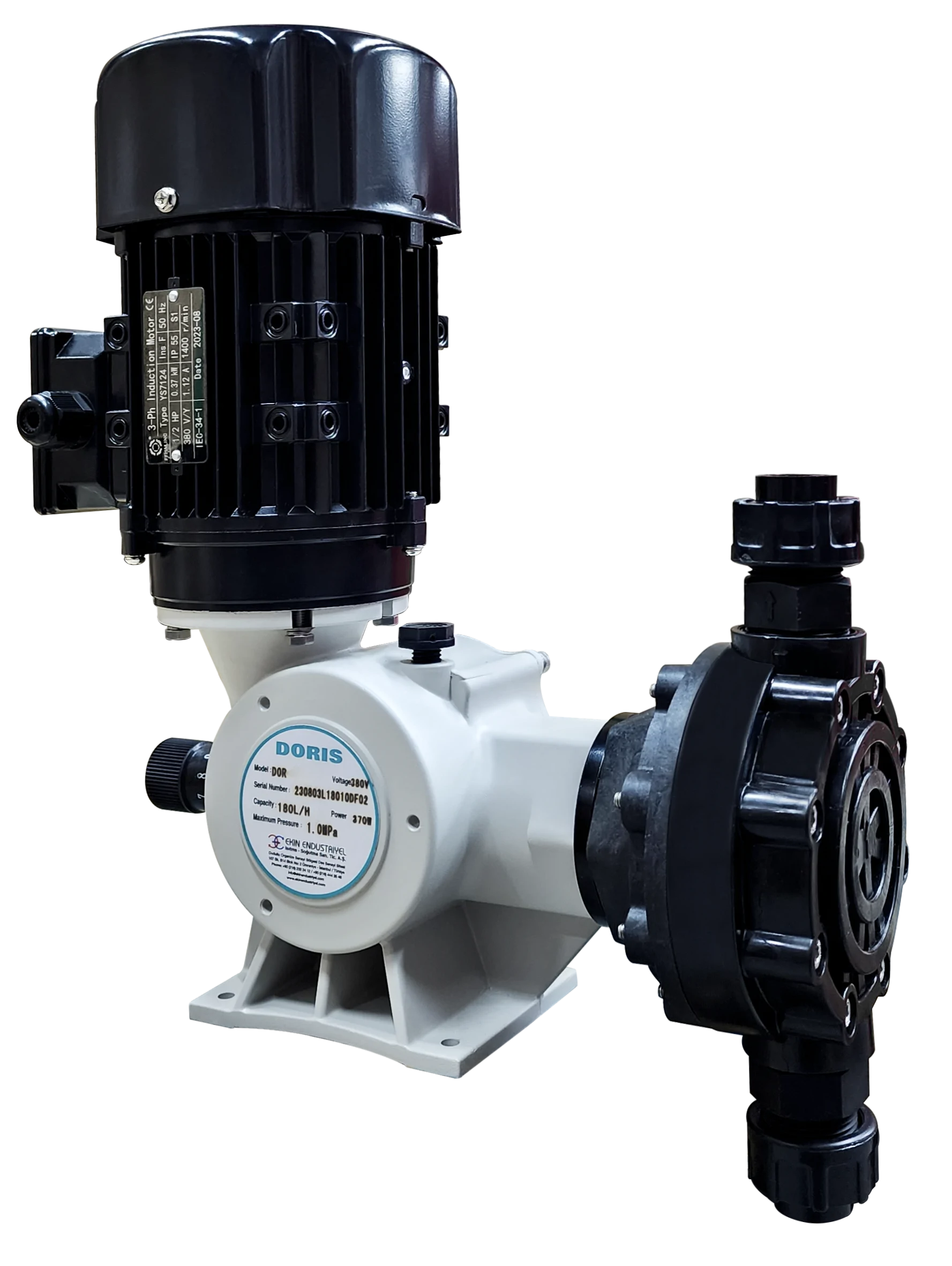
Operating Principle of Dosage Pumps
Dosage pumps fundamentally work by delivering fluid in a specified amount through a controlled stroke movement or diaphragm mechanism. This mechanism allows the pump to draw and push a fixed volume in each cycle, thus continuously or intermittently transporting the fluid in the desired dosages within the system. Throughout the operating cycle, the pump ensures the fluid progresses in the correct direction through inlet and outlet valves.
The most significant advantage of this structure is the ease of adjusting the flow rate. When the stroke length, frequency, or diaphragm movement is altered, the dosage amount can be precisely controlled. This ensures stable operational performance in both low flow applications and processes requiring more concentrated chemical feed.
The operating principle of dosage pumps relies on providing the same amount of flow even when system conditions change. Even in situations where pressure increases, viscosity changes, or process loads fluctuate, the pump's dosing capability remains largely stable. This feature ensures the maintenance of quality standards in various applications such as chemical preparation, disinfection, pH control, and additive injection.
In conclusion, the operating logic of dosage pumps is based on precise measurement, controlled movement, and a reliable valve arrangement. These principles provide a strong foundation for continuity, reliability, and accurate proportioning in industrial liquid management.
Sealing and Material Quality
Since a significant portion of the chemicals used in industrial processes has a high corrosive effect, the material quality of dosage pumps becomes a critical factor for process safety. All components that come into contact with the fluid, such as the pump body, valve housing, diaphragm, and hose connections, must be chemically compatible, which is essential for both the equipment's lifespan and operational safety.
Therefore, durable polymers, stainless steel alloys, and inert materials are typically preferred in dosage pumps. These chemically resistant structures provide high performance against challenging conditions such as wear, corrosion, UV effects, and temperature fluctuations. Especially the robust materials used in valve housings enhance sealing performance by supporting the correct direction of the fluid. This sealing prevents dosage loss in processes and ensures the maintenance of operating pressure.
Properly selected materials also reduce maintenance needs. Issues such as deformations due to chemical incompatibility, premature wear of seals, or damage to valve components are minimized. Thus, the operational lifespan of the pump is extended, the system demonstrates stable performance for many years, and process downtimes are avoided.
In conclusion, sealing and material quality are among the key factors determining the reliability of dosage pumps. Appropriate material selection not only enhances the durability of the equipment but also provides a strong foundation for quality control, safety, and operational continuity in production processes.
The Importance of Pump Head Design
One of the most critical elements determining the efficiency and operational stability of dosage pumps is the design of the pump head. The pump head is the section where fundamental steps such as the intake, direction, and delivery of the fluid occur. Therefore, the correct structuring of the internal design ensures that dosing is repeatable and precise.
The internal channel design of the pump head should support the lossless progression of the fluid in the inlet and outlet directions. Incorrectly angled structures or transitions that are not sufficiently smooth can lead to gas accumulation, turbulence, or cavitation. Cavitation can cause wear on pump components and disrupt flow balance, leading to dosing errors in the system. Therefore, an optimized internal structure prevents these risks and enables stable operation of the pump.
Additionally, the chemical compatibility and surface quality of the pump head material are also significant factors. Heads made from highly modular and chemical-resistant materials not only enhance sealing but also provide stable performance over time. Minimizing friction loss during contact with the internal surface of the fluid enhances energy efficiency and positively affects the overall operational capacity of the pump.
A well-designed pump head also facilitates maintenance processes. Accessibility of parts, ease of disassembly and reassembly of valve components, and suitability of the internal structure for disinfection or cleaning processes provide significant advantages for industrial facilities.
In summary, the design of the pump head is one of the fundamental components that ensure stable flow, maintain dosing accuracy, reduce cavitation risk, and enhance the overall efficiency of the pump. Therefore, a well-designed pump head is the key to high performance in industrial dosing applications.
Energy Efficiency and Operational Savings
Modern dosing pumps offer structures developed to reduce energy consumption in industrial facilities and optimize operating costs. Compared to traditional pump designs, lighter body structures, improved drive mechanisms, and electromagnetic components that provide high efficiency enable the pump to reach the same dosing level with less energy. This situation provides a noticeable saving in both daily operations and long-term business planning.
Energy efficiency is important not only in terms of cost but also in terms of system performance. An efficiently operating dosing pump generates less heat as it eliminates unnecessary energy losses and provides a more stable operating rhythm. This both extends the pump's lifespan and minimizes fluctuations that may occur in the process line.
In addition, energy efficiency provides significant contributions to businesses in terms of sustainability. Systems that consume less energy help reduce the overall carbon footprint and support the transition to environmentally friendly production models. Energy-saving systems also indirectly reduce maintenance costs; because the wear and failure likelihood decreases in environments where motors and electromechanical parts are less stressed.
As a result, energy efficiency is one of the most important advantages offered by modern dosing pumps. Achieving high performance with low energy consumption creates a strong preference for businesses both economically and operationally.
Structures Offering Ease of Maintenance
Maintenance times in industrial facilities are extremely important for the uninterrupted continuation of production flow. The durable diaphragm structures, chemically compatible materials, and modular components used in the design of dosing pumps make maintenance processes practical and quick. This design approach ensures the equipment operates smoothly for a long time while significantly reducing the intervention time of technical teams.
One of the biggest advantages of modular design is that the required parts are easily accessible and replaceable. Components such as the pump head, valve assemblies, or diaphragm can be quickly disassembled and reassembled by the user, reducing service costs and minimizing downtime that may occur on the production line. This feature provides a significant advantage, especially for facilities operating in high-production environments.
Additionally, the quality of materials directly contributes to the low maintenance requirement. Components resistant to chemical environments delay deformation and wear; this allows the pump to maintain stable performance for a longer time. Durable diaphragms offer long life by maintaining their shape even at high operating frequencies and reduce maintenance requirements.
As a result, dosing pump designs that offer ease of maintenance help increase operational efficiency for businesses while assisting in keeping costs under control. A structure that requires less maintenance alleviates the workload of technical teams and allows processes to operate continuously, reliably, and at planned capacity.
Applications in Different Sectors
Dosing pumps undertake important tasks in many sectors:
• Food Industry: Provides hygienic liquid transfer in processes with high cleanliness requirements.
• Automotive: Meets the precise dosing requirements for paint, chemical preparation, and process fluids.
• Marine: Provides reliable flow control in ship systems thanks to its corrosion-resistant structure.
• HVAC: Used in chemical conditioning applications in heating and cooling systems.
• Petrochemical and Pharmaceutical: Ensures the safe handling of corrosive fluids.
• Metal Industry: Provides stable flow in processes requiring high temperature and pressure.
• Energy: Plays an effective role in heat recovery and process water conditioning systems.
• Textile: Preferred when precise chemical dosing is required in dyeing and finishing processes.
Key Criteria to Consider When Selecting a Dosing Pump
Selecting a dosing pump is a critical decision in terms of process safety and system efficiency. An inappropriate pump can lead to both dosing errors and equipment failures. Therefore, several key criteria must be carefully evaluated during the selection process.
First, the chemical structure of the fluid to be used must be accurately determined. Acidic, basic, viscous, or corrosive liquids must be compatible with the material structure of the pump. The chemical resistance of all parts in contact with the fluid, such as the pump head, valve components, and diaphragm, is critical for the long-lasting and safe operation of the system.
Another important factor is the operating pressure and temperature of the process. Selecting a pump with appropriate capacity for these values ensures stable dosing. Choosing the right capacity helps achieve maximum efficiency with a pump that is neither excessively stressed nor unnecessarily large.
Dosing accuracy is also one of the factors that should be considered. While some processes require precise control in very small dosing ranges, in some applications, working within wider ranges may be sufficient. Therefore, the pump's stroke adjustment, control modes, and dosing accuracy should be evaluated.
Additionally, maintenance conditions and operational intensity can also influence the selection. Pump designs that are easy to maintain, have a modular structure, and are equipped with long-lasting components reduce operating costs and increase system continuity. Furthermore, the pump's compatibility with automation systems and its ability to integrate with control panels or sensors also provide a significant advantage in modern industrial facilities.
In conclusion, the correct selection of a dosing pump requires the consideration of many factors, from fluid properties to operating conditions, from maintenance needs to control systems. A pump suitable for the needs enhances process quality, increases energy efficiency, and meets the long-term performance expectations of businesses.
Conclusion
Dosage pumps are among the essential equipment that ensure the accurate, reliable, and controlled management of fluids in industrial facilities. They provide high performance in many applications that require precision, from chemical dosing to water treatment, from food processing to energy systems. Their sealing structures, chemically compatible materials, optimized pump head designs, and low maintenance requirements support both the operational continuity and process efficiency of businesses.
A well-chosen dosage pump not only increases operational safety but also provides long-term benefits to businesses by reducing energy consumption, maintenance costs, and potential downtimes in production lines. With a wide range of applications and technological advancements, these systems have become more precise, efficient, and durable, continuing to be an indispensable part of modern industrial processes.
In short, dosage pumps can be considered a strategic investment that improves process performance and optimizes operating costs. Proper pump selection, material compatibility, and correct design choices significantly contribute to achieving a sustainable, safe, and stable production structure in facilities.