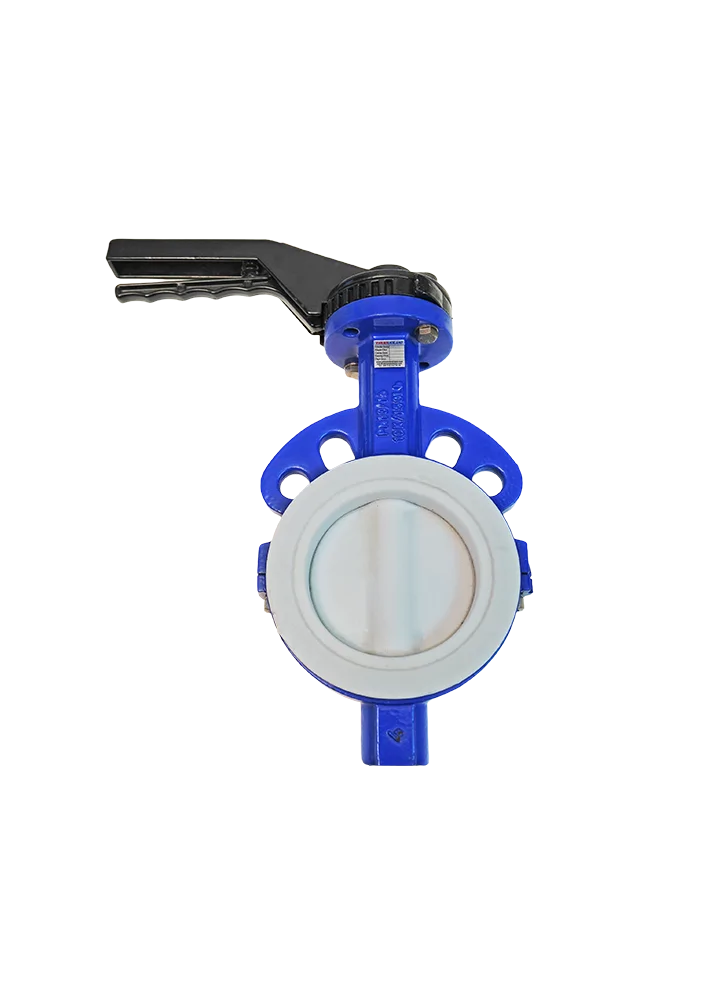
Butterfly valves are one of the most preferred types of valves in industrial fluid control systems. They get their name from the disk-shaped cover piece in the middle, which resembles butterfly wings when opening and closing. This disk is the main component that directs the fluid passing through the pipeline. Thanks to their simple, lightweight, and compact structure, butterfly valves provide ease of installation and use, and they are widely preferred especially in large-diameter pipelines due to their ability to operate with low pressure loss.
Butterfly valves are used to completely stop the fluid or control it at a specific flow rate. In this way, they offer both the opening-closing function and the flow adjustment function together. Compared to classic ball or gate valve designs, they take up less space and are more cost-effective. Therefore, they are frequently preferred by engineers in different sectors due to their energy efficiency, ease of operation, and maintenance advantages.
One of the most important features of butterfly valves is their ability to provide excellent bidirectional sealing. This means that it is possible to safely control the fluid in the pipeline in both directions. Additionally, since the body design is lightweight, the transportation and installation processes are easier compared to other valves. These structural advantages have made them standard equipment in modern industrial facilities.
The history of butterfly valves is relatively recent. First designed and used in the 1960s, this type of valve quickly became widespread in industrial applications. The use of butterfly valves, especially in energy, chemical, and water management projects in America and Europe, has ensured their recognition on a global scale.
The first models developed at that time had more limited features compared to today's products. The materials used offered limited performance in terms of resistance to high temperature and pressure. However, with the advancement of technology, high-strength materials such as cast iron, ductile iron, stainless steel, and PTFE (Teflon) came into play. This extended the service life of butterfly valves, made it possible for them to be used in more aggressive chemical environments, and expanded their operating temperature ranges.
The development of automation systems in the 1970s and 1980s paved the way for the use of butterfly valves with pneumatic and electric actuators. Thus, moving beyond manual use, smarter valve solutions that can be remotely controlled and integrated into process systems were developed. This period was a turning point when butterfly valves ceased to be merely mechanical equipment and became an indispensable part of industrial automation.
Today, butterfly valves are actively used not only in low-pressure water and ventilation lines but also in the chemical, petrochemical, energy, and food sectors. The development of material diversity and production technologies allows butterfly valves to be safely preferred in high-pressure and high-temperature processes.
The Importance of Modern Use
The importance of butterfly valves today is not limited to their technical features. In terms of businesses, cost-effectiveness, long-lasting use, easy maintenance, and the ability to integrate into automation have made them an indispensable solution both in engineering and economically. Additionally, their compact body structure saves space even in large-diameter pipelines and reduces additional costs during installation.
Looking at it today, the development process of butterfly valves also reflects the evolution of industrial equipment. Initially designed with simpler and more limited features, these products have now become modern valves equipped with high engineering solutions, offering precise control, compatible with different actuator systems, and supporting energy efficiency.
Design and Operating Principle of Butterfly Valves
One of the most important factors behind the success of butterfly valves is their extremely simple yet effective design. These valves, which occupy minimal space in the pipeline, structurally consist of few parts. This situation both reduces production costs and facilitates maintenance and installation. At the same time, thanks to its compact structure, it can be used even in large-diameter pipes and provides an advantage for installation in narrow spaces.
Basic Components
A butterfly valve generally consists of four main components:
• Body: The valve body is the outer frame connected to the pipeline. It is mostly made of ductile iron (GGG40), gray cast iron (GG25), stainless steel, or special alloys. The strength of the body is the most critical element determining the valve's resistance to operating pressure and temperature.
• Disk (Flap): It can be considered the heart of the butterfly valve. The disk controlling the passage of the fluid opens or closes the cross-section of the pipeline by rotating. Nickel plating, stainless steel (AISI304, AISI316), or PTFE (Teflon) materials are often preferred in disk production. The material of the disk is selected according to the type of fluid. For example, PTFE-coated disks are preferred for corrosive chemicals, while stainless steel disks are used for water and HVAC applications.
• Shaft: It is the main part that allows the disk to rotate. High-strength steel (e.g., AISI 410 - AISI 416 - AISI 420) is generally used. The strength of the shaft directly affects the valve life because it is constantly under load during opening-closing movements.
• Seal (Sealing Element): It is made of elastomer or PTFE-based materials that provide sealing between the valve and the pipeline. The most common seal materials include EPDM, NBR, VITON, and PTFE. Each seal material is optimized for different fluids and temperature conditions. For example, EPDM is used in drinking water applications, while VITON is preferred in environments requiring high temperature and chemical resistance.
Operating Principle
The operating principle of butterfly valves is quite simple but highly effective. The disk regulates the passage of the fluid in the pipeline by rotating through the shaft:
• When the disk is in the fully closed position, the passage of the fluid is blocked, and the system is completely closed.
• When the disk is in the fully open position, the fluid passes with almost no resistance. In this case, the pressure loss is at a minimum level.
• When the disk is kept in a partially open position, the flow rate of the fluid can be adjusted in a controlled manner. Thus, butterfly valves are used not only for opening-closing but also for flow control.
Thanks to this design, butterfly valves are noted for their fast response times. They can be fully opened and closed with a quarter-turn (90°) movement. This feature is of critical importance, especially in systems requiring emergency intervention.
Concentric and Eccentric Designs
Butterfly valves are produced with two basic design approaches based on the position of the disk and shaft:
• Concentric Design: The disk is symmetrically centered along the shaft. It is the most commonly used type of butterfly valve. It is preferred in water, HVAC, and low-pressure applications. Due to its simple structure, it is an economical solution but shows limited performance under high pressure and temperature conditions.
• Eccentric Design: The disk is positioned offset from the shaft axis. Single, double, or triple eccentric structures can be used. Eccentric designs offer longer-lasting and high-pressure resistant solutions by reducing the friction of the disk on the seal. They are preferred especially in the energy, petrochemical, and metallurgy sectors.
Actuator and Control Options
The use of butterfly valves is not limited to manual lever mechanisms. Different actuator options have been developed for integration with automation in modern industrial applications:
• Manual Gear: Allows the user to open and close the valve with less effort. Preferred in large-diameter valves.
• Pneumatic Actuator: These systems, which operate with air pressure, are used in processes requiring fast opening-closing.
• Electric Actuator: Can be controlled remotely thanks to electric motors. Works fully compatible with automation systems and is especially common in building technologies and process lines.
Pressure Loss and Energy Efficiency
The design of butterfly valves is optimized to operate with low-pressure loss. This reduces the energy consumption of the system and lightens the pump load. Especially in long pipelines and large-diameter installations, this advantage of butterfly valves is a critical factor that reduces operating costs.
Durability and Long Life
The long-term performance of butterfly valves is directly related to the choice of materials used and proper maintenance. Selecting body, disk, and seal materials suitable for the characteristics of the fluid minimizes the risks of wear, corrosion, and deformation. Additionally, eccentric designs reduce friction by preventing the disk from constantly contacting the seal surface, extending the service life.
Comparison of Wafer and Lug Type Butterfly Valves
The two most commonly used connection types of butterfly valves are wafer type and lug type designs. Although both types operate on the same basic principle, they have significant differences in terms of how they connect to the pipeline and maintenance ease. These differences play a critical role in valve selection for installation engineers and maintenance teams. Choosing the right connection type not only increases the efficiency of fluid control but also directly affects maintenance costs and operational risks.
Wafer Type Butterfly Valves
Wafer type butterfly valves get their name from their thin and compact body structure. In this design, the valve is placed between two flanges and secured with long studs (bolts). The valve, clamped in the middle of the flanges, occupies minimal space in the system.
• Connection Method: Wafer type valves are mounted by clamping between flanges. Bolts pass through both flanges to secure the valve.
• Advantages:
o Has a lighter and more compact structure.
o Is a more economical solution.
o Installation is quick and is preferred especially in narrow spaces.
o Due to its simple connection system, it is widely used in standard industrial applications.
• Disadvantages:
o To remove or maintain the valve, the line usually needs to be completely shut down.
o Cannot be disassembled and reassembled independently.
o Connection security under pressure is not as strong as lug type.
Wafer type butterfly valves are preferred especially in water management, HVAC, low-pressure processes, and applications where a compact structure is important.
Lug Type Butterfly Valves
Lug type butterfly valves offer a more robust connection compared to wafer types. They have bolt holes (lug, threaded connection points) on the body. Thanks to these threaded structures, the valve can be directly connected to the flanges with bolts. Thus, even if the connection on only one side of the line is removed, the valve remains fixed in place.
• Connection Method: In lug type valves, each flange is connected separately to the body. Therefore, even if one side of the line remains closed, the other side can be disassembled.
• Advantages:
o Allows the valve to be removed and maintained without completely shutting down the line.
o Provides a more secure connection, so it is preferred in high-pressure applications.
o The double-sided connection system offers a more robust installation and long life.
• Disadvantages:
o Is heavier compared to wafer types.
o Is more expensive.
o Installation time may be slightly longer.
Lug type butterfly valves are preferred in more critical applications. They are commonly used in sectors requiring high security and durability, such as petrochemical, energy, and maritime.
Technical and Operational Differences
• Maintenance Ease: Lug type valves can be disassembled and reassembled by isolating only one side of the line. This feature provides a great advantage in facilities that need to operate continuously. In wafer type valves, the line may need to be completely shut down during maintenance.
• Durability: The body of lug type valves is more robust and heavier, making them more resistant to high pressure and temperatures. Wafer type valves are generally suitable for medium-pressure and low-risk applications.
• Usage Area: Wafer type is widely used in standard industrial systems due to its cost advantage, while lug type is preferred in critical facilities and areas where maintenance continuity is important.
Both types of butterfly valves offer reliable solutions in systems. However, when making a selection, the needs of the facility and maintenance conditions should be considered. If cost is a priority and a low-pressure, standard application is in question, wafer type is preferred. However, in higher-pressure, security-prioritized, or facilities where maintenance ease is critical, lug type butterfly valves will be a much more suitable solution.
Materials and Seal Types Used in Butterfly Valves
The performance and service life of butterfly valves largely depend on the materials used in their production. Each component, such as the body, disk, shaft, and seal, should be selected according to the type of fluid, operating temperature, pressure, and process conditions. Incorrect material selection not only shortens the valve's life but also jeopardizes the integrity of the system. Therefore, material selection in butterfly valve design is one of the critical engineering decisions.
Body Materials
Butterfly valve bodies are the main structural elements that come into direct contact with the fluid and are exposed to pressure. The body material is important in terms of both mechanical strength and corrosion resistance.
• GG25 (Gray Cast Iron): Widely used in standard applications. It is advantageous in terms of cost but shows limited resistance to high pressure and aggressive chemicals.
• GGG40 (Ductile Iron): Provides higher strength and impact resistance compared to gray cast iron. Preferred in medium-pressure and large-diameter applications.
• AISI 304 Stainless Steel: Due to its chemical resistance and hygienic structure, it is frequently used in the food, pharmaceutical, and chemical industries. It is also suitable for drinking water applications.
• AISI 316 Stainless Steel: Due to containing molybdenum, it is more resistant to corrosive environments such as chlorine and saltwater compared to 304 quality. It is common in the maritime and petrochemical industries.
• Alloyed Materials: Nickel alloys, titanium, or PTFE-coated bodies can be used for special processes. Although these materials are high-cost, they provide long-lasting use with aggressive fluids.
Disk (Flap) Materials
The disk is the part that directly contacts the fluid and controls the flow. Therefore, materials with high corrosion and wear resistance should be preferred.
• GGG40 / GG25: Preferred in low-risk applications such as water and HVAC.
• AISI 304: A hygienic solution for food and drinking water applications.
• AISI 316: Provides higher corrosion resistance in environments with saltwater, acids, and chemicals.
• Nickel Plating: Provides protection against wear by increasing surface hardness. It is a medium-cost, long-lasting solution.
• PTFE (Teflon) Coating: Preferred in environments where chemical resistance is most critical. It is an ideal solution, especially in facilities working with acids, bases, and solvents.
Shaft Materials
The shaft is the mechanical part that allows the disk to rotate and requires high strength as it is in constant motion.
• AISI 416 Stainless Steel: The most commonly used shaft material. Its hard structure makes it resistant to wear.
• AISI 431 / 316: Preferred in environments requiring higher corrosion resistance. Provides an advantage especially in the maritime and chemical industries.
Seal (Sealing) Materials
The seal is the most important part providing sealing in butterfly valves. If the seal selection is not suitable for the structure and temperature of the fluid, the valve will quickly lose its function.
• EPDM (Ethylene Propylene Diene Monomer):
o Used in drinking water, hot water, and steam applications.
o Can contact food, is hygienic.
o Maximum temperature resistance is around 130 °C.
• NBR (Nitrile Rubber):
o Compatible with petroleum derivatives, oil, and fuels.
o Can work at lower temperatures compared to EPDM.
o Common in HVAC and industrial processes.
• VITON (FKM):
o Suitable for high temperature (150-200 °C) and aggressive chemicals.
o Offers the highest resistance to corrosion and solvents.
o Is more expensive in terms of cost, preferred in critical processes.
• PTFE (Teflon):
o Can be used in the most aggressive chemical environments such as acids, bases, and solvents.
o Resistant to high temperatures (up to 180 °C).
o Is inert to almost all chemical substances, making it an ideal solution in the chemical and pharmaceutical industries.
The Importance of Correct Material and Seal Selection
Each material has its unique advantages and limitations. For example:
• In an HVAC installation, a GGG40 body + EPDM seal combination is sufficient for economic and long-lasting use.
• In marine applications, a Bronze disk + VITON seal resistant to saltwater should be preferred.
• In a pharmaceutical factory with aggressive chemicals, PTFE Flap + PTFE Disk is a must.
Therefore, when selecting a butterfly valve, not only pressure and diameter values but also the chemical structure and temperature conditions of the fluid should be considered. Correct material selection directly affects both the valve life and the safety of the facility.
Actuated Butterfly Valves: Pneumatic and Electric Options
Butterfly valves are not limited to use with only manual lever or gear box mechanisms. The need for automation in modern industrial systems has led to the development of actuated versions of these valves. Actuated butterfly valves offer solutions that can perform opening-closing or flow control without the need for human intervention, can be remotely controlled, and can be easily integrated into process automation systems. This feature, especially in large-scale facilities, increases operational efficiency and safety.
Actuated systems work by allowing the disk of the butterfly valve to rotate over a shaft. The main difference here is that the power to move the shaft comes from an actuator. These actuators are generally divided into two main groups: pneumatic actuated and electric actuated systems.
Pneumatic Actuated Butterfly Valves
Pneumatic actuators work with compressed air. The energy provided by the air is converted into rotational motion through a piston or diaphragm mechanism, and the valve disk opens and closes accordingly.
• Advantages:
o Provides very fast opening-closing. It is of critical importance in systems requiring rapid intervention, especially in emergencies.
o Offers safe use; since there is no electrical spark, it can be safely used in flammable and explosive environments (e.g., oil refineries, chemical plants).
o Durable and long-lasting. Pneumatic systems generally require low maintenance.
• Disadvantages:
o Requires a compressed air line or compressor system. This means additional installation costs.
o If the quality of the compressed air is low (contains oil or moisture), performance issues may occur in the system.
Pneumatic actuated butterfly valves are preferred especially in heavy industries such as chemical, energy, petrochemical, and metallurgy.
Electric Actuated Butterfly Valves
Electric actuators allow the shaft to rotate with the help of an electric motor. They are widely used in facilities where electricity is easily accessible. Modern electric actuators also have the ability to perform partial opening (proportional control) in addition to opening-closing.
• Advantages:
o Since electrical supply is available in every facility, it does not require extra infrastructure costs.
o Can be directly integrated with PLC, SCADA, or other industrial automation systems.
o Precise control of opening-closing movements is possible; that is, the valve can perform flow control with partial openings.
o Operates quietly and has low maintenance costs.
• Disadvantages:
o Electric actuators can pose a safety risk in explosive or flammable environments. Special designs resistant to explosion (ex-proof) are required in such areas.
o Opening-closing times are generally longer compared to pneumatic actuators.
Electric actuated butterfly valves have a very wide range of applications, including HVAC, water management, food and beverage, pharmaceuticals, and power plants.
Criteria to Consider in Actuator Selection
When selecting an actuated butterfly valve, the following factors should be considered:
• Energy Source: Is compressed air or electricity more easily accessible in your facility? This directly determines the choice of pneumatic or electric actuator.
• Operating Environment: Pneumatic systems are safer in environments with flammable, explosive, or corrosive gases. Ex-proof certified models should be used for electric actuators.
• Speed Requirement: If very fast opening-closing is required, pneumatic systems come to the forefront. If more precise and proportional control is needed, electric actuators are more suitable.
• Cost: In terms of initial installation cost, electric actuators are more economical, while pneumatic systems may be advantageous in facilities where a compressed air line already exists.
• Maintenance Ease: Electric actuators generally require less maintenance, while air quality is of critical importance in pneumatic systems.
The Future of Actuated Systems
With the widespread adoption of Industry 4.0 and digitalization, actuated butterfly valves are also becoming smarter systems. Today, some electric actuators have features such as:
• Remote monitoring,
• Automatic fault diagnosis,
• Communication protocols (Modbus, Profibus, Profinet)
These features are starting to become standard. This way, butterfly valves play an important role not only in flow control but also in the digitalization of the facility.
Advantages Provided by Butterfly Valves
Butterfly valves are one of the most preferred types of valves in industrial facilities for fluid control. The main reason for this preference is the technical and operational advantages they offer. Butterfly valves provide many benefits to users both in terms of engineering and operating costs.
Compact and Lightweight Design
One of the most striking features of butterfly valves is their compact body structure. They take up much less space compared to ball or gate valves. This advantage facilitates pipeline installation in narrow spaces. Additionally, the low weight of the body reduces labor costs during transportation and installation.
Low Pressure Loss
Pressure losses that may occur in the valve during fluid passage directly affect system efficiency. The design of butterfly valves allows the fluid to progress with minimal resistance. When the disk is positioned parallel to the flow direction, the pressure loss is at a minimum level. This provides energy efficiency and reduces the pump load.
Fast Opening-Closing
Butterfly valves can be fully opened and closed with only a quarter-turn (90°) movement. This feature is of critical importance, especially in emergencies or systems requiring rapid intervention. Opening-closing times are very short in manual lever, gear box, or actuated versions.
Bidirectional Sealing
Modern butterfly valves provide excellent sealing both in the forward and reverse directions. This allows the fluid in the pipeline to be safely controlled in any direction. This feature increases operational safety, especially in systems with bidirectional pressure.
Wide Diameter Options
Butterfly valves can be produced in a very wide range from small-diameter pipes to large-diameter industrial lines. In large-diameter pipes, their lightweight structure makes them much more advantageous compared to ball or gate valves.
Cost Advantage
The production processes of butterfly valves are more economical compared to other valve types. The use of less material, simpler design, and compact structure reduce both purchase and operating costs. Therefore, butterfly valves offer budget-friendly solutions preferred especially in large-scale projects.
Flexible Control Capability
Butterfly valves are not only used in fully open or closed positions; they are also suitable for flow adjustment. The flow rate can be precisely controlled thanks to the partial opening angles of the disk. When used with electric or pneumatic actuators, they offer more advanced solutions by providing proportional control within automation systems.
Durability and Long Life
When body, disk, and seal materials are selected correctly, butterfly valves can be used without problems for many years. Thanks to different seal options such as EPDM, NBR, VITON, and PTFE, they can be adapted to any fluid environment. Eccentric (offset) designs minimize wear by reducing the friction of the disk on the seal surface.
Ease of Installation and Maintenance
Thanks to wafer and lug type connection options, butterfly valves provide practicality in installation and maintenance processes. The ability to perform maintenance without completely shutting down the line in lug type valves provides significant time and cost savings for businesses.
Wide Application Area
Butterfly valves can be used in a very wide range from water management to the chemical industry, from the energy sector to HVAC systems. This diversity makes them a versatile type of valve.
Industrial Application Areas of Butterfly Valves
Thanks to their compact design, low pressure loss, fast opening-closing features, and different material options, butterfly valves have a very wide industrial usage area. They are safely used in various sectors from water treatment plants to food production lines, from the automotive industry to power plants. Let's examine in detail the prominent application areas of butterfly valves.
Water Management and Treatment Systems
Since water is the most basic source of life, reliable systems are required for both drinking water supply and industrial uses. Butterfly valves are widely used in water treatment plants, distribution networks, and pump stations.
• Advantages: Provides energy efficiency thanks to low pressure loss. Offers ease of transportation and installation due to its lightweight structure in large-diameter lines.
• Usage Areas: Drinking water networks, wastewater treatment plants, irrigation systems, and fire extinguishing lines.
• Seal Selection: EPDM seal is generally preferred in drinking water applications because it is hygienic and suitable for human health.
Food and Beverage Industry
In the food sector, hygiene and safety come first. Therefore, the equipment used must be easy to clean, stainless, and suitable for contact with food.
• Advantages: Provides safe use in hygienic conditions thanks to stainless steel (AISI 304 or 316) disk and body options.
• Usage Areas: Dairy products, fruit juice, beer, wine, and non-alcoholic beverage production lines; also transfer of viscous products such as confectionery and jam.
• Seal Selection: FDA-approved EPDM or PTFE seals are preferred for food safety. These seals provide hygiene and are resistant to high-temperature sterilization processes.
Automotive Industry
The automotive sector is a sector based on the continuity of production lines. Proper management of the fluids used in processes is of critical importance in terms of product quality and energy efficiency.
• Advantages: Can be easily integrated into production lines thanks to its compact structure. Supports process continuity with its fast opening-closing feature.
• Usage Areas: Paint lines, test systems, cooling lines, and temperature control circuits.
• Seal Selection: VITON or PTFE seals with high chemical resistance are preferred in lines using paint and chemical solutions.
Marine Applications
The maritime sector is one of the areas with the most challenging environmental conditions. Saltwater, high humidity, and constant vibration test the durability of the equipment used.
• Advantages: Provides space savings on ships with its lightweight structure. Also shows resistance to saltwater with Bronze disk and VITON seals.
• Usage Areas: Ship cooling systems, ballast water lines, fire extinguishing circuits, and seawater pumping systems.
• Seal Selection: VITON or PTFE seal is preferred for high resistance to saltwater.
HVAC (Heating, Cooling, Ventilation) Systems
In building technologies and industrial facilities, HVAC systems play a critical role in terms of comfort and energy efficiency.
• Advantages: Provides energy savings thanks to low pressure loss. With electric actuator versions, precise temperature and flow control can be performed by integrating into automation systems.
• Usage Areas: Heating and cooling circuits, hot water systems, ventilation installations.
• Seal Selection: EPDM seal is generally used because it is compatible with hot water and cooling lines.
Petrochemical and Pharmaceutical Industry
The fluids used in these sectors are generally aggressive, corrosive, or chemicals that can operate at high temperatures. Safe and long-lasting equipment selection is of critical importance.
• Advantages: Resistant to aggressive chemicals thanks to PTFE disk and seal options. Pneumatic actuator versions operate safely against explosion risk.
• Usage Areas: Chemical production plants, solvent and acid transport lines, pharmaceutical production processes.
• Seal Selection: PTFE or VITON seal offers superior performance against aggressive chemicals and high temperature.
Metal Industry
In metal processing processes, systems are exposed to high temperature and pressure. Therefore, the durability of the valves used is of critical importance.
• Advantages: Resistant to high temperatures with ductile iron body and stainless disk options. Double-flanged heavy-duty butterfly valves are ideal for this sector.
• Usage Areas: Furnace cooling systems, foundries, rolling mills, and process lines.
• Seal Selection: High-temperature resistant VITON or PTFE seals are preferred.
Energy Sector
The efficiency of the equipment used in energy production directly affects operating costs. Butterfly valves ensure the safe management of different fluids in power plants.
• Advantages: Provides long-lasting use thanks to designs resistant to high pressure and temperature. Electric or pneumatic actuator versions are fully compatible with automation systems.
• Usage Areas: Cogeneration plants, heat recovery systems, steam circuits, and cooling towers.
• Seal Selection: PTFE or VITON seals are used for resistance to high temperature.
Textile Industry
Textile production is a sector that requires continuous flow and temperature control. The energy efficiency of the equipment used in dyeing, finishing, and drying processes is of great importance.
• Advantages: The fast opening-closing feature of butterfly valves saves time in production processes. Thanks to its compact structure, it can be easily mounted even in narrow spaces.
• Usage Areas: Dyeing machines, washing lines, steam circuits, and drying systems.
• Seal Selection: PTFE seals are preferred in lines using chemicals, while EPDM seals are preferred in hot water and steam applications.
General Evaluation
The industrial application areas of butterfly valves are extensive enough to cover almost all sectors. When the correct material and seal selection is made, these valves offer long-lasting, reliable, and economical solutions. Therefore, butterfly valves should be seen not only as a flow control equipment but also as a strategic component that provides energy efficiency, operational safety, and cost savings.
Conclusion: The Strategic Importance of Butterfly Valves in Industry
Butterfly valves have become one of the most preferred types of valves in industrial facilities thanks to their simplicity in design and the versatile advantages they provide. The development they have shown since the 1960s has transformed them from being simple flow control elements to an integral part of modern automation systems.
With their compact bodies, low pressure losses, fast opening-closing features, and wide material options, butterfly valves are safely used in many sectors such as water management, food, automotive, maritime, HVAC, petrochemical, metal, energy, and textile. Especially wafer and lug type designs offer maintenance ease and connection flexibility to meet different operational needs.
When the correct body, disk, and seal materials are selected, butterfly valves provide long-lasting, durable, and economical solutions. Their ability to be adapted to any fluid environment thanks to seal types such as EPDM, NBR, VITON, and PTFE makes them a flexible and reliable option for businesses. Additionally, with electric and pneumatic actuator options, they perfectly align with today's automation and digitalization-focused production approach.
In summary, butterfly valves are not just equipment used in flow control but also a strategic investment tool that increases energy efficiency, facilitates maintenance processes, and supports process safety. Every business can achieve maximum efficiency from butterfly valves by selecting the design and material combination suitable for its needs.