In industrial applications, heat transfer is not just an auxiliary process but a critical function at the heart of production processes. Proper and efficient management of heat transfer plays a decisive role in reducing energy costs, ensuring production continuity, enhancing system safety, and minimizing environmental impacts. Especially in sectors such as chemical, petrochemical, energy, food, textile, and metallurgy, the stability of processes and product quality largely depend on the performance of the heat exchanger equipment used.
At this point, tubular heat exchangers, known for their high heat and pressure resistance, have become an indispensable part of industrial systems. These systems, which have a high heat transfer surface thanks to the tube bundles inside their bodies, ensure operational safety and minimize maintenance costs by working efficiently for many years with their durability against harsh environmental conditions.
Tubular heat exchangers not only stand out with their high resistance features but also perfectly adapt to different process needs with the design flexibility they offer. With tube configurations that can be optimized according to flow and temperature conditions and special material options, solutions tailored to all kinds of industrial applications can be offered.
As Ekin Industrial, we develop tubular heat exchanger solutions that are compatible with heavy-duty conditions, comply with international quality standards, and provide long-lasting and high thermal efficiency. Our design and production processes, carried out with the precision required by process engineering, ensure that our customers achieve their energy efficiency goals while maintaining system safety at the highest level.
In this article, we aim to provide our readers with a comprehensive overview by examining in detail the basic principles of tubular heat exchanger technology, the advantages it offers, its application areas, and Ekin Industrial's solution approach in this field.
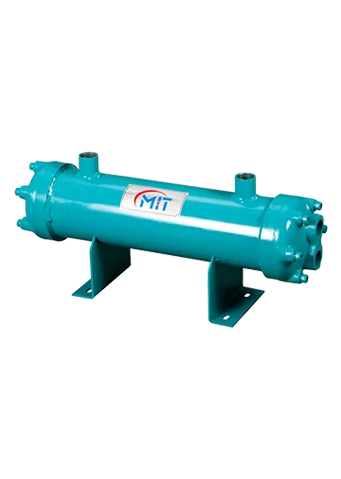
Tubular heat exchangers are heat exchanger systems frequently preferred on an industrial scale that enable heat transfer between two fluids at different temperatures without physical contact. Basically, these systems, where the energy of two different fluids, one hot and the other cold, is transferred to each other, stand out with their high heat transfer efficiency and durability features.
Tubular heat exchangers typically have a cylindrical outer body that can be positioned horizontally or vertically and tube bundles placed inside this body. These tubes are usually made of materials with high thermal conductivity (AISI 316L, titanium, copper-nickel, etc.) with a small diameter. While a fluid carrying heat passes through these tubes, the other fluid flows inside the body in contact with the outer surface of the tubes. Thus, the two fluids exchange heat over the surface of the tubes without mixing with each other.
This structure provides great advantages in terms of both safety and process integrity. Especially in cases where a fluid is contaminated (dirty, chemical, or toxic), preventing mixing is of critical importance. The design of tubular heat exchangers is configured in a dual-circuit and leak-proof structure to meet such process safety requirements.
Additionally, design parameters such as the arrangement (single-pass, multi-pass, U-tube), number, diameter, and length of the tubes can be easily customized according to application needs. This makes tubular heat exchangers ideal for both compact systems and large-scale energy and process lines.
Especially in high-pressure steam systems, processes involving aggressive chemicals, or applications targeting intensive heat recovery, tubular heat exchangers offer a much longer-lasting and safer solution compared to other types of exchangers.
In summary, tubular heat exchangers are strategic heat transfer equipment that increases energy efficiency and supports operational safety thanks to their robust structure, high pressure and temperature resistance, hygienic working principle, and wide adaptability range.
Structure Highlighted by Technical Advantages
Tubular heat exchangers are a prominent solution in heat transfer applications requiring durability, flexibility, and safety. Especially in heavy industrial processes, their ability to withstand challenging working conditions such as high pressure and temperature for a long time makes them more advantageous compared to other types of exchangers. Thanks to their engineering flexibility, they can be designed specifically for the needs of different sectors. To detail the technical advantages of tubular heat exchangers:
High Pressure and Temperature Resistance:
Tubular heat exchangers can be safely preferred in applications that push the limits of standard exchangers. For example, they can withstand system pressures up to 40 bar in steam lines and operating temperatures reaching 400 °C without any problems. This superiority ensures safe and uninterrupted operation, especially in processes under high thermal load such as chemical, energy production, and petrochemical facilities.
Modular and Flexible Design:
Every facility and process has different heat transfer needs. Tubular heat exchangers stand out with their ability to be shaped according to this need. Parameters such as tube diameter, number of tubes, tube arrangement (e.g., straight pass or U-tube), tube pitch, and pass number can be optimized according to user requirements. This modular structure provides great engineering advantages in both new system integrations and existing system improvements.
Easy Cleaning and Maintenance:
In sectors such as food, pharmaceuticals, and chemicals, the easy cleanability of the equipment's inner surfaces is of great importance. Tubular heat exchangers are suitable for mechanical cleaning methods (e.g., brush, water jet, or pig applications). Additionally, thanks to their removable flange structures, service times are shortened, maintenance costs are reduced, and hygiene standards are easily maintained.
Low and Stable Pressure Loss:
In systems where the fluid flows at high flow rates, pressure loss is a critical parameter. Tubular heat exchangers provide low pressure loss in both the primary and secondary circuits thanks to optimized flow channels and minimized internal resistance. This reduces pump energy consumption and increases system efficiency.
Resistance to Thermal Expansion:
In systems operating under constantly changing temperature conditions, thermal expansion can adversely affect equipment life. Expansion compensators and U-tube configurations used in tubular heat exchangers absorb mechanical stresses caused by temperature differences, maintaining structural strength. This feature provides a great advantage in processes where thermal shocks are frequently experienced.
Long-Lasting and Reliable Use:
The high-quality materials used in tubular heat exchangers – such as AISI 316L, titanium, copper-nickel alloys – provide superior protection against chemical effects and extend the system's life against corrosion and wear. Thus, with low maintenance needs and high durability, the total cost of ownership (TCO) is minimized.
High Heat Transfer Surface:
Thanks to the expandable structure of the tube bundles, a wide heat transfer area can be created. This allows for higher heat transfer capacity within a more compact body. It offers a solution without compromising performance, especially in applications where space is limited.
In conclusion, the technical advantages offered by tubular heat exchangers increase both process safety and energy efficiency while providing a user-friendly structure that offers a long-term and sustainable investment opportunity. The tubular heat exchanger solutions developed with Ekin Industrial's engineering expertise ensure maximum performance and minimal maintenance needs even under challenging process conditions.
Applications
Thanks to their durable structure, high heat transfer capacity, and design flexibility, tubular heat exchangers are safely used in a wide variety of industrial, commercial, and residential applications. With their high temperature and pressure resistance, they offer stable and long-lasting performance even under challenging process conditions. This versatile structure makes tubular heat exchangers an indispensable solution in both heavy industrial applications and individual heating-cooling systems.
As Ekin Industrial, we customize tubular heat exchanger technology according to sector-based needs and develop engineering solutions for different fluid structures, process temperatures, and installation areas. We can examine the application areas under two main headings:
Chemical and Petrochemical Plants:
In systems containing corrosive fluids such as acids, bases, and solvents, high temperature and chemical resistance are required. When produced with special materials such as stainless steel and titanium, tubular heat exchangers can work safely under these challenging conditions. They are ideal for processes such as reaction temperature control, solvent recovery, and energy optimization.
Steam Boilers and Condensate Systems:
In steam systems, tubular heat exchangers play a role in both condensing steam and utilizing condensate water. They contribute to energy recovery by increasing condensation efficiency. Additionally, thanks to their high-pressure-resistant structures, they offer a safe solution.
Engine, Turbine, and Generator Cooling:
Industrial engines and turbines generate intense thermal energy during operation. The removal of this energy is critical for the efficient operation of the system and the prevention of overheating-related failures. Tubular heat exchangers are a reliable cooling solution in these applications.
Oil Cooling Systems:
In hydraulic systems, compressors, and gearboxes, it is necessary to keep the temperature of the oils used under control. Tubular heat exchangers balance the temperature of the oil in these systems, extending equipment life and preventing performance losses.
Waste Heat Recovery:
Waste heat emitted from factory chimneys, cooling towers, or process outlets can be reused in other systems with tubular heat exchangers. This increases energy efficiency, reduces operating costs, and minimizes environmental impact.
Pool Heating Systems:
Especially in hotels, sports complexes, and villa-type residences, it is important to provide a constant and controlled temperature in swimming pools. Tubular heat exchangers provide a hygienic and safe solution by transferring heat without contacting the pool water with hot water from solar energy systems or boilers.
Underfloor Heating Systems:
For a comfortable indoor temperature, a constant flow of water at low temperature is required in underfloor heating systems. Tubular heat exchangers are an ideal tool for integrating water from boiler or boiler systems into the underfloor heating circuit.
Domestic Water Heating:
Tubular heat exchangers can be used to obtain hot water for domestic use, such as tap water, in buildings. They are one of the preferred solutions, especially in central hot water systems, in terms of maintaining hygiene and thermal efficiency.
Solar Energy Hot Water Systems:
It is not desired for the fluid heated in solar collectors to mix with the water used in the house. Tubular heat exchangers provide heat transfer between circuits here, increasing energy efficiency and ensuring system safety.
Geothermal Heat Pumps:
Tubular heat exchangers are of great importance for integrating low-temperature geothermal fluids from underground into systems to be used in buildings. In these systems, while heat exchange is provided between geothermal water and domestic water, the physical mixing of the two fluids is prevented.
The Key to Sectoral Flexibility
The most fundamental factor that allows tubular heat exchangers to be widely preferred in dozens of different sectors is their design flexibility and high engineering adaptability. This type of exchanger can be designed not for a specific application but to be shaped according to the needs of various sectors. In this respect, tubular heat exchangers offer an ideal infrastructure for businesses that do not settle for standardized solutions and seek special performance for their processes.
The main factors that enable this sectoral adaptability are:
Wide Range of Materials:
Tubular heat exchangers can be produced with a wide variety of materials such as stainless steel (AISI 304, 316L), titanium, copper, copper-nickel, carbon steel, making them safe to use in both aggressive chemical environments and hygienic food processes. This diversity adapts to the specific corrosion and hygiene requirements of different sectors such as chemical, food, pharmaceuticals, petrochemicals, and maritime.
Design Customization Capability:
Each process has different fluid types, temperature ranges, pressure values, and installation areas. The ability to customize parameters such as tube diameter, number of passes, tube length, baffle structure, and body geometry according to the application extends the use of tubular heat exchangers from small-scale HVAC systems to massive energy plants.
High Mechanical Strength:
With its structure capable of withstanding pressures of 40 bar and above and temperatures up to 400 °C, tubular heat exchangers can operate without performance loss for a long time even under extremely challenging conditions. Its high tolerance to thermal expansion, vibration, and pressure fluctuations makes it a reliable solution in heavy industrial applications.
Thus, tubular heat exchangers have become a versatile engineering product that can be shaped according to the unique needs of different sectors, not just a specific sector.
Chemical and Petrochemical: Long-lasting solutions with the use of special alloy materials in the transfer of high-temperature, corrosive chemicals.
Food and Beverage Industry: Heat exchange suitable for food safety with hygienic tube structure and smooth welding details.
Energy Plants: Special designs resistant to high pressure and temperature in steam production and waste heat recovery applications.
Maritime and Ship Machinery: Engine and generator cooling with titanium and copper-nickel alloy exchangers resistant to saltwater.
Heating-Cooling and HVAC Systems: Use in both commercial and residential projects with high-efficiency solutions in a compact structure.
As Ekin Industrial, we produce solutions tailored to the needs of each customer, regardless of the sector, analyzing application requirements on-site and offering the most accurate tubular heat exchanger system with engineering support. We manage all processes in an integrated manner, from material supply to production, testing to installation, and after-sales support, being with you at every stage of your project.
Whether you need an exchanger that provides safe production under hygienic conditions or a system carrying high-temperature heavy chemicals – the tubular heat exchanger solutions designed with Ekin Industrial's experience continue to create value specific to each sector.
Design Criteria and Material Selection
The operational efficiency, durability, and safety of tubular heat exchangers depend entirely on accurate engineering calculations and appropriate material selections. Since each application has different fluid characteristics, temperature ranges, pressure levels, and installation conditions, tubular heat exchangers should not be "one-size-fits-all" but designed specifically for the application. As Ekin Industrial, we conduct calculation and production processes specific to each project in line with this principle.
The main criteria to consider in the design of tubular heat exchangers are as follows:
Tube Arrangement (Geometry and Number of Passes): One of the most important determinants of heat transfer performance is the arrangement of the tubes. Generally, three different configurations are preferred in tubular heat exchangers:
Straight Tube: Easy to clean and maintain. Preferred in systems with low fouling risk and requiring easy access.
U-tube: The most durable structure against thermal expansions. Eliminates the need for expansion compensators and offers long-lasting solutions, especially in systems with high temperature differences.
Multi-pass: Allows the fluid to circulate over the same surface multiple times, achieving a higher heat transfer coefficient. Ideal for high performance in compact systems.
Additionally, parameters such as tube diameter, tube length, tube pitch, and tube axis arrangement (circular, square, triangular) are determined through calculations and optimized for both heat transfer and pressure loss.
Tube Material (Selection Based on Fluid Characteristics): The tube material directly affects the life and chemical resistance of the exchanger. Incorrect material selection can lead to system failures such as corrosion, cracking, and leakage. Therefore, the following materials are preferred based on the physical and chemical properties of the fluid:
AISI 304: A type of stainless steel suitable for general-purpose use with limited resistance to rust.
AISI 316L: The risk of corrosion after welding is reduced thanks to its low carbon content. Offers high resistance to seawater, chlorinated water, and chemical fluids.
Titanium: Provides exceptional resistance in acidic and high-chlorine-containing fluids. Used in the chemical and maritime sectors.
Copper-Nickel Alloys: Preferred in applications requiring seawater, saltwater, and high thermal conductivity.
In material selection, working temperature, fluid viscosity, pH value, particle content, and abrasiveness should also be considered.
Baffle Plates (Baffle Structure): Baffle plates direct the fluid on the shell side to circulate turbulently around the tubes, not just in a straight direction. This way:
• Contact with the heat transfer surface increases,
• Laminar flow is prevented,
• The heat transfer coefficient is significantly increased.
The spacing, shape (full baffle, segmental baffle, disk and donut type), and direction of the baffle plates are designed according to the temperature and pressure of the fluid. However, as the number of baffles increases, pressure loss also increases, so an engineering balance must be maintained.
Flanges, Nozzles, and Connection Elements
For the exchanger to be correctly integrated into the system, the placement and type of inlet-outlet connection points (nozzles) are of great importance. The following features are considered to be compatible with process piping:
• Flange Type: Weld neck, flat face, raised face, or threaded flanges are selected according to system pressure.
• Connection Direction: The direction of the nozzles is optimized according to horizontal or vertical installation.
• Gasket and Sealing Elements: Sealing is provided with PTFE, graphite, or metal gaskets. These elements are determined according to the working temperature and the chemical structure of the fluid.
Ekin Industrial designs and manufactures its tubular heat exchangers considering all these details for both system safety and maximum efficiency. Upon special customer requests, production can be certified according to either ASME or EN standards.
Tubular Heat Exchanger vs. Plate Heat Exchanger Comparison
| Feature |
Tubular Heat Exchanger |
Plate Heat Exchanger |
| Pressure Resistance |
40 bar and above |
Between 10–25 bar |
| Temperature Resistance |
Up to 400 °C |
Usually up to 180 °C |
| Cleaning |
Mechanical cleaning possible |
Requires chemical cleaning |
| Suitability for Dirty Fluids |
High |
Low |
| Space Requirement |
More |
Less |
| Initial Investment Cost |
Relatively high |
Lower |
| Maintenance Frequency |
Less frequent |
More frequent |
| Customization Flexibility |
High |
Limited |
Ekin Industrial's Tubular Heat Exchanger Solutions
Tubular heat exchangers are critical equipment that responds to the ever-increasing need for efficiency and durability in industrial facilities. As Ekin Industrial, we offer long-lasting and high-efficiency tubular heat exchanger solutions designed specifically for the needs of various industrial processes. With our engineering expertise and modern production infrastructure, we develop products that fully meet project-specific technical requirements and comply with national and international standards.
The tubular heat exchangers produced by Ekin Industrial are designed and tested according to the following criteria:
• Compliance with ASME Sec VIII Div 1 and EN 13445 norms
• Production processes linked to the ISO 9001 quality management system
• CE-certified product range in compliance with PED directives
• Technical calculation reports and schematic drawings specific to each project
• After-sales technical support and spare parts supply covering post-installation
Our exchangers ensure safe heat transfer of liquid and gas fluids without physical contact, using tubes. Their compact structures, high heat transfer efficiencies, and various design alternatives can be adapted to different environments.
Our tubular heat exchangers:
• Can be designed horizontally or vertically,
• Offer different tube geometries, material alternatives, and capacity configurations,
• Can be produced with special materials such as stainless steel or titanium for hygienic applications,
• Can be used under strict supervision in the food, chemical, and energy sectors.
Thanks to our custom production capability, each exchanger is designed specifically for the relevant process, schematic drawings are made in a CAD environment, and production is started after the manufacturing drawings are approved. Then, they are subjected to leakage and pressure resistance tests and made available for use, and energy loss is minimized with insulation applications upon request.
Our tubular exchangers customized for hygienic applications have a temperature resistance of up to 350 °C and use precision welding technologies to provide smooth flow on their inner surfaces. The production process is carried out under the supervision of certified welders and expert engineers with a three-layer control system.
Additionally, pool exchangers developed under the MIT brand are designed to work integrated with solar or boiler systems, preventing substances like chlorine from damaging the system. Thanks to their spiral and finned tube designs, they provide much higher efficiency compared to traditional types. They are suitable for various projects with a capacity range of 15 kW to 1750 kW.
Finally, our BYS and MOR series oil cooler tubular exchangers offer high-efficiency solutions in different industrial motor and hydraulic systems with their cast cover structure, finned inner tubes, and various flow options.
As Ekin Industrial, our aim is to bring tubular heat exchanger solutions that provide maximum performance, minimum energy loss, and long life under all conditions to the sector.
Conclusion and Evaluation
Tubular heat exchangers are not just equipment for businesses seeking reliability, efficiency, and sustainability in industrial applications; they are also a strategic investment tool. Thanks to their high performance, long-lasting use, and system safety, they play a key role in solving many challenges faced by modern industry. Especially in the face of complex needs such as high temperature, high pressure, corrosive environments, viscous fluids, or frequently changing process conditions, tubular heat exchangers ensure the continuity of processes with their superior durability features.
Energy efficiency and process stability are of great importance in today's industry not only in terms of cost advantage but also in terms of environmental sustainability and operational safety. The fact that tubular heat exchangers work seamlessly and with high efficiency in many different sectors, from chemical and petrochemical plants to energy production plants, from waste heat recovery systems to food processing lines, is proof of how critical a role these devices play.
At Ekin Industrial, we aim for much more than offering standard products. We evaluate the unique needs of each facility, each process, and each business with engineering precision; we develop the most suitable solution for your process by considering all the parameters of the system together. We stand by you with our expert team at all stages, including material selection, tube geometry, connection details, capacity calculations, and post-installation support.
Every tubular heat exchanger we produce is planned not only to meet today's needs but also to comply with the sustainable production standards of the future. Thanks to our engineering infrastructure, quality control processes, project management discipline, and customer-oriented service approach, we aim to establish long-term solution partnerships.
If you are looking for a safe, flexible, and energy-efficient heat transfer solution for your business, we can implement a tubular heat exchanger system designed specifically for your process together with our expert engineering team. With our products developed in accordance with high-quality standards, you can optimize your production processes, reduce your maintenance costs, and increase your competitive advantage.
Contact us for detailed information, to request an engineering evaluation specific to your system, or to initiate the offer process. As Ekin Industrial, we are ready to produce the right solution that will add value to your process together.