Use of Blowers in the Food Industry
The food industry is one of the production areas with the highest hygiene standards. Therefore, it is crucial that all equipment used in processes is both reliable and cleanable. Blowers play an active role in many critical steps such as air transportation, drying, cooling, air blowing, and vacuum processes in food production facilities. Blowers that operate on a oil-free principle convey air without contamination, making them particularly preferred in applications requiring hygiene.
One of the most common uses of blowers in the food sector is in product transportation and drying processes. In fruit and vegetable washing lines, high-flow air blowing helps remove excess water from the products. In bottle and package drying systems, blowers quickly eliminate moisture on surfaces, enhancing packaging quality and labeling performance. Similarly, in pneumatic transport lines for products like granulated sugar, flour, or cocoa, blowers ensure that raw materials are conveyed to production stages without contamination.
Blowers are also used to create vacuum in food processing machines, stabilize products, shape them, or remove air during packaging. These features significantly enhance operational efficiency, especially in automatic filling and packaging lines. Their energy-saving designs and low maintenance requirements make blowers a long-term and reliable solution for food manufacturers.
In the food sector, where hygiene, safety, and uninterrupted production are paramount, blowers support critical processes with their durable structure, oil-free air production, high efficiency, and quiet operation. They offer a wide range of applications from fruit and vegetable processing lines to beverage production, and from post-packaging drying systems to pneumatic transport lines. Thanks to these features, blowers are one of the indispensable equipment that elevate the efficiency and quality standards of the food industry.
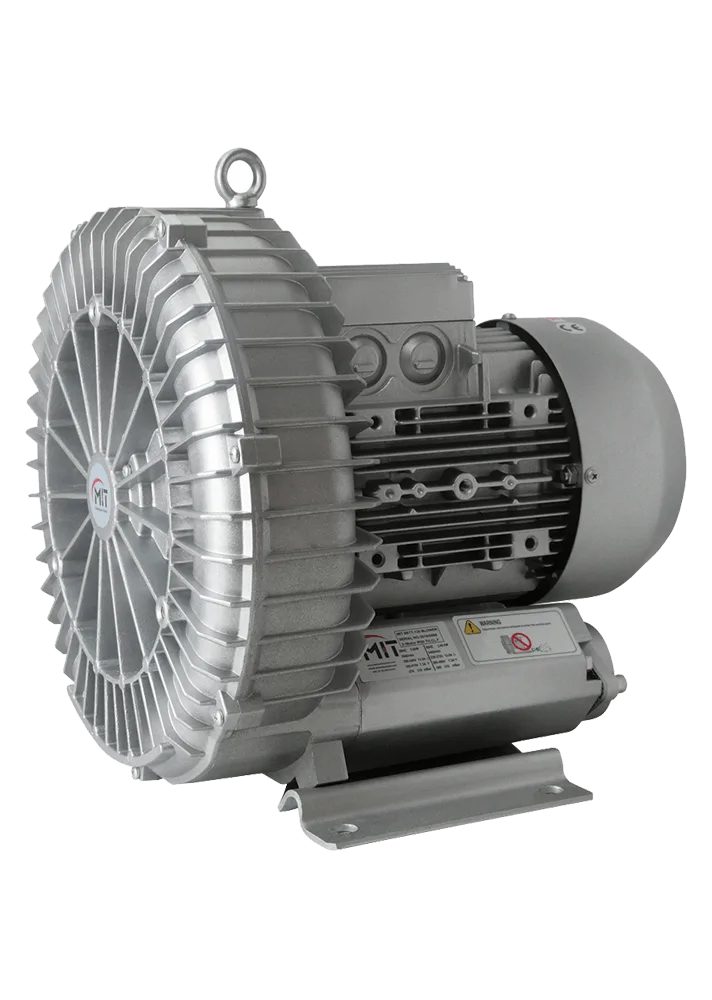
Blower Solutions in the Automotive Sector
The automotive sector is among the industries where production lines must operate continuously and processes must be carried out with high precision. Therefore, it is crucial that the equipment used is durable, efficient, and capable of providing consistent performance. Blowers play a critical role in automotive production processes for tasks such as controlling airflow, creating vacuum, cooling, drying, and particle removal.
In production lines, blowers are used to ensure clean airflow, especially during painting and coating processes. High-flow air helps remove dust and particles from surfaces, thereby improving coating quality. Additionally, the controlled airflow generated in drying booths ensures that the paint layer dries uniformly and prevents surface defects.
In assembly lines, blowers are also preferred for vacuum lifting and stabilization processes in various machines and automation systems. The vacuum created during the positioning of parts offers significant advantages in terms of occupational safety and process precision. Moreover, in cooling processes for motors and metal parts operating at high temperatures, blowers prevent overheating by providing rapid airflow to critical areas, thus extending equipment life.
Blowers are also effectively used in the automotive sector for the removal of harmful gases, maintaining air quality in workshop environments, and the controlled discharge of exhaust gases. Energy efficiency, low maintenance needs, and long service life make blowers an ideal solution for manufacturers in the automotive industry.
In conclusion, blowers are equipment that enhance production quality, optimize energy use, and support process safety at many stages of the automotive sector, from painting lines to assembly, cooling processes to vacuum applications. This versatile range of applications makes blowers an indispensable part of the automotive industry.
Use of Blowers in Marine Applications
The maritime sector is an area where harsh environmental conditions prevail, and the durability of equipment and long-lasting solutions are of great importance. Saltwater, high humidity, vibration, and the need for continuous operation require that all machines used are specially selected. Blowers ensure the reliable execution of many critical processes such as air transportation, gas discharge, cooling, and vacuum applications in this challenging environment.
One of the most common uses of blowers on ships is for engine room ventilation. Temperatures in engine rooms can rise rapidly, affecting both equipment performance and operational safety. Blowers help maintain temperature control by providing a continuous supply of fresh air to the engine room. They also play an active role in removing exhaust gases and harmful particles from the environment.
In maritime applications, blowers are also commonly used in cooling systems and HVAC applications. The high-efficiency airflow provided by blowers is critical for climate control in living spaces on the ship, supporting cooling systems and cleaning the air. This enhances both comfort and energy efficiency.
On cargo ships, container ships, and fishing boats, blowers are used in gas removal and ventilation processes. Tasks such as ventilating fuel tanks, preventing odor and gas buildup in holds, and ensuring fresh air circulation are safely carried out with the high-flow performance of blowers.
Blowers are also used in wastewater and treatment systems, particularly for air supply in onboard gray water and black water treatment units. Their oil-free operation features provide clean and reliable air that meets maritime standards.
In conclusion, blowers have a wide range of applications in the maritime sector, from ventilation to cooling, gas discharge to treatment systems. Their durable structures, long service lives, and high energy efficiency contribute to the reliable, uninterrupted, and efficient operation of ship operations.
The Role of Blowers in HVAC Systems
HVAC (Heating, Ventilation and Air Conditioning) systems are structures that are critical for comfort and energy efficiency, encompassing heating, cooling, ventilation, and air conditioning processes. Proper management of air flow in these systems requires reliable equipment to maintain ambient temperature and improve indoor air quality. Blowers are central to HVAC systems, providing high-efficiency air flow and directly affecting system performance.
Blowers are primarily used in HVAC applications for air circulation and fresh air supply. The continuous air flow generated by blowers in air conditioning and ventilation devices allows for the renewal of ambient air by passing through filters. This makes it possible to reduce dust, particles, odors, and harmful gases in the environment. Additionally, blowers help distribute the air produced by heating and cooling units evenly throughout the entire indoor space.
Another critical aspect of HVAC systems is energy efficiency. High-performance blowers significantly reduce climate control costs by providing high flow rates with low energy consumption. Thanks to their quiet operation, they offer ideal solutions in areas sensitive to noise, such as office buildings, hotels, shopping centers, and residential projects.
Moreover, blowers play an effective role in heat recovery systems. By recovering the heat from exhaust air, these systems increase energy efficiency, and blowers are one of the most important components. The right blower selection enhances system efficiency and ensures long-term operation without requiring maintenance.
In the HVAC industry, blowers are used in fresh air units, air conditioning plants, air curtains, ducted air conditioning systems, and central ventilation installations. With high flow rates, low pressure loss, quiet operation, and long-lasting structural features, they have become an indispensable component in the climate control needs of modern buildings.
In conclusion, blowers are essential equipment that regulate air circulation in HVAC systems, ensure indoor comfort, and optimize energy consumption. The correct selection of blowers is of great importance for a sustainable, efficient, and comfortable climate control system.
Use of Blowers in the Petrochemical and Pharmaceutical Industry
The petrochemical and pharmaceutical industries are sectors that require high precision and involve the intensive use of aggressive chemicals and corrosive gases. Therefore, the durability, safety, and performance of the equipment used in processes are extremely important. Blowers are one of the essential pieces of equipment that ensure the safe management of air and gas flow in these two critical sectors, thereby enhancing production efficiency and process reliability.
One of the most important tasks of blowers in petrochemical facilities is the evacuation of hazardous gases and process ventilation. Gas accumulations that can occur in refineries, storage tanks, chemical reactors, and pipelines can pose risks to both facility safety and worker health. Blowers minimize the risk of fire and explosion by enabling the controlled removal of these gases with high flow rates of air.
Additionally, blowers are actively used in many applications in petrochemical processes, such as pneumatic transport of raw materials, filtration of flammable and corrosive gases, flue gas treatment, and neutralization of waste gases. Thanks to their corrosion-resistant body structures and oil-free air production, they provide reliable performance in chemical environments for extended periods.
In the pharmaceutical industry, the use of blowers is more focused on clean room ventilation, product drying, and vacuum applications. Since the amount of particles in production areas must be kept to a minimum, blowers work in conjunction with filtration systems to help maintain high hygiene standards. The controlled air flow provided by blowers in tablet production lines, capsule filling machines, and drying tunnels not only improves product quality but also supports the stable operation of production processes.
The oil-free air production of blowers used in the pharmaceutical industry provides a critical advantage by eliminating contamination risks. Blowers are also utilized in tasks such as cooling sensitive equipment in processes, transporting products without damage in vacuum transport systems, and disposing of excess air generated during packaging.
In conclusion, blowers provide safe air management, gas evacuation, and resistance to aggressive chemical environments in the petrochemical sector, while contributing to hygiene, precise air flow, and controlled production processes in the pharmaceutical sector. In both industries, blowers are indispensable equipment that enhance process safety, improve production quality, and support facility efficiency.
Applications of Blowers in the Metal Industry
The metal industry is one of the most challenging areas of industry due to high temperatures, intense particle formation, heavy working conditions, and the need for continuous production. Therefore, it is crucial that all equipment used in processes is durable, reliable, and long-lasting. Blowers play significant roles in critical stages such as managing air flow, cooling, drying, creating vacuum, and dust removal in metal processing processes.
One of the most common applications of blowers in the metal industry is cooling high-temperature processes. During processes such as casting, annealing, melting, and welding, metal surfaces become excessively hot. Blowers accelerate the cooling process by providing controlled air flow to these surfaces, helping produce products with more stable properties. They also enhance production quality by reducing the risk of deformation during cooling.
Another important application is dust and particle removal. Metal dust generated during cutting, grinding, sanding, and CNC operations poses risks to both worker health and machine lifespan. Blowers create a cleaner and safer working environment by removing these particles from the area with high flow rates of air. This feature provides a significant advantage, especially when combined with filtration systems.
Blowers are also used in pneumatic transport and vacuum lifting systems in the metal industry. Vacuum systems supported by blowers are preferred for transporting products quickly and without damage between production lines. This method increases efficiency and enhances job safety by minimizing operator errors.
In furnaces and heat treatment lines, blowers also play a critical role in supplying combustion air and ensuring the homogeneous distribution of heat. Proper air flow increases energy efficiency while combustion
optimizes its performance. Additionally, the high-performance airflow provided by blowers in chemical coating, metal surface cleaning, and drying tunnels shortens process times and improves cycle time in production.
As a result, blowers are high-durability and efficient equipment that meet the fundamental needs of the metal industry in many critical stages such as cooling, drying, dust removal, pneumatic conveying, and oven ventilation. They significantly enhance production quality, efficiency, and occupational safety with the reliable performance they offer against challenging production conditions.
Use of Blowers in Energy Production and Cogeneration Systems
Energy production is one of the critical industries that require high efficiency, continuous operation, and reliable airflow. Modern energy solutions such as cogeneration and trigeneration systems optimize resource use by simultaneously generating both electricity and heat. In these complex structures, air management, combustion efficiency, and system safety make blowers an indispensable component.
One of the most fundamental tasks of blowers in energy production is supplying combustion air. To ensure that natural gas, biogas, fuel oil, or other fuel types can burn efficiently, a correct and continuous airflow is required. While blowers provide controlled air to combustion chambers, they also enable combustion to occur in a stable, safe, and efficient manner. Insufficient airflow can lead to efficiency loss, while excessive airflow can cause unnecessary energy consumption, making blower selection critical during these processes.
In cogeneration systems, blowers are also used for tasks such as gas transfer, cooling, and exhaust gas management. The temperature must be kept under control for equipment such as turbines, generators, and heat exchangers to operate efficiently. Blower-supported cooling systems balance equipment temperature and minimize the risk of failure due to overheating. This ensures the uninterrupted operation of the system, guaranteeing continuity in energy production.
In biogas and similar applications, blowers are used to transport gas from storage tanks to process equipment. The safe transfer of gas, pressure balancing, and ensuring a stable flow play a critical role in facility performance. Blowers used in such environments must be corrosion-resistant, produce oil-free air, and be capable of operating for long periods without requiring maintenance.
In energy production facilities, blowers are also frequently preferred in filtration and emission control systems. Directing waste gases to filters, supplying air to neutralization systems, and controlling emissions in accordance with environmental regulations are made possible by the high flow rate and stable performance provided by blowers.
In conclusion, blowers are equipment that play a critical role in fundamental processes of energy production and cogeneration systems such as combustion efficiency, gas transfer, cooling, and emission control. With their high durability, energy efficiency, and ability to operate continuously, they enhance the performance of modern energy facilities, reduce operating costs, and elevate system reliability to the highest level.
Blower Solutions in the Textile Industry
The textile industry is a multi-stage and highly precise production area that ranges from yarn production to dyeing processes, finishing processes to drying lines. Proper management of airflow in each of these processes is of great importance for product quality and process efficiency. Blowers play a critical role in the textile sector with their ability to enhance production line performance and optimize energy use.
One of the most common applications of blowers in textile processes is drying and moisture control. High flow rates of air are required for the rapid and homogeneous drying of fabrics that have undergone dyeing, washing, or finishing processes. Blowers provide power to drying systems with hot or cold air, ensuring that moisture is evenly removed from the fabric. This not only improves product quality but also increases operational efficiency by shortening production time.
In finishing and printing processes, blowers help remove excess moisture or chemicals from the surface. Especially in cooling systems on textile machines, blowers reduce the risk of failure by balancing the temperature of motors and mechanical parts, thereby extending the life of the machines. Energy-saving models offer a cost advantage for factories with low operating costs.
Blowers are also heavily used in dust control and vacuum cleaning systems. In textile facilities, fibers, fluff, and fine particles tend to accumulate in production areas. These accumulations pose risks both in terms of quality problems and employee health. Blower-supported vacuum systems create a clean production area by removing these particles from the environment, ensuring that products are prepared under more hygienic conditions.
Another application of blowers in the textile sector is in air-blown conveying systems. Blowers are utilized to transport fibers, yarns, or lightweight textile products between lines. This method reduces product damage and provides speed and stability in production.
In conclusion, blowers are equipment that offer high efficiency, provide energy savings, and enhance process quality in fundamental operations of the textile industry such as drying, cooling, cleaning, conveying, and moisture control. The use of blowers has become indispensable for maintaining production continuity and raising product standards in modern textile facilities.
Use of Blowers in Packaging and Filling Lines
Packaging and filling lines are critical processes in production facilities that require speed, precision, and hygiene. For maintaining packaging quality, accurately filling products, and increasing line efficiency, equipment must operate at high performance. Blowers are among the important components that manage airflow and directly affect production quality in packaging and filling machines.
One of the most common applications of blowers in these processes is the drying of bottles, boxes, and packaging. Water droplets remaining on packaging surfaces before and after filling can negatively affect label adhesion, cap sealing performance, and product appearance. Blowers remove moisture from surfaces within seconds by providing high flow rates of air. This rapid drying increases line efficiency while also improving the product's appearance on the sales shelf.
Blowers play a critical role in filling and packaging lines, especially in vacuum applications. Blower-assisted vacuum systems are used during packaging opening, foil separation, or product transfer. This mechanism facilitates the positioning of packages on the line, speeds up the filling process, and prevents damage to the products.
In packaging machines, blowers are also used for dust removal and cleaning purposes. A powerful air blowing mechanism is required to remove dust and particles from the inner surface of the packaging before the product enters the package. This process is particularly important from a hygiene perspective in the food, pharmaceutical, and cosmetic industries.
Additionally, blower-assisted airflow optimizes product flow during filling and ensures more stable operation of the system. Especially on lines where granules, powders, or lightweight products are transported, blowers take on the role of pneumatic conveying, enabling products to reach the relevant sections quickly and safely.
Blower models that offer energy efficiency, low noise levels, and long service life support continuous operation on packaging and filling lines and reduce maintenance costs. Thanks to these features, blowers stand out as indispensable equipment that increases production capacity, improves quality, and ensures operational stability in automation lines.
In conclusion, blowers are an important technological solution that enhances both the efficiency and hygiene standards of packaging and filling lines at many stages, such as drying, vacuum creation, dust removal, pneumatic conveying, and internal packaging cleaning.
Use of Blowers in Waste Management and Treatment Facilities
Waste management and water treatment facilities form the most critical infrastructures in terms of environmental sustainability. Many stages in these facilities, such as oxygenation of wastewater, sludge mixing, gas discharge, and biological treatment processes, require controlled airflow. Blowers are one of the essential pieces of equipment that ensure these processes are carried out efficiently, stably, and continuously.
The most common application of blowers in treatment facilities is air supply to biological treatment tanks. Oxygen is necessary for microorganisms to break down organic matter in wastewater. Blowers support the life of microorganisms by sending high-flow and continuous air to these tanks, thereby increasing the effectiveness of biological treatment. The provided dense and homogeneous airflow ensures that the dissolved oxygen level is maintained within the ideal range and directly affects the treatment performance.
In wastewater facilities, blowers also play an important role in sludge mixing and aeration processes. This process ensures that the sludge remains homogeneous, prevents sedimentation, and maintains process stability. The use of energy-efficient blowers reduces the operational costs of the facilities while increasing treatment capacity.
Gas discharge and odor control are another area where blowers stand out. Blower-assisted aeration systems are used to remove harmful gases such as methane and hydrogen sulfide that accumulate in wastewater tanks. This not only increases workplace safety but also prevents the formation of odors.
In solid waste management, blowers actively participate in compost aeration systems, gas collection lines in landfills, and filtration systems. Especially during the composting process, blowers enhance compost quality by ensuring that organic waste decomposes at the correct temperature and oxygen level.
The stable performance of blowers in the automation and control systems of treatment facilities is of critical importance. Blowers that offer long-lasting bearing structures, oil-free air production, and low maintenance needs allow facilities to operate continuously 24/7 and increase operational efficiency.
In conclusion, blowers are energy-saving and reliable equipment that provide high performance in many critical processes such as wastewater treatment, biological aeration, gas discharge, compost management, and sludge mixing. They make significant contributions to the safe and sustainable operation of waste management and treatment facilities in compliance with environmental regulations.