Equipment used in the food industry must meet high standards in terms of hygiene, product safety, and process continuity. In this regard, lobe pumps are among the most preferred hygienic pump solutions in food production processes due to their positive displacement structures. The fact that all surfaces in contact with the product are made of stainless steel provides a critical advantage for food safety.
Since lobe pumps operate with low shear force, they do not alter the structure of the fluid. This feature is particularly important in the food sector. The transfer is carried out while preserving the consistency, homogeneity, and natural structure of the product. Delicate products such as cream, yogurt, fruit puree, sauces, and similar items can be safely transported between production lines without deformation thanks to lobe pumps.
Hygienic design is one of the main reasons lobe pumps stand out in food applications. Thanks to smooth surfaces, a body structure that does not create dead spots, and easily disassembled parts, cleaning processes can be performed quickly and effectively. Their compatibility with CIP (cleaning in place) systems minimizes production downtime and increases operational efficiency.
There are many products with different viscosity values in food production. Lobe pumps provide stable performance in the transfer of medium and high viscosity fluids. They can be used across a wide range of products, from dense items like jam, honey, and molasses to low viscosity fluids like milk and beverages. The positive displacement working principle enhances process safety by providing a constant and controlled flow rate.
Moreover, reliability is as important as hygiene in the food sector. The quiet operation of lobe pumps, their vibration-free structure, and long-lasting mechanical components offer the advantage of uninterrupted operation on production lines. Mechanical seals and cartridge seals with washing options ensure leak-proof operation, especially in sugary and sticky products.
In conclusion, lobe pumps are ideal pump solutions that provide hygiene, product quality, and process efficiency in the food industry. Their structure compliant with food safety standards, wide range of applications, and ease of maintenance make them indispensable equipment in modern production facilities.
Lobe Pumps in Milk and Dairy Product Production
The production of milk and dairy products is among the processes where hygiene and product integrity are most critical. Equipment used in the transfer of products such as milk, yogurt, buttermilk, cream, clotted cream, and whey must comply with food regulations and be designed not to harm the product. Therefore, lobe pumps are among the most preferred types of pumps in the dairy industry.
Since lobe pumps operate with low shear force, they preserve the natural structure of dairy products. It is crucial, especially for thick products like yogurt and cream, that the product's curd structure remains intact and its homogeneity is maintained. Thanks to the working principle of lobe pumps, the product is safely transported along the process line without foaming or separation.
Hygienic design is essential in the production of milk and dairy products. The body, rotor, and shaft structure of lobe pumps made from AISI 316 stainless steel offer smooth surfaces that minimize bacterial retention. This feature enhances product safety and facilitates cleaning processes. Thanks to their compatibility with CIP systems, cleaning can be performed without disassembling the production line, providing significant time savings for businesses.
Different dairy products have varying viscosity and flow characteristics. Lobe pumps easily adapt to this variable structure. They provide stable flow across a wide range of products, from low viscosity fluids like milk and whey to thicker yogurt and cream. The positive displacement structure helps achieve a controlled and steady flow throughout the process.
Production continuity is also a critical factor in the dairy industry. The quiet and vibration-free operation of lobe pumps ensures comfort in the production environment and reduces equipment wear. Mechanical seals and washing seal options enhance leak-proof security, especially during long-term operations, minimizing maintenance needs.
In summary, lobe pumps provide hygiene, product quality, and process reliability in the production of milk and dairy products. Their ability to transfer without altering the product structure, ease of cleaning, and wide operational flexibility make them indispensable equipment in modern dairy processing facilities.
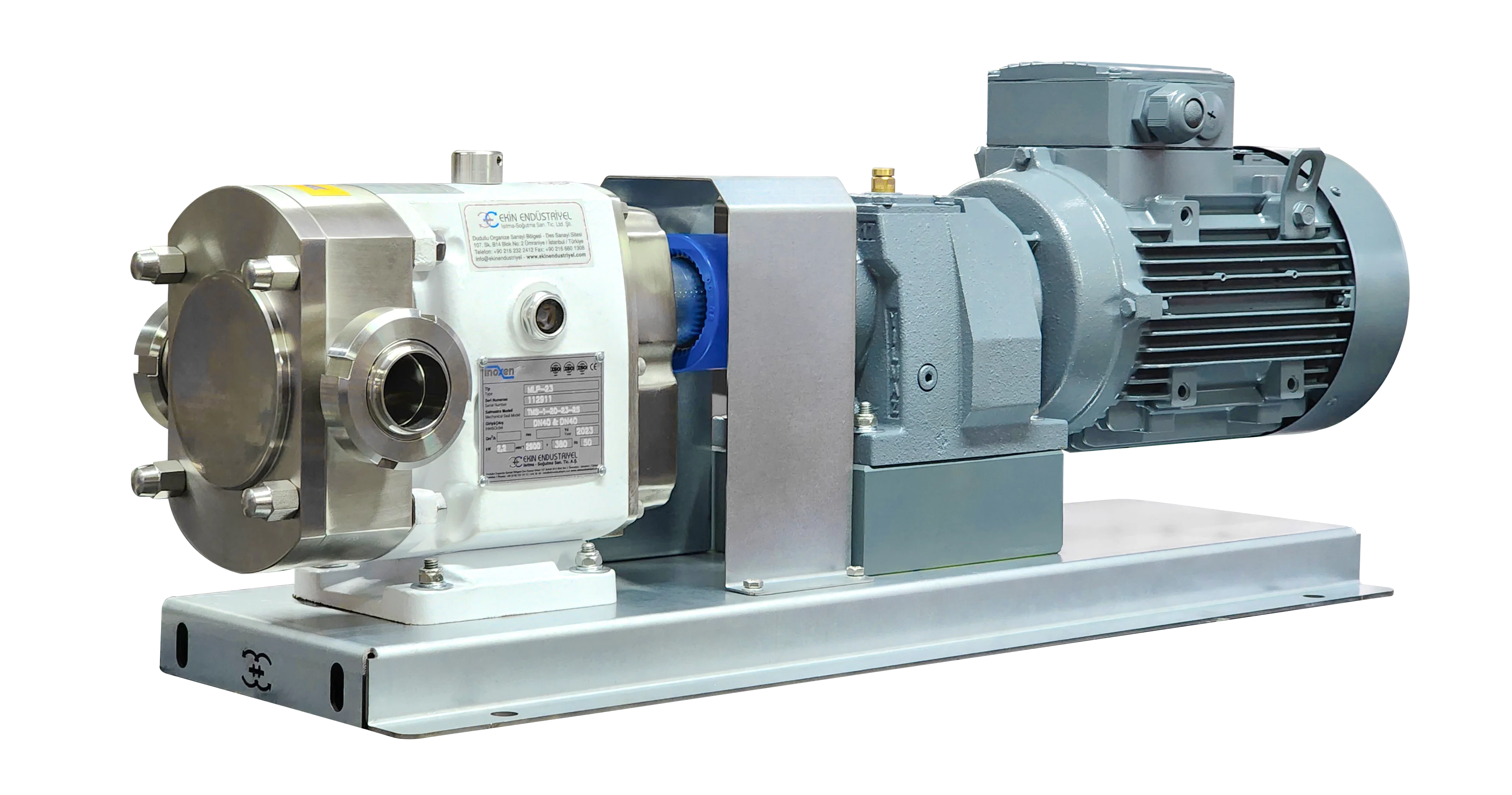
Lobe Pumps in Beverage and Fermented Product Processes
In the production processes of beverages and fermented products, being able to transfer while preserving the structure of the fluid is of great importance for product quality. Fruit juices, carbonated and non-carbonated beverages, beer, wine, kombucha, and similar fermented products may contain sensitive components, pulp, or natural sediments. In the production lines of such products, lobe pumps provide a reliable and efficient solution.
One of the most important advantages of lobe pumps is their ability to provide low pulsation and controlled flow. This feature minimizes foaming and product loss in beverage production. Especially in processes before or after carbonation, stable flow directly affects product quality. Beverages can be safely transferred without exposure to pressure fluctuations thanks to lobe pumps.
Natural sediments, yeast residues, or fruit particles found in fermented products can pose problems for some types of pumps. Lobe pumps can be used seamlessly in such applications due to their ability to transfer medium-sized solid particles without causing damage. The product is transported along the process line while maintaining its structure and preserving homogeneity.
Hygiene is an indispensable criterion in the production of beverages and fermented products. The body and surfaces in contact with the fluid of lobe pumps, made of stainless steel, are designed to meet hygienic requirements. The smooth surface structure and easily disassembled components speed up cleaning processes and reduce production downtime. Compatibility with CIP systems is one of the most significant advantages in this area.
As a result, lobe pumps provide a hygienic and reliable transfer solution that preserves product quality in beverage and fermented product processes. Due to their low shear force, solid particle handling capability, and process flexibility, they are widely preferred in modern beverage production facilities.
Candy, Jam, and High Viscosity Food Products
Fluid transfer in the production of candy, jam, honey, molasses, glucose, and similar high viscosity food products is often a challenging process for standard pump systems. These types of products require specially designed pump solutions due to their thick consistencies, sticky structures, and occasional solid particle content. Lobe pumps offer a reliable and efficient solution for transferring high viscosity food products thanks to their positive displacement design.
Lobe pumps provide a constant and controlled flow, minimally affected by viscosity changes. In products containing fruit pieces such as jam and marmalade, it is possible to transfer the pieces without crushing them and without altering the product's texture. Particularly, the two lobe rotor option is preferred in applications containing solid particles, contributing to the preservation of product integrity.
One of the most significant issues encountered with high viscosity products is the freezing or crystallization of the fluid inside the pump or along the line. In such applications, lobe pumps with heating jackets come into play. Thanks to the integrated heating jackets on the pump body and cover, the product is maintained at a specific temperature and progresses through the process without losing its fluidity. This situation preserves product quality and prevents potential mechanical damage to the pump.
Hygiene is of great importance in the production of candy and similar products. The fact that all surfaces of lobe pumps that come into contact with the fluid are made of AISI 316 stainless steel ensures compliance with food safety standards. The smooth surface structure minimizes the retention of sugary and sticky products within the pump. Thanks to the CIP-compatible design, cleaning processes can be carried out quickly and effectively.
Moreover, sealing is a critical issue in the transfer of such products. Mechanical seals and carbide seal options used for fluids like glucose, jam, and similar liquids minimize the risk of leakage, ensuring long-term and safe operation. Quiet operation and low vibration provide a comfortable working condition in the production environment.
In conclusion, lobe pumps are ideal pump solutions that preserve product quality in the production of candy and high viscosity food products, enhancing hygiene and process safety. With heating jacket options, solid particle handling capability, and ease of maintenance, they rank among the most effective transfer systems in this field.
Lobe Pump Applications in the Petrochemical Industry
The petrochemical industry has challenging process conditions that require high temperature, pressure, and chemical resistance. The fluids used in this sector can have different viscosities and properties, such as oils, additives, resins, and various chemical components. Lobe pumps provide a reliable transfer solution in petrochemical applications due to their robust mechanical structures and positive displacement operating principles.
One of the main reasons lobe pumps are preferred in the petrochemical sector is their ability to transfer high viscosity and dense fluids stably. They facilitate process control by providing a constant flow even in products with variable viscosity. This feature contributes to preserving product quality on production lines and ensuring process continuity.
Equipment durability is of great importance in petrochemical facilities. The gearboxes of lobe pumps made of cast iron and coated with epoxy paint show high resistance to harsh environmental conditions. Additionally, shafts, rotors, and pump bodies made of stainless steel offer long-lasting use against chemicals. This structure minimizes maintenance and failure risks.
Sealing is a critical issue in petrochemical applications. To safely transfer aggressive and high-temperature fluids, lobe pumps can be equipped with various mechanical seal options. This reduces the risk of leakage and increases operational safety. Double and flushed seal options are particularly preferred in challenging chemical processes. The ability of lobe pumps to operate bidirectionally provides operational flexibility in petrochemical facilities. The same pump can be used for both filling and emptying operations. Connection options such as side inlet-outlet or top inlet-bottom outlet adapt to different facility layouts and facilitate system design.
In conclusion, lobe pumps are effective pump solutions that offer reliable performance, high durability, and process continuity in the petrochemical industry. Their structure adapts to challenging working conditions, compatibility with high viscosity fluids, and long-lasting components make them widely used in petrochemical facilities.
Hygienic Pump Solutions in the Pharmaceutical and Cosmetic Sector
Production processes in the pharmaceutical and cosmetic sectors require high hygiene standards and precise product management. The products used in these sectors come in forms such as creams, gels, lotions, syrups, liquid medicines, and similar forms, where maintaining their physical structures and chemical stabilities is of great importance. Lobe pumps are safely preferred in these sensitive applications due to their hygienic design and low shear force operation.
Lobe pumps have the ability to transfer without damaging the product's structure and maintaining its homogeneity. Creams and gels used in the cosmetic sector are high viscosity and surface-sensitive products. Excessive shear forces that may occur during the transfer of these products can negatively affect product quality. Lobe pumps eliminate these risks by providing controlled and gentle flow.
In pharmaceutical and cosmetic production, hygiene is not limited to material selection; it also encompasses cleaning and sterilization processes. The smooth surface structure and body design of lobe pumps that do not create dead spots minimize bacterial formation. Thanks to their CIP-compatible structures, cleaning can be performed without disassembling the pump, supporting production continuity.
Sealing and safety are of great importance in these sectors. Lobe pumps, equipped with mechanical seals and wash-down cartridge seal options, minimize the risk of product loss and contamination. They ensure the safe transfer of sensitive and valuable products, especially used in pharmaceutical applications. Additionally, flexible and modular systems are required in pharmaceutical and cosmetic production facilities. Thanks to the different rotor options, connection types, and installation alternatives of lobe pumps, they can easily adapt to various process needs. The ability to operate in both directions offers operational advantages during filling and emptying processes.
As a result, lobe pumps are ideal pump solutions that provide hygiene, product quality, and process safety in the pharmaceutical and cosmetic industries. With low shear force, easy-to-clean design, and reliable sealing features, they have a wide range of applications in these sectors.
Use of Lobe Pumps in the Textile Industry
The production processes carried out in the textile industry require the controlled transfer of dyes, printing, finishing, and chemical auxiliaries. The fluids used in these processes often have viscous, abrasive, or temperature-controlled properties. Lobe pumps provide a reliable pumping solution in the textile industry thanks to their robust structures that adapt to these challenging conditions and their positive displacement working principles.
The accurate and homogeneous transfer of chemicals used in dyeing and printing processes directly affects product quality. Lobe pumps prevent color fluctuations and process errors by providing a constant and controlled flow. The low pulsation working principle prevents unwanted color variations on textile products. Another common requirement in the textile industry is temperature control. Some fluids used in finishing and chemical processing lines must be maintained within a specific temperature range. Lobe pumps with heating jackets ensure the fluid's temperature is maintained in such applications, providing process stability. This not only improves production quality but also prevents potential damage to the equipment.
Another reason for the preference of lobe pumps in the textile industry is their compatibility with abrasive and chemically aggressive fluids. Surfaces in contact with fluids made of stainless steel offer high resistance to chemicals. This structure extends the pump's service life while reducing maintenance and service costs. Continuity of production and energy efficiency are of great importance in textile facilities. Lobe pumps provide a comfortable working condition in the production environment due to their quiet and vibration-free operation. The advantage of easy installation and maintenance minimizes downtime, increasing efficiency.
In conclusion, lobe pumps are effective solutions that offer process safety, product quality, and energy efficiency in the textile industry. They are widely preferred in textile production facilities due to the stable flow and durable structure they provide in dyeing, printing, and finishing applications.
Precise Fluid Transfer in the Chemical Industry
The fluids used in the chemical industry can have different viscosity values, chemical compositions, and reaction sensitivities. Therefore, it is crucial to ensure that the fluid's structure is not compromised during transfer for process safety and product quality. Lobe pumps provide ideal solutions for precise fluid transfer in the chemical industry thanks to their controlled and low shear force working principles.
The positive displacement structure of lobe pumps facilitates flow control and ensures a stable flow throughout the process. Especially in precise chemical formulations, sudden pressure changes or irregular flow can negatively affect product quality. Lobe pumps minimize such risks with their low pulsation working features. Another common challenge in the chemical sector is working with aggressive and corrosive fluids. The surfaces of lobe pumps in contact with the fluid are made of stainless steel, providing high resistance to chemicals. This feature contributes to the pump's longevity while reducing maintenance needs. Additionally, different sealing options enhance sealing safety.
Temperature control is also a critical factor in chemical processes. Heating jacketed lobe pumps are preferred for fluids that need to be maintained within a specific temperature range. This way, viscosity changes of the fluid are controlled, and process stability is preserved. The heating jacket also eliminates the risk of freezing or solidification inside the pump. The ability of lobe pumps to operate in both directions provides operational flexibility in chemical facilities. It allows for filling, emptying, and return lines to be operated with a single pump. Different connection options and installation alternatives easily adapt to facility layouts and simplify system design.
In conclusion, lobe pumps are effective pump solutions that provide precise, safe, and controlled fluid transfer in the chemical industry. Their compatibility with aggressive chemicals, constant flow advantage, and design that supports process safety make them widely used in chemical facilities.
Waste and By-Product Transfer Applications
In industrial production facilities, the safe transfer of waste and by-products, in addition to the main production processes, is also of great importance. These fluids often have high viscosity, contain solid particles, or have a non-homogeneous structure. Lobe pumps offer an effective solution in waste and by-product applications due to their reliable performance in transferring fluids with these challenging characteristics.
One of the biggest problems encountered in the transfer of waste and by-products is that solid particles can damage the pump or cause irregular flow. Lobe pumps provide an advantage in such applications with their ability to transport medium-sized solid particles without causing damage. The operation of rotors without touching each other reduces wear inside the pump and preserves the structure of the fluid.
In such applications, the viscosity of the fluid can vary over time. The positive displacement structure of lobe pumps offers a constant and controlled flow, minimally affected by viscosity changes. This feature ensures the safe and predictable transportation of waste and by-products along the process line. Hygiene and cleanliness are also crucial aspects that should not be overlooked in waste transfer systems. Particularly in the transportation of by-products generated in food and chemical facilities, the ease of cleaning the pump provides a significant advantage. The smooth surface structure and CIP-compatible design of lobe pumps accelerate cleaning processes and support operational continuity.
Furthermore, durability is a priority in these applications. The robust body structure of lobe pumps, surfaces in contact with the fluid made of stainless steel, and reliable sealing options offer long-lasting and trouble-free use. The quiet and vibration-free operation feature provides a more comfortable working environment throughout the facility.
As a result, lobe pumps offer reliable, durable, and process-friendly solutions in waste and by-product transfer applications. Their ability to transport solid particles, compatibility with viscous fluids, and ease of maintenance make them an ideal pump option for such applications in industrial facilities.
Conclusion: The Importance of Lobe Pumps in Industrial Processes
Lobe pumps are among the versatile and reliable pump solutions that can adapt to the challenging process requirements in various sectors. The high performance they offer in food, dairy and dairy products, beverages, confectionery, petrochemicals, pharmaceuticals, cosmetics, textiles, chemicals, and waste transfer applications has made this type of pump indispensable equipment in modern industrial facilities.
Thanks to the positive displacement working principle, lobe pumps provide stable and controlled flow in the transfer of low, medium, and high viscosity fluids, supporting process continuity without altering the product structure. Low shear force, solid particle transport capability, and quiet operation features provide significant advantages, especially in sectors processing sensitive and high-value-added products.
Hygienic design is one of the most prominent features of lobe pumps. Surfaces in contact with the fluid made of stainless steel, easy-to-clean structure, and CIP compatibility offer safe usage in sectors where hygiene is critical, such as food, pharmaceuticals, and cosmetics. Additionally, various sealing, rotor, and heating jacket options allow for the development of tailored solutions for each application.
With their durable mechanical structure, flexible installation options, and bidirectional operation capability, lobe pumps provide high efficiency in both fixed facilities and mobile systems. The low maintenance requirement and long service life contribute to reducing operating costs, shortening the return on investment period. In conclusion, lobe pumps are a strategic pump solution that offers process safety, product quality, and operational efficiency together. When used with the right application and configuration, they provide sustainable and long-term performance advantages in industrial production processes.