Boiler, designed for heating and storing domestic water, is one of the most fundamental components of plumbing systems. It is used to safely and efficiently meet the hot water needs in buildings, industrial facilities, and projects of different scales. The basic working principle is to heat the water stored inside the boiler using energy received from a heat source through a coil and to transfer this hot water to the required points within the system. The coil is one of the most important components that efficiently transfers energy from the heat source to the water and directly affects the system's performance. This allows users to quickly and continuously access ready hot water without having to heat the water from scratch each time.
Boiler systems not only provide hot water for comfort purposes but also offer significant advantages in terms of energy efficiency, system performance, and sustainability. A correctly designed and appropriately sized boiler optimizes energy consumption and reduces operating costs. It also enhances comfort levels by ensuring that water is stored at a certain temperature and prevents temperature fluctuations. Thanks to these features, boilers play a critical role in a wide range of applications, from residential buildings to hotels, industrial facilities to healthcare structures.
With advancing manufacturing technologies, modern boilers are designed to be not only functional but also hygienic, durable, and long-lasting. The quality of materials used, internal coating technologies, and insulation features reduce the risk of corrosion, minimize heat losses, and lower maintenance costs. Thus, boilers offer high performance in daily use and provide reliable solutions for many years. Especially models that can work in harmony with renewable energy systems contribute to reducing environmental impacts by supporting sustainable energy use.
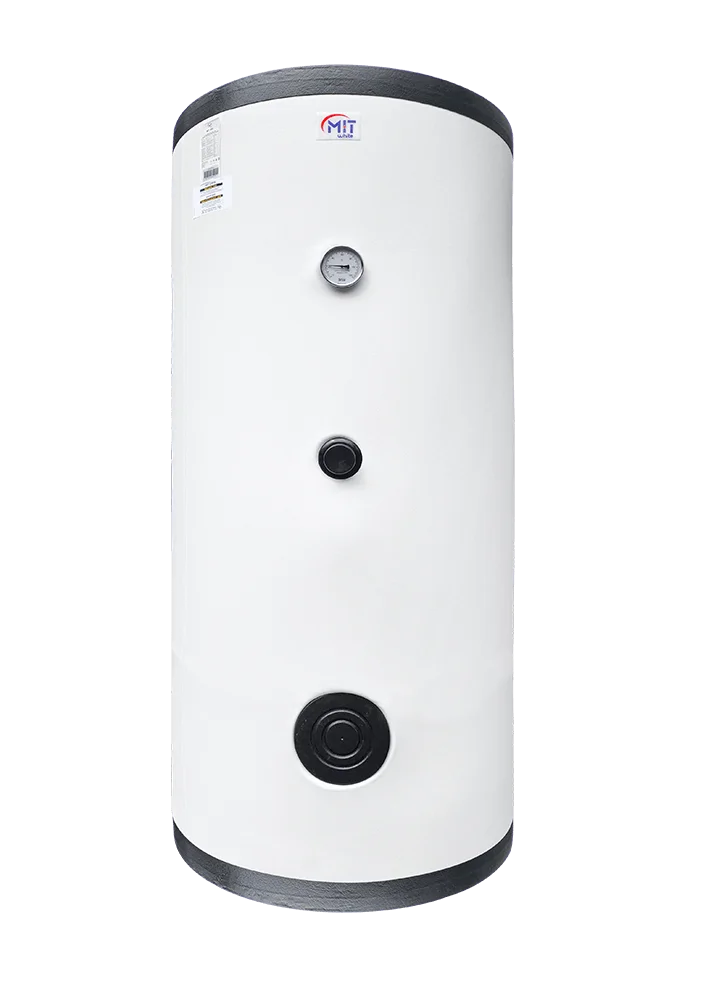
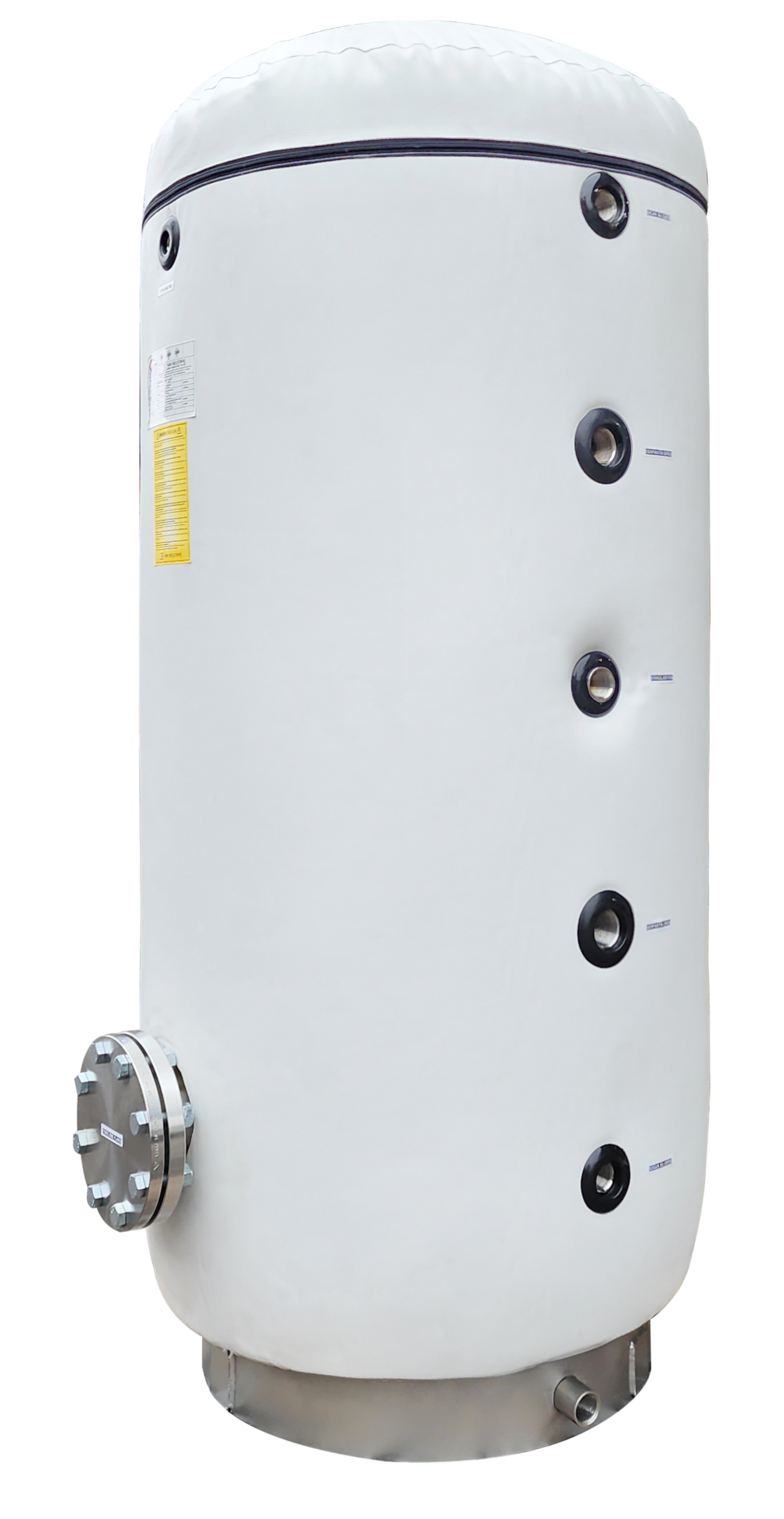
Boiler systems are produced in various models according to different usage scenarios, energy sources, and plumbing needs. Each type of boiler offers different advantages based on its structural features, heating method, and intended use. Choosing the right boiler is crucial for the efficient operation of the system, ensuring energy savings, and achieving long-lasting use. Among the most commonly used types of boilers today are single-coil boilers, double-coil boilers, electric boilers, epoxy-coated boilers, and enamel-coated boilers.
Single-Coil Boiler
Single-coil boilers are systems that contain one coil and heat the domestic water through this coil. The coil transfers the energy it receives from an external heat source to the water, providing hot water. These types of boilers, generally preferred in small and medium-sized structures, have a wide range of applications due to their compact design and easy installation. Produced in capacities ranging from 100 liters to 6000 liters, single-coil boilers offer reliable solutions with their high efficiency, hygienic structures, and 10-bar operating pressure. Details such as cathodic protection system, enamel coating, and high-density insulation ensure long-lasting and efficient use.
Double-Coil Boiler
As the name suggests, double-coil boilers contain two coils. This allows the boiler to receive energy from two different heat sources simultaneously. For example, one coil can be connected to a solar energy system while the other is connected to a boiler system. This structure provides a significant advantage, especially in terms of increasing energy efficiency and integrating renewable energy sources into the system. Double-coil boilers, produced in capacities ranging from 160 liters to 6000 liters, are widely used in industrial applications due to their structures resistant to high pressure and temperature. Hybrid solutions can be created by adding an electric resistance if desired.
Electric Boiler
Electric boilers heat water using resistors that operate with electrical energy instead of a coil. Equipped with stainless resistors and advanced control systems, these models have a fast and efficient water heating capacity. They take up less space compared to coil systems and are easier to install. They offer an ideal solution, especially in buildings where natural gas or central heating systems are not available. With a wide range of capacity options from 100 liters to 6000 liters, they meet different needs. Thanks to cathodic protection, double-layer hygienic enamel coating, and high insulation features, they provide long-lasting use.
Galvanized Coil Boiler
Galvanized coil boilers offer long-lasting and durable solutions thanks to the galvanizing of the coil inside them. Galvanized coating increases the coil's resistance to corrosion and ensures it maintains its performance even at high temperatures. These types of boilers are preferred especially in systems operating under high temperature and pressure. Due to their robust structures, they offer a wide range of applications from industrial facilities to residential applications. Galvanized coil boilers are an efficient alternative for projects seeking cost-effective and long-lasting solutions.
Stainless Boiler
Stainless boilers are models produced with both the inner body and the coil made of stainless steel. Thanks to the high corrosion resistance and durability of stainless steel, long-lasting, reliable, and low-maintenance systems are obtained. Their structures resistant to high temperature and pressure provide significant advantages, especially in industrial processes, areas where hygiene is prioritized, and projects requiring high performance. Additionally, stainless boilers maintain the quality of domestic water, offering efficient and safe operating performance for many years.
Epoxy-Coated Boiler
Epoxy-coated boilers gain high resistance to corrosion thanks to the coating of their inner surfaces with epoxy paint. This structure extends the life of the boilers while also contributing to maintaining the quality of domestic water. Since epoxy coating also reduces the production costs of boilers, it offers an economical solution. Therefore, epoxy-coated models are frequently preferred in projects seeking low-cost but long-lasting solutions.
Enamel-Coated Boiler
In enamel-coated boilers, the inner surfaces are coated with special enamel. Enamel coating creates a hygienic surface and provides a strong barrier against corrosion. This feature is especially important in areas such as residential, hotel, and food industry where hot water is required directly for human use. Enamel-coated boilers maintain their durability even at high temperatures and offer safe use for many years.
Production Details Ensuring the Longevity of MIT Boilers
The durability and service life of boilers depend not only on their designs but also on the materials used in production processes, the surface treatments applied, and the quality control steps. MIT branded boilers are manufactured in accordance with the highest production standards to provide long-lasting use, high performance, and hygienic hot water. Every detail is specially designed to ensure the reliable operation of the boiler for many years.
The sheet material used in MIT boilers is of critical importance for the product's durability. Therefore, in production, low-carbon Ereğli TRKK 6222 hot-rolled sheet suitable for enamel coating and cold forming is preferred. This material does not deform even under high pressure and temperature and maintains the structural integrity of the boiler for many years. The sheet surfaces are cleaned with a double bathing process for perfect surface cleaning before transitioning to enamel application. This process provides a great advantage in terms of both hygiene and corrosion resistance by ensuring the coating adheres perfectly to the surface.
The enamel coating applied to MIT boilers is carried out with a thickness of 200 microns to 250 microns. Enamel is a special composition containing boron and silicon, free of heavy metals, with double-layer titanium additive, and is produced in accordance with RoHS standards. This ensures that the inner surfaces are protected against high temperature and chemical effects, while also guaranteeing hygienic water supply. The enamel coating significantly extends the service life of the boiler by protecting the inner surface against corrosion.
Heat insulation is also one of the factors that directly affect the efficiency and durability of boilers. MIT boilers use polyurethane insulation with a density of 42 – 44 kg/m³. Thanks to this high-density insulation, heat losses are minimized, energy efficiency increases, and water remains hot for a long time. Additionally, reducing heat loss provides economic advantages to the user by lowering operating costs. In large-capacity boilers, special sponge insulation is applied to support the system's performance.
The outer surface of the boiler is as important as its inner structure. The electrostatic powder coating applied to the outer surface of MIT boilers is designed to be in the thickness range of 50 microns to 80 microns. Iron phosphate treatment is applied in surface cleaning before painting to delay rust formation and ensure better adhesion of the paint to the surface. This makes the outer surface more resistant to environmental effects and preserves the aesthetic appearance of the boilers for a long time.
Finally, the SRM pipes in MIT boilers undergo durability tests against high pressure. These tests guarantee that the products can operate safely and smoothly even under challenging working conditions. Thanks to all these production processes and quality control steps, MIT boilers offer not only long-lasting and reliable but also hygienic, energy-efficient, and sustainable solutions.
Basic Differences Between Single, Double Coil, and Electric Boilers
One of the most important criteria when choosing a boiler is selecting the model suitable for the system's needs. There are significant differences between single-coil, double-coil, and electric boilers in terms of structural design, energy source, application area, and performance. A good understanding of these differences enhances system efficiency and provides advantages in energy savings and operating costs in the long term.
Structural Differences
Single-coil boilers contain only one coil and transfer energy received from an external heat source to the stored water through this coil. This structure offers a simpler and more compact design. Double-coil boilers, on the other hand, contain two coils. This allows the system to be fed from two different heat sources simultaneously. For example, one coil can receive energy from a boiler system while the other benefits from a solar energy collector. Electric boilers do not have a coil; instead, stainless resistors are used to heat the water. This difference affects not only the design but also the maintenance, installation, and usage processes.
Energy Source and Working Principle
Single-coil boilers usually operate connected to a single heat source. This source can be a boiler, central system, or heat pump. Double-coil models offer the opportunity to integrate two different energy sources. For example, pre-heating of water can be done with solar energy, and the target temperature can be reached with a boiler. This feature significantly increases energy efficiency and facilitates the integration of renewable energy sources into the system. Electric boilers operate entirely with electrical energy and do not require an external heat source. This provides a significant advantage, especially in projects where natural gas lines are not available or independent solutions are needed.
Usage Area and Application Differences
Single-coil boilers are ideal for small and medium-sized structures, apartments, villas, and buildings using a central system. Their simple and compact structure makes installation easy and offers low maintenance costs. Double-coil boilers are preferred especially in systems using renewable energy sources (e.g., solar energy). They offer effective solutions in large-scale structures with high hot water demand, such as hotels, hospitals, and industrial facilities. Electric boilers stand out in areas where natural gas or central heating systems are not available or where independent systems are needed. They also provide practical solutions in places like small businesses, summer houses, or temporary installations.
Performance and Efficiency Comparison
Single-coil boilers require less maintenance due to their simple structure and offer long-lasting use. However, being dependent on a single energy source can limit energy efficiency. Double-coil boilers are among the most energy-efficient models thanks to the advantage of using two sources simultaneously. This feature increases energy savings, especially by combining heat from renewable energy with a supporting second source. Electric boilers, although efficient in energy conversion, may be disadvantageous in terms of operating costs in regions where electricity costs are high. On the other hand, they offer user-friendly solutions with their fast water heating feature and easy control capability.
In conclusion, when choosing between the three types of boilers, the purpose of use, access to energy sources, capacity needs, and energy efficiency goals should be considered. While single-coil models offer simple and economical solutions, double-coil boilers provide maximum efficiency in multi-source systems. Electric boilers stand out as practical and independent solutions in areas with limited energy infrastructure.
What is the Difference Between Accumulation Tanks and Boilers?
Although often mentioned together in hot water systems, accumulation tanks and boilers are quite different from each other in terms of both structure and function. While both equipment play a role in heating and storing domestic water, they show significant differences in working principles, energy transfer methods, and application areas. Understanding these differences correctly facilitates the selection of equipment suitable for the system's needs and directly affects energy efficiency and operating performance in the long term.
Structural and Functional Differences
Boilers are equipment designed to heat and store domestic water. The coils inside them transfer the energy received from an external heat source to the water, providing hot water. In other words, in a boiler, water is heated directly within the system through the coil. In accumulation tanks, this structure is different; there is no coil, and the water inside the tank is not heated directly. Instead, water is heated by an external heat source (heat exchanger, boiler, solar energy system, heat pump, etc.) and sent to the tank. The accumulation tank, as the name suggests, is mainly used for storing hot water and distributing it evenly within the system.
This structural difference also changes the purpose of use of the two equipment. Boilers undertake the task of directly heating water, while accumulation tanks work as the heat storage and balancing element of the system. Therefore, in boilers, the process of obtaining hot water takes place in the coils inside the tank, while in accumulation tanks, the integration of heated water into the system is provided through external equipment.
Energy Use and Efficiency
In boilers, the point where the energy source contacts the water is within the system. This allows the water to heat up quickly, but the capacity may be limited. Accumulation tanks, on the other hand, act as a buffer that balances energy fluctuations by storing the heat received from external sources. This significantly increases the system's efficiency, especially in intermittent energy sources like solar energy. While the boiler is an ideal solution for direct domestic water production, the accumulation tank is preferred for keeping large volumes of water hot for a long time and making the system resistant to peak demands.
Usage Area and Application Differences
Boilers are generally preferred for providing direct domestic water in residences, hotels, industrial facilities, and buildings with high hot water needs. Their compact structures offer easy installation and maintenance opportunities. Accumulation tanks are used in large-scale systems, renewable energy applications, or projects where temperature fluctuations need to be controlled. Especially in solar energy-supported systems, they work with heat exchangers to maintain a constant water temperature and increase system efficiency. Therefore, accumulation tanks stand out as complementary equipment in situations where boilers are insufficient or hot water demand is high.
Hygiene and Durability Differences
The inner surfaces of boilers are usually protected with enamel or epoxy coating. This coating increases corrosion resistance and ensures that domestic water remains hygienic. In accumulation tanks, since water is stored directly inside the tank, hygiene and corrosion resistance become even more critical. Therefore, accumulation tanks are also produced with enamel coating and maintain hygienic water quality even in long-term use.
In conclusion, the boiler and accumulation tank are two different pieces of equipment that complement each other. While the boiler is used to directly heat water, the accumulation tank optimizes energy management in the system by storing this heated water. Therefore, using both equipment together in projects requiring high hot water capacity, energy efficiency, and system balance provides the most ideal and efficient solution.
Usage Areas of Boilers and Accumulation Tanks
Boilers and accumulation tanks are critical equipment in hot water supply and heat energy management. These systems, produced in different capacities and features, are used in a very wide range from residential to industrial facilities. They play an indispensable role in many sectors today as they offer advantages such as energy efficiency, hygiene, long life, and sustainability. Their usage areas vary according to the required amount of hot water, type of energy source, and process requirements.
Food Industry
In the food sector, hygiene and process safety are the most basic requirements. It is of great importance that the equipment used in areas such as dairy products, beverages, juice, beer production, and food processing lines are easy to clean, hygienic, and stainless. Boilers contribute to the uninterrupted operation of production lines by continuously and consistently supplying hot water in this area. Accumulation tanks maintain the temperature of the hot water used in processes, preserving production quality and increasing energy efficiency. Thanks to their hygienic inner surface coatings, they prevent bacterial formation and offer solutions that comply with food safety standards.
Automotive Sector
In the automotive industry, hot water and temperature control are of vital importance in many processes such as production lines, test stations, and paint application systems. Boiler systems guarantee the stable supply of the necessary hot water in these processes, while accumulation tanks maintain the system's balance against sudden demand increases. Especially in large-scale production facilities, they provide energy efficiency, reduce operating costs, and support production continuity.
Maritime Applications
The equipment used in the maritime sector must be resistant to harsh environmental conditions and long-lasting. Boilers produced with materials resistant to saltwater offer reliable solutions in ship systems for heating, cooling, and hot water supply. Accumulation tanks balance fluctuating energy sources, ensuring stable system operation and preventing energy losses. Their low maintenance requirements support the continuity of ship operations.
HVAC Systems
In building technologies, comfortable climate control and continuous hot water supply should be evaluated together with energy efficiency. Boilers increase comfort levels by continuously supplying hot water in heating, cooling, ventilation, and domestic water systems. Accumulation tanks prevent temperature fluctuations, ensuring the system operates more balanced and efficiently. These solutions are widely preferred in many areas such as residences, hotels, hospitals, office buildings, and commercial structures.
Petrochemical and Pharmaceutical Sector
The petrochemical and pharmaceutical industries require the use of equipment resistant to high temperature and pressure. Additionally, systems operating in environments with corrosive and aggressive chemicals need to have special designs. MIT boilers and accumulation tanks support process safety and continuity with their structures resistant to these challenging conditions. These equipment, offering stable performance even under high pressure, contribute to the safe and efficient execution of production processes.
Metal Industry
In metal processing processes, durability, efficiency, and reliability are at the forefront in systems exposed to high heat and pressure. Boilers support the uninterrupted operation of production lines by providing the necessary hot water in these processes. Accumulation tanks maintain process stability by keeping the system balanced during sudden demand increases. These features increase productivity while optimizing energy consumption.
Energy Sector
Efficiency is of vital importance in energy production, cogeneration, and heat recovery systems. The combined use of boilers and accumulation tanks optimizes energy conversion in these systems and minimizes energy losses. Accumulation tanks balance fluctuations in energy production, ensuring the system operates continuously and efficiently. This helps businesses reduce energy costs and achieve sustainability goals.
Textile Industry
In the textile sector, hot water and temperature control play a critical role in processes such as printing, dyeing, finishing, and drying. Boilers reliably provide the hot water needed for these processes. Accumulation tanks maintain a constant temperature during production, preserving product quality and increasing energy efficiency. Thus, textile businesses increase production capacity while reducing energy costs.
Strategic Solutions in Efficiency, Durability, and Energy Management
Boilers and accumulation tanks form the basis of today's heating and hot water systems. While boilers provide continuous hot water supply by directly heating water, accumulation tanks increase system balance and energy efficiency by storing this water. When used together, they offer high-performance, sustainable, and long-lasting solutions, especially in large-scale projects. These systems, used in many sectors such as food, automotive, energy, metal, textile, HVAC, and maritime, help businesses reduce energy costs, achieve environmental sustainability goals, and ensure process safety.