In industrial facilities, billions of kilowatts of energy are spent every day for heat transfer at different stages of production. In an environment where energy is consumed so intensively, the efficiency of the equipment and technologies used directly affects not only production costs but also environmental sustainability, competitiveness, and the long-term success of the business. In a production facility, all critical processes such as reliable cooling of machines, keeping process fluids at desired temperature values, or recovering waste heat and reintegrating it into the system are fundamentally based on a single engineering principle: heat transfer. Therefore, how efficiently, reliably, and economically this process is managed is one of the key factors determining the facility's energy consumption, carbon footprint, and operational continuity.
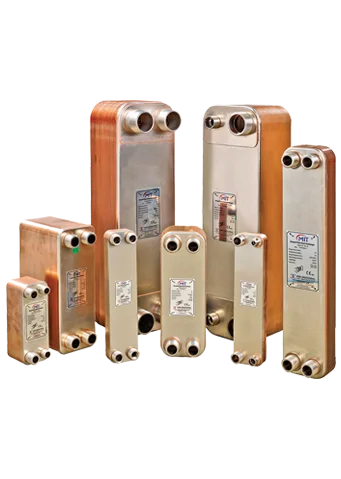
In facilities operating with traditional methods, tubular or gasketed exchangers have been widely preferred for many years. However, the increasing efficiency expectations of modern industry, rising energy costs, and environmental concerns have made the need for new generation solutions inevitable. At this point, brazed exchangers, which stand out with their compact structures, come into play. Although they may appear as small devices from the outside, thanks to their extraordinary heat transfer capacity, they can perform the tasks undertaken by much larger equipment. In fact, they often provide higher efficiency than traditional exchangers, doing the same job with less energy consumption.
The advantages offered by brazed exchangers are not limited to efficiency alone. Their monoblock structures eliminate the risk of leakage, and their gasket-free designs minimize maintenance needs. With these features, they not only reduce short-term operating costs but also significantly lower the total cost of ownership of the facility in the long term. Their ability to withstand high pressures and wide temperature ranges makes them safely usable in critical industrial processes. Thus, they are preferred not only in HVAC systems or simple cooling applications but also in energy recovery projects, renewable energy plants, data center cooling, and the food industry.
Another important point is the flexibility provided by the compact design of brazed exchangers from an engineering perspective. While traditional exchangers require large spaces for placement, brazed exchangers can be easily positioned in much smaller volumes. This situation facilitates facility planning in new investments, saves space, and reduces installation costs. Additionally, thanks to the possibility of modular use, they can be easily adapted to different capacity needs.
In today's competitive industrial environment, businesses must not only reduce costs but also minimize their environmental impact. In this context, brazed exchangers have gone beyond being just a heat transfer device, becoming a strategic technology that increases energy efficiency, reduces carbon emissions, and plays a critical role in achieving sustainability goals.
Brazed exchangers work like an invisible hero in industrial facilities. They harbor great power behind their small sizes; they ensure the continuity of production, increase energy efficiency, and serve an environmentally friendly production approach.
Today, integrating this technology into the processes of every business that adopts a sustainability vision has become not an option but a necessity.
One of the most critical issues in industrial production lines is ensuring continuity without interruption. In a production facility, even a few hours of cooling system failure can lead to the entire line stopping, disrupting production plans, and causing losses worth millions of lira. Such interruptions not only cause economic damage but also result in long-term negative consequences such as delays in customer deliveries, failure to meet contractual obligations, and damage to brand reputation. Therefore, the reliability and durability of the heat transfer technology used are among the most fundamental needs of today's industry.
High pressure fluctuations, sudden temperature changes, or chemically aggressive fluids experienced in production processes bring about a rapid wear process in classic exchanger systems. Gasket wear, loosening at connection points, or scaling and sediment formation on heat transfer surfaces are common problems encountered in traditional solutions. Such issues not only reduce the efficiency of the device but also pave the way for unexpected failures. At this point, brazed exchangers stand out as a reliable and innovative alternative offered by modern engineering.
The biggest difference of brazed exchangers is their monoblock structures. This design completely eliminates the risk of leakage seen in gasketed exchangers. The method of brazing the plates together with copper or nickel ensures that the device has an integral body. Thus, problems such as loosening under pressure, gasket wear, or leaks at connection points do not occur. Especially in critical processes, even a single drop of leakage can pose a serious threat to production safety, making this feature of brazed exchangers a great advantage for facilities.
Durability is not limited to leak-proofing alone. Brazed exchangers are also extremely resistant to high pressure and sudden temperature changes. Models that can be safely used at pressures above 30 bar are available. This makes them one of the equipment that businesses can safely choose in many areas, from power plants to chemical processes, from food production to HVAC systems.
Moreover, the plate surface design of brazed exchangers creates turbulent flow, maximizing heat transfer efficiency. The fluid progresses in a structure that continuously changes direction and accelerates along the plate channels, providing two main advantages: first, the heat transfer coefficient increases, achieving the same performance with a more compact device; second, since the formation of stagnant areas by the fluid is prevented, sediment, scaling, and particle accumulation are significantly reduced. This feature reduces the frequency of maintenance of the device while extending its operational life.
Brazed exchangers are not only a reliable heat transfer device but also a strategic investment that guarantees the continuity of the facility. By minimizing production interruptions, reducing maintenance costs, and offering long-term performance, they provide a modern and sustainable response to industrial challenges.
Features That Make a Difference
Brazed exchangers offer a surprisingly wide operating range in industrial applications despite their small and compact designs. These devices can safely operate at high temperatures up to 200 °C, starting from cryogenic levels like -196 °C. Thanks to this feature, they have become a reliable equipment preferred in both liquefied gas applications and high-temperature processes. High pressure resistance is another important advantage; models that can be safely used up to 30 bar levels provide long-lasting performance in critical environments such as power plants, chemical facilities, and high-pressure cooling circuits.
The use of stainless steel as the body material increases both the durability and hygiene standards of the exchangers. The stainless steel body provides safe use, especially in environments with aggressive chemicals, with its corrosion-resistant structure. The copper and nickel options preferred as brazing materials offer flexibility depending on the application area. Copper brazed models stand out in more standard applications such as cooling and air conditioning, while nickel brazed models are safely preferred in processes where acidic or alkaline chemicals are used due to their high corrosion resistance. Thus, brazed exchangers can be used with the same efficiency in both the chemical industry and the food industry.
One of the most appreciated aspects of brazed exchangers is their low maintenance requirement. In traditional gasketed exchangers, the wear, hardening, or deterioration of gaskets over time due to chemical effects is a common situation. This leads to loss of sealing and unwanted stoppages in production lines. However, brazed exchangers do not have gaskets; all plates are brazed with copper or nickel to form a single monoblock structure. This design eliminates the risk of possible chemical leaks and makes maintenance periods quite infrequent.
This feature provides a great advantage in sectors such as food, pharmaceuticals, petrochemicals, and energy, where uninterrupted production is critical. For example, in a food production line or a power plant operating 24/7, minimizing shutdowns for maintenance is very valuable in terms of both time and cost. Thanks to the durable structure of brazed exchangers, it is possible to operate in these facilities continuously without failure for a long time.
Additionally, brazed exchangers, which provide high heat transfer performance in much smaller spaces thanks to their compact sizes, also offer space savings for businesses. Despite their small volume, performing heat transfer at high capacity increases the efficiency of modern facilities and reduces investment costs.
Brazed exchangers are not only an efficient heat transfer solution but also a long-lasting, safe, and economical investment. With their wide operating range, high pressure resistance, stainless steel body, different brazing options, and low maintenance requirement, they have become indispensable equipment for modern industrial facilities.
A Closer Look with Usage Scenarios
Brazed exchangers appeal to a very wide range of applications, not just a specific sector, thanks to their flexible structures and high heat transfer performance. Their compact designs, low maintenance requirements, and high durability make them play a strategic role in many industrial applications. The diversity of applications clearly shows that they are not only an auxiliary equipment but also a critical element in terms of energy efficiency and process safety.
HVAC and Air Conditioning Systems Heating, ventilation, and air conditioning (HVAC) applications are among the areas where brazed exchangers play the most common and critical role. They have a wide range of use from residences to shopping malls, from large plazas to hotels, from hospitals to industrial facilities. While occupying minimum space thanks to their compact designs, the high heat transfer efficiency they offer provides a great advantage especially in modern architecture in terms of space and energy savings.
In central cooling systems, heat pumps, or fan-coil units, the ability to maximize the energy transfer of the fluid (water, glycol mixture, or gas) provides businesses with significant savings opportunities directly on their energy bills. Especially during the summer months when the air conditioning load is intense, the high efficiency of brazed exchangers significantly reduces energy consumption. This provides not only a cost advantage but also an important contribution in terms of environmental sustainability.
Moreover, the monoblock structure used in the design of brazed exchangers eliminates the sealing and maintenance problems frequently encountered in HVAC systems. Their gasket-free structure increases operational reliability, especially in buildings such as hotels, hospitals, or shopping malls where long-term uninterrupted operation is required. Thanks to the low maintenance requirement, service times are shortened, planned shutdowns are minimized, and system continuity is guaranteed.
Thanks to these features, brazed exchangers are not only an auxiliary equipment in the HVAC sector but also one of the key components that determine the efficiency and reliability of the system.
Food and Beverage Industry In the food and beverage sector, where hygiene and product quality are of critical importance, brazed exchangers offer reliable and effective solutions. In many different processes such as pasteurization, milk cooling, beer production, fruit juice processing, and even wine production, they make it possible to control temperature quickly, precisely, and hygienically. Thanks to their stainless steel body and nickel brazing options, they fully comply with food safety standards and contribute to the processing of the product under hygienic conditions.
These devices not only perform heat transfer but also preserve the natural structure of the product. For example, in milk cooling applications, brazed exchangers quickly lower the milk to the desired temperature without compromising its nutritional value, taste, and smell. Thus, both the shelf life is extended and the quality standard is maintained. Similarly, in fruit juice or beer production, brazed exchangers used for temperature control at different stages of the process ensure that the product is processed reliably without losing its aroma and color.
Energy savings are also one of the most prominent advantages of brazed exchangers in the food industry. These devices, which operate with high efficiency thanks to their turbulent flow surfaces, perform more cooling or heating with less energy. This reduces production costs while also contributing to sustainability goals.
Additionally, thanks to their compact structures, they occupy minimum space in food production facilities, support production continuity with easy installation and low maintenance needs. With these features, they find a wide range of use from large-scale industrial production lines to small-scale boutique food businesses.
Brazed exchangers are not just an equipment in the food and beverage sector; they are a strategic solution that guarantees hygiene, quality, continuity, and energy efficiency at the same time.
Energy Systems Energy efficiency is not only one of today's but also one of the most important priorities of the future. Increasing energy costs, limited natural resources, and global goals to reduce carbon emissions are driving industries to seek more sustainable solutions. At this point, brazed exchangers stand out as a strategic component in energy systems.
In solar energy applications, a reliable heat transfer element is needed to effectively transfer the heat collected in collectors to storage tanks or directly to usage lines. Brazed exchangers ensure that the energy obtained from the sun is used with maximum efficiency thanks to their compact structures and high heat transfer coefficients. This situation provides significant advantages not only in residential hot water applications but also in large-scale solar energy plants.
Geothermal energy systems are also one of the areas where brazed exchangers are intensively used. The high-temperature fluid extracted from underground is passed through a heat exchanger before being directly given to turbines or heating systems. Here, brazed exchangers come into play thanks to their resistance to aggressive chemicals and high temperature conditions. These devices reliably transfer the heat possessed by the geothermal fluid to the second circuit, ensuring the system's long-lasting and uninterrupted operation. Thus, both continuity in energy production is ensured and maintenance costs are kept to a minimum.
Brazed exchangers also play a key role in cogeneration (combined heat and power) applications. Reusing the waste heat generated during electricity production increases energy efficiency and reduces environmental impact. Brazed exchangers offer an effective solution in directing this waste heat to heating systems, hot water circuits, or industrial processes. In this way, both electricity and heat energy can be obtained from the same fuel, reaching efficiency levels of up to 80% in fuel use.
Additionally, brazed exchangers are frequently preferred in energy recovery systems, for example, in evaluating hot gases emitted from factory chimneys or high-temperature fluids released from processes. Thanks to their compact structures that can be installed even in small areas, they are easy to integrate into existing facilities.
Brazed exchangers are not just an auxiliary equipment in solar energy, geothermal energy, cogeneration, and general energy recovery systems; they are a strategic solution that increases energy efficiency, reduces operating costs, and facilitates achieving sustainability goals. With these features, they will continue to play a critical role in the energy infrastructure of the future.
Industrial Processes Brazed exchangers also have a wide range of use in industrial production lines.
They provide reliable performance in hydraulic systems for oil cooling, in plastic injection machines for mold temperature control, or in cooling systems of compressors. Especially in plastic injection machines, the correct control of mold temperature directly affects production quality. Brazed exchangers provide fast heat transfer at this point, shortening the cycle time and standardizing product quality. In compressor systems, they prevent overheating, extending the equipment's life and increasing operational safety.
Strategic Importance All these different usage scenarios reveal that brazed exchangers are not just a small auxiliary equipment; on the contrary, they have become a strategic element in energy management, process safety, and reducing operating costs. The flexibility they provide in different areas of modern industry clearly proves why these devices are increasingly preferred every day.
Contribution to a Sustainable Future
Globally, energy efficiency has become a critical issue not only to reduce the costs of businesses but also to reduce environmental impacts. Steps taken to reduce carbon emissions, slow down the effects of climate change, and protect natural resources necessitate the reshaping of industrial technologies. In this context, brazed exchangers play a silent but highly effective role.
One of the most important contributions of brazed exchangers is that they provide higher efficiency with less energy consumption. Being much more compact in size compared to traditional heat transfer equipment allows the fluid to exhibit turbulent flow within the plate channels. This maximizes the heat transfer surface, minimizes heat losses, and allows much more work to be done with the same amount of energy. This advantage in energy consumption directly contributes to reducing the carbon footprint.
In future projections, it is foreseen that brazed exchangers will be used in more critical areas. For example, data centers have become one of the most energy-consuming facilities worldwide with their increasing energy consumption. In the cooling systems used to prevent the overheating of servers in these centers, brazed exchangers stand out with their compact structures and high heat transfer efficiencies. By providing more effective cooling with less energy, they contribute to data centers achieving their sustainability goals.
Another developing area is electric vehicle battery management systems. With the widespread use of electric vehicles, keeping batteries within a safe temperature range has become a critical engineering problem. Brazed exchangers provide high efficiency in both preventing batteries from overheating during fast charging and maintaining optimal operating temperature. This feature helps electric vehicles to be longer-lasting and safer while also increasing energy efficiency.
Additionally, the role of brazed exchangers in renewable energy systems continues to grow. Solar energy collectors, geothermal plants, and biomass facilities are among the most important technologies in sustainable energy production, and effective management of heat in these systems is of critical importance. Brazed exchangers offer a reliable solution in such facilities thanks to their high durability and long-lasting performance.
Brazed exchangers not only respond to today's industrial needs but also become an important part of the sustainable energy vision of the future. Their ability to do more work with less energy, low maintenance requirements, and environmentally friendly structures make them an invisible but indispensable role in the transformation of modern industry.
Conclusion: Great Power in Small Size
Brazed exchangers have become one of the indispensable parts of modern industry with their efficiency, durability, and versatile usage advantages despite their small size. Their compact designs provide excellent flexibility both in facilities with limited space and in large-scale industrial applications. These devices harbor highly sophisticated engineering behind their seemingly simple structures. The turbulent flow created on thin plate surfaces easily meets even the most challenging heat transfer needs. This not only reduces operating costs but also maximizes energy efficiency in the long term.
In industrial facilities, even a few hours of downtime of a machine or line can lead to losses worth millions of lira, so reliability is paramount. Brazed exchangers guarantee this reliability by eliminating the risk of leakage thanks to their monoblock structures. Their ability to withstand high pressure and wide temperature ranges makes them safely usable in critical processes. The advantage they offer in a wide range from HVAC systems to energy recovery projects, from the food industry to chemical processes, makes them not just an auxiliary equipment but a strategic investment element.
Sustainability is one of the most important priorities of today and the future. The ability of brazed exchangers to do more work with less energy directly contributes to reducing carbon emissions. Their increasing preference in technologies that shape the future, such as data centers, electric vehicle battery management systems, geothermal and solar energy, clearly demonstrates how compatible these devices are with the industry's sustainability vision.
The high-quality brazed exchanger solutions we offer as Ekin Industrial not only meet your current operational needs but also provide strong support for achieving tomorrow's energy efficiency, reliability, and sustainability goals. Each of our products is meticulously manufactured in accordance with quality standards and supported with solutions tailored to the specific needs of different sectors. For us, brazed exchangers are not just a product but a strategic investment in the long-term success of businesses.
The benefits offered by brazed exchangers make them not just an equipment but also technological solutions that play a critical role in the growth strategies of businesses. Especially in today's world where energy efficiency is gaining more importance every day, these devices increase the competitiveness of businesses while also serving as a strong partner in achieving sustainability goals. Increasing global energy costs force companies to achieve more efficiency with fewer resources, and at this point, the high heat transfer performance of brazed exchangers provides businesses with a direct cost advantage.
Moreover, their ability to eliminate sealing issues thanks to their monoblock structures significantly reduces maintenance and repair times. The stoppage of a production line can often lead to not only production loss but also a chain reaction that results in decreased customer satisfaction, delayed deliveries, and damage to the company's reliability. The reliability provided by brazed exchangers minimizes these risks and guarantees the continuity of businesses. In this respect, they can be considered not only as a technical equipment but also as an integral part of risk management.
The versatility of brazed exchangers is another feature that makes them unique. They are among the most reliable solutions in HVAC systems at the center of air conditioning solutions, in energy recovery systems for reusing lost heat, in the food and beverage industry for safely conducting processes under hygienic conditions, or in the chemical industry for controlling aggressive fluids. This wide range of use is the clearest indicator of why they are indispensable in different areas of the industry.
Looking to the future, the importance of brazed exchangers will increase even more. With the widespread use of electric vehicles, the need for reliable cooling solutions in battery management systems is rapidly growing. Similarly, the increasing energy consumption of data centers worldwide increases the demand for efficient cooling systems in these centers. In renewable energy projects such as geothermal and solar energy, brazed exchangers are used as one of the key technologies that directly serve a sustainable future. The compactness, energy efficiency, and long-lasting usage features provided by these devices make them not only today's but also tomorrow's strategic investment.
The brazed exchanger solutions offered by Ekin Industrial are designed as part of this vision. Our products are developed not only to meet standard needs but also by taking into account the unique requirements of different sectors. Each exchanger is meticulously tested to ensure the highest efficiency and reliability in production processes and offered for the use of our customers in accordance with quality standards. For us, brazed exchangers are not just a piece of equipment sold; they are a strategic solution that allows our customers to take stronger, more efficient, and more environmentally friendly steps into the future.
In conclusion, brazed exchangers harbor great power behind their small size. They not only reduce operating costs but also contribute to building a sustainable future by minimizing environmental impacts. While responding to the current needs of the industry, these silent heroes, ready for the challenges of the future, will continue to be a reliable and long-term solution partner in the journey of businesses.