Boilers are installation equipment classified as pressure vessels used for heating and storing domestic water. Thanks to the coil or resistance inside, it ensures that the water heats up quickly and efficiently. In other words, boilers serve as a central hot water preparation system in collective living areas and industrial facilities where the need for hot water is intense.
The most important feature of boilers is that they not only heat the water but also maintain its temperature for a certain period, providing comfort and energy efficiency. Unlike household individual water heaters, boilers have a high water capacity and are therefore preferred in crowded areas such as hospitals, schools, hotels, dormitories, shopping malls, factories, and complexes.
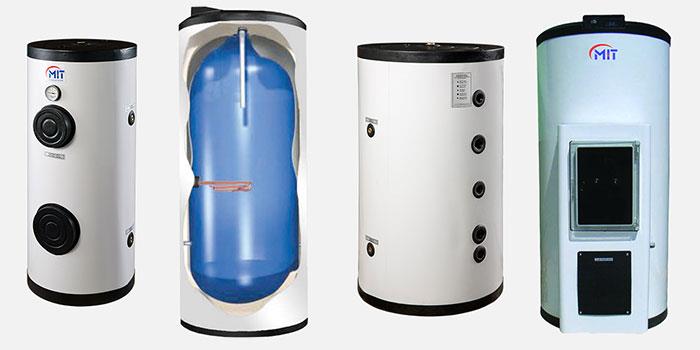
Working Principle of Boilers
The working system of boilers is quite simple:
• In coil boilers, the hot fluid passing through the coil (usually hot water/steam from a boiler, solar energy system, or another heat source) transfers heat to the cold water stored inside the boiler.
• In electric boilers, there is no coil; instead, stainless resistances heat the water with electrical energy.
Thanks to this structure, boilers can be integrated into central heating systems and offer independent solutions with electric models. Additionally, modern boilers become long-lasting, hygienic, and corrosion-resistant thanks to enamel coating, epoxy paint, polyurethane insulation, and cathodic protection applications.
Difference Between Boilers and Other Water Heaters
Boilers are often confused with individual use products like water heaters or instant water heaters. However, there are fundamental differences between them:
• Water heaters are designed for individual use and have low water capacity.
• Instant water heaters work on the principle of instant heating and do not have a storage feature.
• Boilers, on the other hand, are suitable for collective use with high-capacity storage volumes and guarantee uninterrupted hot water supply.
In conclusion, boilers are indispensable equipment in terms of both energy efficiency and comfortable hot water use.
Types of Boilers
Boilers are divided into different categories according to their structures and heating methods used. Choosing the right type of boiler suitable for the area of use increases system efficiency and ensures long-lasting use. In general, the types of boilers are as follows:
Single Coil Boiler
In single coil boilers, there is a single coil inside the boiler. This coil transfers the energy it receives from a heat source such as a boiler or solar energy to the domestic water stored in the boiler.
• Advantages: Offers an economical solution, is easy to install, and is ideal for places where the central hot water need is moderate.
• Areas of Use: Preferred in medium-sized areas such as apartments, complexes, small hotels, and construction sites.
• Features: Capacity options range from 100 liters to 6000 liters, providing high efficiency and long-lasting use.
Double Coil Boiler
Double coil boilers contain two coils inside. Thanks to this structure, they can be fed from different heat sources simultaneously. For example, while one coil is connected to a boiler or natural gas system, the other coil can be integrated into a solar energy system.
• Advantages: High energy efficiency, can be used with renewable energy sources.
• Areas of Use: Suitable for areas with high hot water demand such as large hotels, shopping malls, dormitories, hospitals, and industrial facilities.
• Features: Offers a capacity from 160 liters to 6000 liters, electric resistance can be added optionally.
Electric Boiler
Electric boilers do not have a coil. Instead, water is heated with stainless resistances. These boilers, which use electrical energy directly, provide solutions in independent systems.
• Advantages: Easy to install as it does not require coil connection. Produces hot water without the need for a central system.
• Areas of Use: Preferred in facilities where electricity is heavily used or where there is no alternative heat source.
• Features: Capacity options range from 100 liters to 6000 liters, operates with 10 bar operating pressure, contains long-lasting stainless resistance.
Epoxy Painted Boiler
In epoxy painted boilers, the inner surface is coated with epoxy paint. This increases resistance to corrosion and provides a hygienic environment.
• Advantages: A more economical option, durable for long-term use.
• Areas of Use: Preferred in facilities seeking cost advantage but also wanting hygiene and durability.
• Features: Epoxy coating on surfaces in contact with water ensures long-lasting use.
Enamel Coated Boiler
In enamel coated boilers, the inner surface of the boiler is coated with double-layer enamel. This coating ensures both hygienic use and resistance to corrosion. It is a preferred type of boiler especially in the food and health sectors.
• Advantages: Ensures the cleanliness of the domestic water thanks to its hygienic features. Does not contain heavy metals, suitable for human health.
• Areas of Use: Can be used in food production facilities, hospitals, schools, and everywhere where hygiene is a priority.
• Features: Long-lasting thanks to double-layer enamel coating, offers high efficiency.
Production Quality and Long-Lasting Use Features of MIT Boilers
Boilers should be produced with the right material selection, coating technologies, and quality control processes to be used safely and efficiently for many years. MIT boilers meet high hygiene standards and offer long-lasting performance thanks to their meticulous production approach in this field.
Quality of Used Sheet and Enamel
In the production of MIT boilers, Ereğli TRKK 6222 low carbon hot rolled sheet is preferred. This material provides high durability on the inner surface of the boilers thanks to its suitability for enamel coating. The enamel thickness varies between 200–250 microns. The used enamel is boron and silicon-based, does not contain heavy metals, and complies with Rohs values with its double-layer titanium additive structure.
Thanks to this special coating, the inner surfaces of the boilers:
• Become resistant to corrosion,
• Provide hygienic domestic water,
• Acquire a structure that does not allow heavy metal contamination.
Surface Cleaning and Coating Processes
Before the enamel application, boiler surfaces are deeply cleaned with a double bathing method. This process ensures the coating adheres perfectly to the surface. Additionally, the electrostatic powder paint applied on the outer surface of the boiler is applied at a thickness of 50–80 microns. For the paint to be long-lasting, the surfaces are first cleaned with iron phosphate and extra protection against rust is provided.
Insulation Features
The insulation used in MIT boilers consists of high-density polyurethane foam.
• The 42–44 kg density polyurethane insulation minimizes heat losses.
• Thus, boilers save energy by keeping hot water for a long time.
• In large capacity boilers, external durability is increased by using a special winlex cover.
Pressure and Durability Tests
The SRM pipes used in MIT boilers are subjected to strict tests to guarantee maximum pressure resistance. Additionally, all products are tested under pressure in quality control processes after production and offered to the customer.
Cathodic Protection and Extra Measures
Another application supporting the long-lasting use of boilers is the cathodic protection system. This system prevents electrochemical corrosion that may occur on the metal surfaces inside the boiler. Thus, the service life of the product is significantly extended.
Technical Features
MIT boilers are produced with various technical equipment suitable for different capacities and needs. Below, the technical features of single coil, double coil, and electric boilers are explained in detail.
Technical Features of Single Coil Boilers
Single coil boilers are one of the most preferred models for medium-scale hot water needs.
• Capacity: There are wide capacity options from 100 liters to 6000 liters.
• Coating: All surfaces in contact with water are protected with double-layer hygienic enamel coating. This feature ensures the domestic water remains clean and the boiler is resistant to corrosion.
• Outer Coating: Models between 100–600 liters have a galvanized sheet with electrostatic powder-coated cover, while models between 800–6000 liters have a special winlex cover.
• Insulation: Heat losses are minimized thanks to polyurethane insulation.
• Durability: Designed for 10 bar operating pressure and supported with a cathodic protection system.
• Extra Advantages: Has an aesthetic appearance, easy to install, and long-lasting.
Technical Features of Double Coil Boilers
Double coil boilers are developed especially for facilities with high hot water needs.
• Capacity: Offers different capacity options from 160 liters to 6000 liters.
• Coating: Ensures the domestic water remains hygienic thanks to double-layer enamel coating.
• Insulation:
o Models between 160–600 liters have 50 mm thick polyurethane insulation,
o Models between 800–6000 liters have special sponge insulation.
• Outer Coating: Models between 160–600 liters have a galvanized sheet with electrostatic powder-coated cover, while models between 800–6000 liters have a special winlex cover.
• Pressure: Provides high durability with 10 bar operating pressure.
• Energy Flexibility: Electric resistance can be added optionally.
• Advantages: High efficiency, possibility to work with multiple energy sources, long-lasting structure.
Technical Features of Electric Boilers
Electric boilers offer an independent hot water solution with their structure that does not require a coil.
• Capacity: There are varying capacity options from 100 liters to 6000 liters.
• Coating: Surfaces in contact with water are protected with double-layer hygienic enamel coating.
• Outer Coating:
o Models between 160–600 liters have a galvanized sheet with electrostatic powder-coated cover,
o Models between 800–6000 liters have a special winlex cover.
• Insulation: Minimum heat loss with polyurethane or sponge insulation.
• Pressure: Suitable for 10 bar operating pressure.
• Heating Elements: Provides long-lasting and safe use thanks to stainless resistances.
• Advantages: Works independently without being connected to a central system, easy to install, high energy efficiency.
Usage Areas of Boilers
Boilers play a critical role in collective living areas and industrial facilities where there is a high volume of hot water demand. The rapid preparation of domestic water, maintaining hygienic conditions, and continuous hot water supply are the most important advantages of boilers.
Below, the common usage areas of boilers are explained in detail:
Hospitals and Health Institutions
Hospitals, clinics, and health centers are places that need uninterrupted hot water at all hours of the day. The continuity of hot water in operating rooms, intensive care units, laboratories, and patient rooms is critically important for hygiene.
• Advantages: Provides healthy domestic water thanks to hygienic coating.
• Why Preferred: Offers long-lasting use thanks to their energy-efficient structures, high pressure resistance, and cathodic protection systems.
Schools and Dormitories
In educational institutions and dormitories, situations arise where hundreds of students need hot water at the same time. High capacity is especially required in shower areas and cafeterias.
• Advantages: Offers solutions suitable for needs with medium and large capacity boiler options.
• Why Preferred: Saves energy thanks to polyurethane insulation, keeps hot water for a long time.
Shopping Malls and Hotels
Shopping malls and hotels are facilities where hot water consumption is most intense. In hotels, the simultaneous usage need especially in the morning and evening hours makes the high capacity of boilers mandatory.
• Advantages: Provides high efficiency by connecting to both central boiler systems and solar energy with double coil models.
• Why Preferred: Guarantees guest satisfaction with its high-volume storage capacity.
Apartments and Complexes
In apartments and complexes with central hot water systems, boilers are used to meet the hot water needs of all apartments simultaneously.
• Advantages: Offers solutions suitable for different sizes of complexes with capacity options from 100 to 6000 liters.
• Why Preferred: Long-lasting thanks to the cathodic protection system and reduces maintenance costs.
Construction Sites and Factories
Construction sites and industrial factories have high hot water needs depending on the intense number of workers. Boilers are a reliable solution, especially for dining areas, shower sections, and process water preparation parts.
• Advantages: Can be used safely under challenging conditions thanks to their pressure-resistant structures.
• Why Preferred: Provides long-term savings with both hygienic water production and energy efficiency.
Food Industry
In the food sector, hygiene and safety are prioritized. All equipment used in the production of dairy products, fruit juices, beer, or beverages must be easily cleanable and have a hygienic design.
• Advantages: Provides hygienic domestic water thanks to double-layer enamel coating.
• Application Areas: Milk pasteurization, fruit juice production lines, canned food processes.
• Added Value: Its hygienic and durable structure fully complies with food safety standards.
Automotive
In the automotive sector, hot water and fluid management are critically important during production lines, test systems, and paint applications.
• Advantages: Guarantees uninterrupted operation thanks to its structure resistant to high pressure and temperature.
• Application Areas: Paint booths, test lines, surface treatment facilities.
• Added Value: Provides energy efficiency and operational continuity.
Maritime
The maritime sector requires corrosion-resistant equipment due to the corrosive effect of saltwater.
• Advantages: Offers long-lasting use with enamel coating and cathodic protection.
• Application Areas: Heating, cooling, and hot water preparation systems in ship systems.
• Added Value: Low maintenance requirement and adaptation to challenging environmental conditions.
HVAC Systems
Boilers are at the heart of heating, cooling, ventilation, and hot water preparation systems.
• Advantages: Provides energy efficiency thanks to polyurethane insulation.
• Application Areas: Central climate control systems in hotels, shopping malls, residences, and business centers.
• Added Value: Comfortable living space, low energy cost, high performance.
Petro-Chemical and Pharmaceutical Industry
Systems used in petrochemical and pharmaceutical production must withstand high temperature and pressure. At the same time, there is a need for a structure that can work with aggressive liquids and gases.
• Advantages: Pressure-resistant body, enamel coating, and cathodic protection.
• Application Areas: Preparation of chemical mixtures, sterilization lines.
• Added Value: Provides process safety and system continuity.
Metal Industry
In the metal processing sector, equipment exposed to high heat and pressure must be long-lasting.
• Advantages: Provides safe use thanks to its solid structure and high operating pressure.
• Application Areas: Heat treatment lines, surface coating facilities.
• Added Value: Process stability and production efficiency increase.
Energy Sector
Boilers play a significant role in energy production, cogeneration, and heat recovery systems.
• Advantages: Minimizes energy losses with high-performance insulation.
• Application Areas: Cogeneration facilities, energy recovery systems.
• Added Value: Reduces energy costs, provides sustainability.
Textile Sector
Temperature control is of vital importance in textile production processes. High-volume hot water is used in dyeing, printing, and finishing processes.
• Advantages: Ensures uninterrupted hot water supply with large capacity models.
• Application Areas: Dye boilers, finishing lines, drying systems.
• Added Value: Reduces production costs with energy efficiency, increases quality.
How to Choose a Boiler?
Boiler selection should be made by considering many criteria such as the area of use, hot water need, energy source, and system design, not just capacity. Incorrect boiler selection can lead to both insufficient hot water production and unnecessary energy costs. Therefore, the selection process must be based on engineering calculations.
Determining the Area of Use
The most basic step in boiler selection is determining where the boiler will be used.
• Central hot water systems are preferred for collective living areas (such as hospitals, schools, dormitories, hotels, shopping malls, apartments, complexes).
• In industrial facilities, higher capacity boilers are used according to process water preparation, cleaning, or production line needs.
Calculating Hourly Water Need
The most critical point of boiler selection is the correct calculation of the hourly hot water need. This calculation should be made in accordance with the standards set by the Chamber of Mechanical Engineers.
• First, the water outlet points to be used (faucet, shower, battery, etc.) are determined.
• The average flow rate (liters/hour) and usage time are calculated for each outlet point.
• The total need is determined by simulating all water usage sources being open for an hour simultaneously.
This method guarantees that the system does not fall short even during peak loads.
Simultaneous Use Factor
The probability of all faucets and showers being used at the same time is low. Therefore, the simultaneous use factor (diversity factor) is considered in engineering calculations. This factor allows for more realistic capacity calculation.
• For example, in a facility with 100 shower outlets, it is assumed that not all will work at the same time. A more economical boiler suitable for the actual need is selected with the simultaneous use factor.
Selection According to Energy Source
The energy source to be used in boiler selection also plays a decisive role:
• Single coil boiler: Preferred when a single energy source (e.g., boiler) is used.
• Double coil boiler: Suitable for using different sources such as both a boiler and solar energy simultaneously.
• Electric boiler: Preferred in places where there is no central energy source or where independent systems are needed.
Durability and Hygiene Factors
The production features of the boiler are also a selection criterion to ensure it is long-lasting and safe:
• Enamel coating: Provides hygienic domestic water, prevents corrosion.
• Cathodic protection: Offers extra security against electrochemical corrosion.
• Insulation thickness: Minimizes energy losses, reducing operating costs.
Professional Consultancy
During boiler selection, it is essential to act not only based on capacity and price but also with expert engineering consultancy. Correct calculations and appropriate product selection ensure both energy savings and long-term trouble-free operation of the system.
Conclusion: The Right Boiler Choice for Efficiency and Longevity
Boilers offer reliable, hygienic, and energy-efficient solutions in both central hot water systems and industrial processes. With options such as single coil, double coil, electric, epoxy painted, or enamel coated, they provide flexible solutions suitable for different areas of use.
When making the right boiler choice, it is not enough to look only at capacity. Factors such as the area of use, hourly hot water need, simultaneous use factor, energy source, and the production quality of the product must be considered. Professional calculations by mechanical engineers reduce operating costs and guarantee the long-lasting operation of the system.
MIT boilers;
• Hygienic double-layer enamel coating,
• High-density polyurethane insulation,
• Cathodic protection systems,
• Durability tests, and
• Aesthetic designs
are produced to meet not only today's needs but also the needs of the future.
In conclusion, whether it is a hospital, hotel, or factory; or an apartment or complex... Quality production, correct engineering, and appropriate energy solutions should be the basis in boiler selection. This way, both user comfort and energy efficiency are maximized.