Tube heat exchangers are one of the essential components of industrial heat transfer applications. By enabling heat exchange between two fluids in liquid or gas form without direct contact, they increase the energy efficiency of processes and ensure system continuity. Therefore, in many industries such as energy, chemicals, food, marine, metal, and HVAC, tube exchangers are positioned as indispensable equipment in terms of process safety and efficiency.
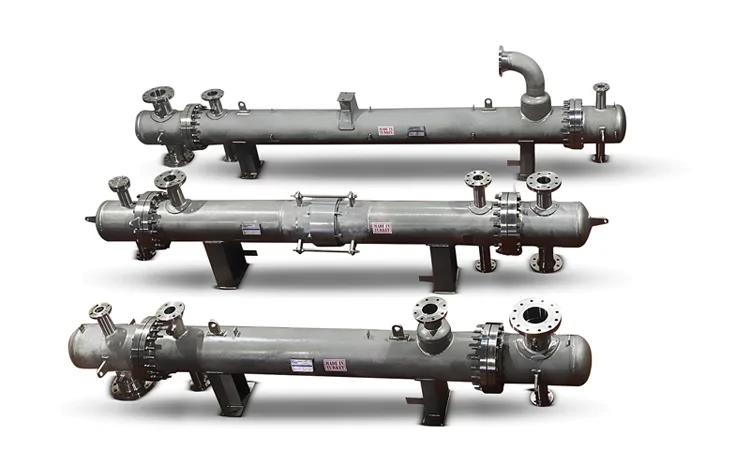
Structural and Functional Advantages
One of the most important features of tube heat exchangers is their high pressure and temperature resistance. The body, inner tubes, and, when necessary, the baffles are designed to optimize heat and flow control. This design flexibility allows tube exchangers to be produced both horizontally and vertically.
Thanks to the variety of materials used (ST37, AISI304, AISI316, titanium, copper, etc.), the system can operate reliably even under demanding conditions such as corrosion, extreme temperatures, and pressure. In this respect, tube exchangers offer long-lasting, low maintenance, and high-performance solutions.
Energy Efficiency and Sustainability
Today, energy efficiency is at the center of the sustainability policies of industrial facilities. Tube heat exchangers reduce energy consumption and contribute to lowering the carbon footprint by recovering waste heat. Both economic and environmental benefits are achieved through heat recovery. This feature is particularly important in energy production facilities, cogeneration systems, and large-scale process lines.
Process Flexibility and Adaptable Design
Tube exchangers can be customized according to different needs in various sectors.
While hygienic stainless steel pipes are preferred in a food production facility, titanium or ST35.8 material resistant to high temperatures and aggressive chemicals is used in a petrochemical facility. This flexibility ensures that each system is equipped with the most suitable solution for its process conditions. Manufacturers like Ekin Industrial implement the principle of maximum efficiency – minimum energy loss by designing heat exchangers tailored to each process with engineering knowledge and industry experience.
Critical Role in Industrial Scale
The industrial importance of tube heat exchangers is not limited to energy efficiency. These systems also ensure the stability of processes, extend equipment life, and reduce operating costs.
Tube exchangers, used in a wide range of applications from oil refineries to power plants, and from food production to the marine industry, are considered one of the key elements that maintain the thermal balance of modern industrial systems.
Tube heat exchangers are strategic equipment that provides efficiency, reliability, and sustainability in all industrial processes requiring high-performance heat transfer. With their robust structure, customizable design, and energy-saving potential, they have become an indispensable component of today's industry. With advancing technology, modern tube exchangers equipped with sensor integration and smart control systems will continue to be one of the important building blocks of industrial automation in the future.
Hygienic and Safe Heat Transfer in the Food Industry
In the food industry, hygiene, safety, and product quality are among the most critical elements of production processes. At this point, tube heat exchangers contribute to the uninterrupted operation of the food production chain by providing reliable, hygienic, and efficient heat transfer even under high temperature and pressure. In many processes such as dairy products, fruit juice, beer, beverage, and sauce production, tube exchangers are preferred to eliminate microorganisms from the product and process it at the correct temperature.
The Importance of Hygienic Design
Tube exchangers used in food processing applications are made from stainless steel pipes with smooth inner surfaces. This prevents sediment accumulation or bacterial growth in the flow of liquid products.
Fully hygienic and detachable tube exchanger models developed by MIT engineers facilitate cleaning and maintenance processes, ensuring that systems operate in accordance with hygiene standards. These models eliminate the risk of gasket deformation even at high temperatures with a temperature resistance of up to 350°C.
These exchangers, fully compatible with CIP (Clean in Place) systems used in food production, can be cleaned with chemical cleaners without being removed from the system. Thus, both operational continuity is maintained, and hygiene standards are ensured.
Material Quality and Process Safety
In tube exchangers in the food sector, AISI 304 or AISI 316L stainless steel is typically used. These materials provide corrosion resistance and chemical durability even in systems operating with acidic food products or at high temperatures.
The three-stage quality control and pressure testing applied in Ekin Industrial's production process guarantee the safe operation of each exchanger. Each device undergoes a 72-hour testing process at 1.5 times the normal operating pressure before shipment.
These tests help to detect potential welding defects, sealing problems, and material deformations in advance. As a result, zero leakage and maximum safety are ensured during the operating process.
Energy Efficiency and Product Quality
In the food sector, energy costs constitute a significant portion of the production budget. Tube exchangers minimize energy losses thanks to their high heat transfer coefficient. This not only reduces operating costs but also contributes to environmental sustainability goals.
Moreover, the homogeneous temperature distribution within the exchanger ensures that the product is produced at the desired consistency and flavor. Especially in processes such as pasteurization, sterilization, and concentration, the accuracy of heat control is critically important for product quality.
Advantages of Tube Exchangers in Hygienic Applications
• Fully cleanable design: Prevents bacterial growth, ensures food safety.
• Resistance to high temperature and pressure: Can be safely used in applications where plate exchangers are insufficient.
• Long lifespan and low maintenance cost: Offers long-term use thanks to its durable material.
• Waterproof structure: Completely prevents contact with the outside environment.
• Efficient heat recovery: Reduces energy consumption, lowers production costs.
Process Efficiency and Temperature Control in the Automotive Sector
The automotive sector is one of the industries where temperature control plays a critical role in the continuity of production lines and the preservation of product quality. From engine test systems to paint booths, from press lines to plastic injection molds, temperature management and fluid cooling solutions at various stages directly affect production performance. In this context, tubular heat exchangers stand out as systems that provide reliable, durable, and high-efficiency heat transfer in automotive processes.
The Importance of Temperature Control in Production Processes
Automotive production lines consist of numerous machines and equipment operating at different temperatures. For this equipment to operate efficiently, the heat within the system must be maintained within specific tolerance ranges.
Tubular heat exchangers precisely perform temperature control in applications such as oil cooling in engine test systems, hot water heating in paint lines, or hydraulic oil cooling in press machines.
These systems prevent part deformation, material degradation, and production downtimes by ensuring a stable temperature. Thus, both quality continuity and production efficiency increase.
Durability and High-Pressure Compatibility
Tubular exchangers used in the automotive sector typically operate under high pressure, high temperature, and aggressive fluids. Therefore, high-strength metals such as AISI 316, AISI 304, ST 35.8, or copper are preferred for the body and tube materials.
The BYS and MOR series oil cooler exchangers in Ekin Industrial's production portfolio have been specially developed to meet these needs.
• The BYS models feature threaded copper tubes with a wall thickness of 1.2 mm and are resistant to temperatures up to 140°C and pressures up to 9 bar.
• In the MOR series, efficient operation is achieved with copper tubes having a wall thickness of 0.6 mm under temperatures of 120°C and pressures of 6 bar.
These models provide consistent performance in engine test lines, transmission systems, and hydraulic power units, preventing system failures.
Energy Efficiency and Reduction of Operating Costs
Tubular heat exchangers not only provide temperature control in the automotive sector but also create cost advantages through energy recovery.
For example, the heat generated during engine tests can be utilized in another process through exchangers. This way, both energy savings are achieved, and the facility's carbon footprint is reduced.
Additionally, tubular exchangers have long maintenance intervals, and their operational lifespan is higher compared to plate systems. This feature offers significant economic advantages for businesses by minimizing production line downtimes.
Application Areas
Tubular heat exchangers are widely used in the automotive sector in the following areas:
• Oil and water cooling in engine test systems
• Maintaining temperature balance in hydraulic and transmission systems
• Air/water heating in paint booths and ovens
• Mold cooling in plastic injection machines
• Evaluating waste heat in energy recovery units
In these applications, tubular exchangers stand out with advantages such as high efficiency, long lifespan, and low maintenance costs.
In the automotive industry, achieving production continuity, quality standardization, and energy efficiency goals is fundamentally dependent on proper temperature control. Tubular heat exchangers enhance the reliability of production lines and reduce energy costs by providing this control with precision.
With their robust structure, customizable design, and high performance, tubular exchangers have become an integral part of thermal management solutions in the automotive sector. With advancing production technologies, these exchangers will continue to play a significant role in the smart production lines of the future through sensor-based monitoring systems and automation integrations.
In the food industry, hygienic production processes are of great importance for both legal requirements and brand reputation. Tubular heat exchangers are among the most reliable and sustainable heat transfer solutions that meet these requirements.
With their high performance, hygienic structure, and energy efficiency, tubular exchangers continue to be at the heart of modern food production lines. In today's world, where food safety standards are continually rising, the advantages provided by tubular exchangers play a critical role in helping businesses achieve their quality and sustainability goals.
Durability and Corrosion Resistance in Marine Applications
The maritime sector requires systems that operate under challenging environmental conditions such as high salinity, humidity, pressure changes, and vibrations. Therefore, all equipment used in marine vessels and offshore facilities must be corrosion-resistant, long-lasting, and high-performing. Tubular heat exchangers are among the systems that best meet these requirements and are safely preferred in many applications, from ship engines to cooling circuits, fuel systems to HVAC solutions.
Design Suitable for Harsh Environments
Seawater causes corrosion on metal surfaces due to the chloride ions it contains. Therefore, the design of heat exchangers used in marine applications requires meticulous attention in terms of material selection and surface protection technologies.
Ekin Industrial's MIT branded tubular exchangers are produced with materials that have high corrosion resistance, such as AISI 316L stainless steel and titanium. These materials eliminate the risk of wear, oxidation, and deformation that salty water can cause.
Additionally, the spiral and coiled inner tube design increases the fluid velocity, maximizing thermal efficiency and preventing sediment buildup on the surface. This way, both the heat transfer performance of the system increases, and maintenance intervals are extended.
Use in Engine Cooling and Fuel Systems
Tubular heat exchangers play a critical role in marine vessels, especially in main engine cooling systems. In these systems, where seawater is used as the cooling fluid, the temperature of the engine is maintained stable through the exchanger.
This situation prevents mechanical failures that may occur due to overheating while maintaining engine efficiency.
Additionally, tubular heat exchangers;
• Viscosity control in fuel systems,
• Cooling in oil circuits,
• Heat recovery in fresh water production systems,
• Many applications such as maintaining temperature balance in ship HVAC systems.
These exchangers, each designed according to different process conditions, ensure the operational continuity and energy efficiency of systems in the maritime sector.
Corrosion Resistance and Long Life
In tubular heat exchangers used in maritime applications, surface treatments and welding technology are of great importance. The welding processes carried out in MIT production facilities are performed by certified welders and undergo a three-stage quality control process.
Thanks to this quality process, each exchanger can operate without showing deformation even under high pressure.
Materials with high corrosion resistance (for example, titanium and AISI 316L) minimize the risk of chemical reactions on surfaces in contact with seawater. This significantly extends the service life of the system.
Energy Efficiency and System Safety
Tubular heat exchangers are used in maritime systems not only for cooling but also for energy recovery purposes. For example, heat obtained from exhaust gases can be reused in fresh water production or heating systems through exchangers. This reduces energy consumption on the ship while increasing fuel efficiency.
Additionally, the compact design of the exchangers provides easy installation advantages in machine rooms with limited space. Their leak-proof structure enhances system safety, protecting both the ship's personnel and reducing maintenance costs.
Compliance with Maritime Standards
Tubular heat exchangers are produced in accordance with international standards such as ASME VIII-1, PED, and Lloyd’s Register, specifically for the maritime sector. This compliance ensures that systems are approved by maritime authorities and can be safely used in international transportation.
Ekin Industrial provides maximum safety and performance in ship systems by fully complying with these standards during the production process.
The maritime sector is one of the most challenging industries that require durability and continuity. Tubular heat exchangers offer ideal solutions for ship engines, fuel systems, and HVAC applications due to their resistance to high pressure and corrosion conditions, long life, and efficiency.
Tubular heat exchangers branded MIT, made from titanium and stainless steel, have become one of the technological solutions that make a difference in the maritime sector by providing energy efficiency, system safety, and environmental sustainability together.
Energy Savings and Comfort Climate Control in HVAC Systems
In modern buildings, comfort, air quality, and energy efficiency are directly related to the success of HVAC (Heating, Ventilation, and Air Conditioning) systems. Tubular heat exchangers, which are one of the most important components of these systems, provide high efficiency, low energy consumption, and long-lasting performance in both heating and cooling applications.
These exchangers, which have a wide range of applications from office buildings to hospitals, hotels to industrial facilities, form the basis of sustainable climate control solutions by providing heat recovery and energy savings.
The Role of Heat Exchangers in HVAC Systems
The aim of HVAC systems is to maintain indoor comfort while minimizing energy consumption. Tubular heat exchangers take on two main tasks in this regard:
1. Heat recovery in ventilation ducts
2. Heat transfer between fluids in cooling and heating circuits
Fluids coming from cooling towers, chillers, or boiler systems provide air or water at the desired temperature to indoor environments through tubular exchangers. This way, the system prevents unnecessary energy losses while maintaining the ambient temperature at an optimal level.
Energy Efficiency and Heat Recovery
Energy consumption is one of the highest cost items in HVAC systems. Tubular heat exchangers provide energy savings by re-evaluating waste heat.
For example, hot air coming from the exhaust line can preheat fresh air through the tubular exchanger. Thus, the amount of energy required for heating is reduced.
Similarly, the low-temperature fluid coming from the cooling circuit in chiller systems cools the air in the ventilation line, creating a secondary cooling advantage. This heat recovery can save between 20-40% in energy costs.
Material Selection and Durability
HVAC systems are generally continuous operation, long-lasting systems. Therefore, the exchangers used must be made from materials with high corrosion resistance and low maintenance requirements.
The MIT branded tubular exchangers from Ekin Industrial are produced with material options of AISI 316L stainless steel or titanium. This ensures long-lasting performance without being affected by condensation, corrosion, and pressure changes.
Additionally, the compact design of the exchangers offers easy assembly and maintenance even in limited spaces within HVAC systems.
Comfort Climate Control and Indoor Air Quality
Tubular heat exchangers support indoor comfort not only in terms of temperature but also in terms of air quality.
Exchangers used in fresh air systems facilitate heat transfer between indoor and outdoor air while preventing the transfer of moisture and particles. This way, both energy loss is prevented, and a healthy indoor air environment is maintained.
In sensitive environments such as hospitals, laboratories, and hotels, these systems provide hygienic climate control by preventing cross-contamination. Sustainability and Smart System Integration
Today, tubular heat exchangers have been integrated with sensor and control modules in many building automation systems. This allows the system's temperature, pressure, and flow parameters to be automatically monitored and optimized.
These smart integrations not only provide energy savings but also extend equipment life, reduce maintenance requirements, and minimize the risk of failure.
The contribution of tubular exchangers to energy efficiency is among the scoring criteria in green building certifications (LEED, BREEAM, etc.). This highlights the importance of tubular exchangers in terms of environmental sustainability in HVAC projects once again.
In HVAC systems, tube heat exchangers are an indispensable solution in terms of energy savings, indoor comfort, and sustainability. Thanks to their high heat transfer coefficient, low maintenance needs, and durable structure, these exchangers are among the most reliable components of modern building technologies.
The MIT tube exchangers developed with Ekin Industrial's engineering expertise continue to make a difference in the HVAC sector by providing efficient, eco-friendly, and long-lasting solutions in comfort conditioning and energy recovery processes.
High Pressure and Temperature Resistance in Petrochemical and Pharmaceutical Industry
Petrochemical and pharmaceutical industries are known for their processes involving high temperatures, pressures, and intense chemical interactions. These challenging conditions test both the mechanical durability and chemical resistance of heat transfer equipment. Tube heat exchangers are among the most preferred solutions due to their ability to provide safe, stable, and long-lasting performance in such environments.
In systems operating under high pressure, the continuity and safety of heat transfer are critically important. Therefore, the design of tube exchangers used in the petrochemical and pharmaceutical sectors is done according to high engineering standards in terms of material selection, welding quality, and leak tightness.
Application Areas in the Petrochemical Sector
In petrochemical facilities, heat transfer at high temperatures is required during the processing of crude oil, gas separation, solvent recovery, and chemical reactions. Tube heat exchangers increase system efficiency by facilitating heat exchange between two fluids without direct contact.
Exchangers used in this sector are typically made from high-strength materials such as ST 35.8, ST37, AISI 316L, and titanium. These materials exhibit superior resistance to corrosive chemicals, acid vapors, and solvent effects.
Additionally, the exchangers produced by Ekin Industrial are tested in accordance with ASME VIII-1 and PED standards, and each one undergoes pressure tests lasting 72 hours at 1.5 times the working pressure. These tests ensure both the mechanical and thermal safety of the system.
Hygiene and Precision in the Pharmaceutical Industry In the pharmaceutical sector, the priority is hygiene and process precision along with chemical resistance. Temperature variations in pharmaceutical production lines must be controlled with very small tolerances; even a slight deviation in heat balance can disrupt the structure of active ingredients. Tube exchangers are ideal systems for ensuring this precise control.
Due to hygienic production requirements, exchangers used in the pharmaceutical industry are generally made of AISI 316L stainless steel, and surface roughness is kept to a minimum. This design prevents bacterial growth and works in full compliance with CIP (Clean in Place) cleaning systems.
Moreover, additional hygiene measures such as polished inner surfaces, removal of weld traces, and elimination of dead volumes are taken in tube exchangers used in pharmaceutical processes. This ensures product quality is maintained while ensuring production continuity.
High Pressure and Temperature Resistant Structure
In petrochemical and pharmaceutical facilities, the temperatures encountered by heat exchangers typically range from 150°C to 400°C. Under these conditions, the system must maintain both mechanical stability and leak tightness.
The cylindrical body structure of tube exchangers provides natural strength against high internal pressures. Additionally, multi-pass tube bundle designs enhance heat transfer efficiency by allowing the fluid to remain in contact with the heat exchange surface for a longer duration.
These features make tube exchangers preferred in heat recovery, condenser, evaporator, and reactor cooling systems in petrochemical processes.
Chemical Resistance and Material Compatibility
Fluids used in petrochemical and pharmaceutical processes typically contain acidic, alkaline, or solvent-based chemicals. These fluids pose a risk of wear and corrosion on metal surfaces. The production of tube exchangers from high-alloy materials such as titanium, Inconel, or AISI 316L eliminates this risk.
Additionally, the filler metal and welding gas used in the welding areas should also be selected based on chemical compatibility. The automatic TIG welding technology applied at Ekin Industrial ensures high leak tightness and surface smoothness in this regard.
Energy Efficiency and Process Safety
In systems operating under high temperatures and pressures, minimizing heat losses directly affects energy costs. Equipping tube exchangers with insulation minimizes heat loss and increases efficiency.
Additionally, systems can be supported by sensor-based temperature control and pressure monitoring modules. These smart integrations help detect potential failures in advance, preventing production downtimes. Thus, both process safety is enhanced and maintenance costs are reduced.
In the challenging conditions of the petrochemical and pharmaceutical industries, where high pressure, temperature, and chemical interactions prevail, tube heat exchangers are the most reliable thermal management solution. With their corrosion-resistant structure, precise temperature control, high efficiency, and long service life, these systems ensure the sustainability of production processes.
Tube exchangers developed with Ekin Industrial's engineering expertise have become a symbol of high safety and performance in both the petrochemical and pharmaceutical sectors with production quality compliant with ASME and PED standards.
Continuous Production and Heat Management Solutions in the Metal Industry
The metal industry is among the leading industries where high temperatures, intense energy use, and continuous process flows coexist. In production steps such as casting, rolling, heat treatment, and surface coating, heat management directly affects both product quality and energy efficiency. Therefore, tube heat exchangers are one of the most critical components for ensuring safe, efficient, and continuous heat transfer in metal processing facilities.
The Importance of Heat Transfer in Continuous Production Processes
In metal processing processes, heat is both a necessary energy source for production and a parameter that needs to be controlled.
For example, in casting lines, the cooling of molten metal, in rolling mills, the temperature control of oil or water, and in galvanizing lines, the chemical baths must be kept at a constant temperature.
Pipe heat exchangers enable the system to operate in balance by providing highly efficient heat exchange between hot and cold fluids during these processes.
As a result, in production lines:
• Overheating or temperature fluctuations are prevented.
• Energy consumption is reduced.
• Process continuity is maintained and product quality becomes stable.
Material Durability and Adaptation to Harsh Conditions
Metal industrial environments are quite challenging for heat equipment due to extreme temperatures and aggressive chemicals. Therefore, the exchangers used must be resistant to high pressure, abrasive liquids, and metal powders.
MIT pipe exchangers produced by Ekin Industrial;
• Are manufactured from high-strength materials such as AISI 316L, ST 35.8, and Titanium.
• Can operate safely up to 1.3 MPa pressure and 205°C temperature.
• Offer long-lasting use thanks to their thick-walled pipe structure and welding quality.
Additionally, having smooth and soft inner surfaces of the pipes increases the fluid velocity and prevents sediment accumulation, which significantly reduces maintenance frequency.
Energy Efficiency and Heat Recovery
Metal production is an energy-intensive process. Therefore, recovering waste heat is critically important for reducing energy costs.
Pipe exchangers make waste heat generated during the cooling of molten metal or in oil cooling systems reusable in different processes.
For example:
• The heat of the liquid cooled in the casting line can be transferred to the facility's water preheating system.
• The energy obtained during the cooling of hydraulic oils used in rolling lines can be integrated into the facility's heating system.
Through these methods, energy consumption decreases, operating costs drop, and carbon emissions are minimized.
System Integration and Continuous Performance
Pipe exchangers can be integrated with various systems in the metal industry in series or parallel. This structure provides scalability according to the desired capacity. Moreover, modern pipe exchangers that can work integrated with sensor and automation systems optimize process control by monitoring temperature, pressure, and flow rate in real time.
This way, both operator intervention is reduced, and the margin of error in the production process is minimized. Continuous performance monitoring allows for the early detection of sudden temperature changes or sealing issues.
Use in Cooling and Oil Management Systems
One of the most common areas of use for pipe heat exchangers in metal industry applications is oil cooling systems.
The BYS and MOR series MIT pipe exchangers stand out in these applications with their high efficiency:
• BYS models withstand temperatures up to 140°C and pressures up to 9 Bar; they are produced in 24 different capacity ranges.
• MOR series operate under 120°C temperature and 6 Bar pressure; they offer flow rate options between 60 lt/min and 1200 lt/min.
These systems extend equipment life by ensuring that oil in hydraulic lines remains at an optimum temperature and reduce maintenance costs.
Heat Recovery in Energy Production and Cogeneration Systems
Energy production and cogeneration (combined heat and power production) systems are at the center of high energy efficiency and sustainable production goals in industrial facilities. The pipe heat exchangers used in these systems prevent energy losses by enabling waste heat recovery and significantly reduce operating costs.
Pipe exchangers are used to transfer the energy of high-temperature fluids coming from turbines, boilers, exhaust, or chiller systems to another fluid. This process not only increases the overall efficiency of the facility through energy recovery but also directly contributes to environmental sustainability.
The Role of Pipe Exchangers in Cogeneration Systems
The aim in cogeneration systems is to produce both electrical and thermal energy from the same fuel source. However, in these systems, a large amount of waste heat is generated during the energy conversion.
Pipe heat exchangers convert this waste heat into usable energy by recovering it.
For example:
• Hot gases exiting gas turbines can be used for steam production through a pipe exchanger.
• The energy obtained from the engine cooling water in cogeneration plants can be utilized for building heating or process lines.
Through these methods, system efficiency rises above 80%, and energy recovery reduces fuel consumption.
High Temperature and Pressure Resistant Structure
Pipe exchangers used in energy production systems are typically exposed to temperature values ranging from 200°C to 500°C and high operating pressures.
Therefore, materials with high thermal conductivity and strength properties, such as AISI 316L, ST 35.8, copper, and titanium, are used in the body and pipe materials. MIT pipe exchangers produced by Ekin Industrial are manufactured in accordance with ASME VIII-1 and PED standards, and each is tested at 1.5 times the working pressure to verify safety.
These tests ensure the preservation of sealing and structural integrity even in high-pressure environments.
Waste Heat Recovery and Efficiency Increase
The greatest advantage of pipe exchangers in energy systems is the increase in efficiency achieved through the re-evaluation of waste heat.
In a power plant, exhaust gases typically contain usable heat energy of up to 30%. Recovering this energy through pipe exchangers:
• Reduces fuel consumption,
• Lowers CO₂ emissions,
• Increases the overall energy efficiency of the system.
Additionally, the recovered heat can be utilized in various systems such as process steam, hot water, or building heating. This versatility places pipe exchangers at the center of energy management strategies.
Energy Storage and Heat Transfer Applications
In modern energy systems, pipe exchangers are used not only for heat transfer but also in energy storage solutions.
In thermal energy storage tanks, these systems manage the energy transfer between hot and cold fluids, supporting production continuity by balancing demand fluctuations.
Especially in systems that operate with solar energy, the heat energy collected during the day is stored through the exchanger and can be used for heating or electricity generation at night. This feature makes tubular exchangers strategic in renewable energy integration.
Ease of Maintenance and Long Lifespan
Continuity is essential in energy production facilities; therefore, short maintenance periods are of great importance.
Thanks to their modular designs, tubular exchangers can be easily disassembled and cleaned. Spiral or grooved pipe designs with high flow rates create less need for cleaning by preventing sediment accumulation on the surface.
Additionally, heat losses are minimized due to the insulated body structure, preserving system efficiency. Periodic tests conducted for long-lasting use keep the system's performance stable for years.
Environmental Sustainability and Carbon Reduction
Energy efficiency is not only an economic necessity but also an environmental one.
The ability of tubular exchangers to recover waste heat contributes to the reduction of greenhouse gas emissions. This not only ensures compliance with ISO 50001 energy management standards but also facilitates businesses' approach to carbon neutrality goals.
In energy production and cogeneration systems, tubular heat exchangers are of strategic importance due to their high temperature and pressure resistance, energy recovery capabilities, and low operating costs. These systems provide efficiency increases and environmental sustainability in projects integrated with both fossil fuels and renewable energy sources.
Tubular exchangers developed with Ekin Industrial's advanced engineering solutions have become a symbol of efficiency and innovation in the energy sector by providing reliable performance in cogeneration, trigeneration, steam recovery, and energy storage systems. In the metal industry, temperature balance is fundamental to production quality and continuity. Tubular heat exchangers are among the indispensable equipment of metal processing facilities due to their high-pressure and temperature-resistant structures, energy recovery features, and long-lasting performance.
The MIT tubular exchangers developed by Ekin Industrial offer maximum efficiency and reliability in critical processes such as molten metal cooling, oil management, surface coating, and rolling lines.
With these features, tubular exchangers continue to be the key to sustainable production and energy optimization in the modern metal industry.
Process Stability and Energy Efficiency in the Textile Sector
The textile industry is an energy-intensive sector that encompasses many temperature-controlled processes such as spinning, weaving, dyeing, finishing, and drying. The continuity of these processes is directly related to thermal balance and process stability. Tubular heat exchangers are key equipment that provide energy efficiency and maintain production quality in this field.
In textile facilities where hot water, steam, or thermal oil is used for heat exchange, tubular exchangers enable both the correct transfer of heat and the recovery of energy. With these features, they have become an indispensable part of sustainable production in modern textile businesses.
The Importance of Heat Management in Textile Processes
In textile production processes;
• Maintaining a constant temperature in dyeing tanks,
• Balancing the heat in drying lines,
• Recovering steam and hot water, directly affects product quality.
Tubular heat exchangers ensure consistent temperature throughout the process thanks to their high heat transfer coefficients, guaranteeing color consistency and fabric quality.
Additionally, by preventing sudden temperature changes, they eliminate the risk of deformation in the fabric's fiber structure. This both enhances product quality and increases production efficiency.
Energy Efficiency and Waste Heat Recovery
The textile sector ranks among the top industries in terms of energy consumption. Tubular heat exchangers reduce this consumption by recovering waste heat.
For example;
• The hot water discharged after the dyeing process can be utilized to preheat the water to be used in the new process through the exchanger.
• The exhaust air from drying lines can be directed to the heat exchanger with a recovery system, preventing energy loss.
As a result, businesses can achieve savings of up to 25% in annual energy costs. Additionally, carbon emissions decrease, and the facility can more easily comply with environmental regulations.
Material Quality and Process Safety
The conditions to which tubular exchangers are exposed in textile applications include hot water, steam, chemical additives, and occasionally acidic washing agents. Therefore, the materials used must have high corrosion and chemical resistance.
The MIT branded tubular exchangers from Ekin Industrial are produced from stainless materials such as AISI 304, AISI 316L, and titanium for this purpose.
This structure prevents material deformation during long-term operations and extends the device's lifespan.
Additionally, the inner pipes with high surface smoothness prevent sediment accumulation and clogging, ensuring continuous flow and stable heat transfer.
Process Stability and Product Quality
One of the most important quality indicators in textile production is the stable operation of processes. Tubular heat exchangers provide homogeneous heat distribution during the production process by maintaining a constant temperature difference (ΔT) even in high flow fluids. This feature is particularly critical for color consistency and drying quality in dyeing and finishing lines.
The engineering team at Ekin Industrial develops custom-designed exchanger solutions tailored to the needs of each textile process. This ensures full compliance with operating conditions and maximizes system performance.
Ease of Maintenance and Long Lifespan
The modular structure of tubular exchangers facilitates maintenance operations in textile facilities. Cleaning processes can be completed quickly thanks to removable heads, allowing production to continue uninterrupted.
Additionally, the grooved pipe design that provides high flow rates prevents scaling and sludge accumulation, minimizing maintenance costs.
Sustainable Textile Production and Environmental Contribution
In the textile sector, water and steam management is as important as energy efficiency in achieving sustainable production goals.
Tubular heat exchangers reduce both energy and water consumption by facilitating the return of steam and hot water. This way, the carbon footprint of facilities decreases, making it easier to comply with environmentally friendly production certifications.
Ekin Industrial's MIT tubular exchangers offer optimal solutions in terms of both efficiency and environmental sustainability in this field.