Use of Globe Valves in the Food and Beverage Industry
The equipment used in the food and beverage industry requires compliance with hygiene standards, high safety, ease of cleaning, and process control precision. Therefore, globe valves play a critical role in controlling steam, hot water, clean water, cleaning chemicals, and process fluids. Thanks to their precise flow control capacity, they contribute to maintaining product quality, enhancing process safety, and ensuring energy efficiency.
Globe valves used in CIP (Clean in Place) and SIP (Sterilize in Place) systems in food facilities stand out with their high-temperature resistance and reliable sealing structures. AISI 304 and AISI 316 stainless steel materials are particularly preferred in hygienic designs. These materials provide significant advantages in terms of both corrosion resistance and hygiene in areas such as dairy products, fruit juice, carbonated beverages, beer, and confectionery production.
Areas of Use for Globe Valves in the Food Industry
• Heating and sterilization processes in steam lines
• Temperature control in hot water circuits
• Safe management of cleaning chemicals in CIP systems
• Precise flow control in filling and processing lines
• Flow adjustment in feed lines to process tanks
• Safe shut-off and flow control in pressurized water lines
Seals that support hygienic design, polished inner surfaces, and the ability to operate for long periods without maintenance are among the reasons why globe valves are preferred in the food sector. Additionally, globe valve options with bellows provide extra safety regarding stem sealing, offering maximum protection especially in critical process lines.
Process stability, product safety, and quality continuity are fundamental issues in food production. Globe valves fully meet these requirements, providing businesses with long-term advantages through their control precision and durability.
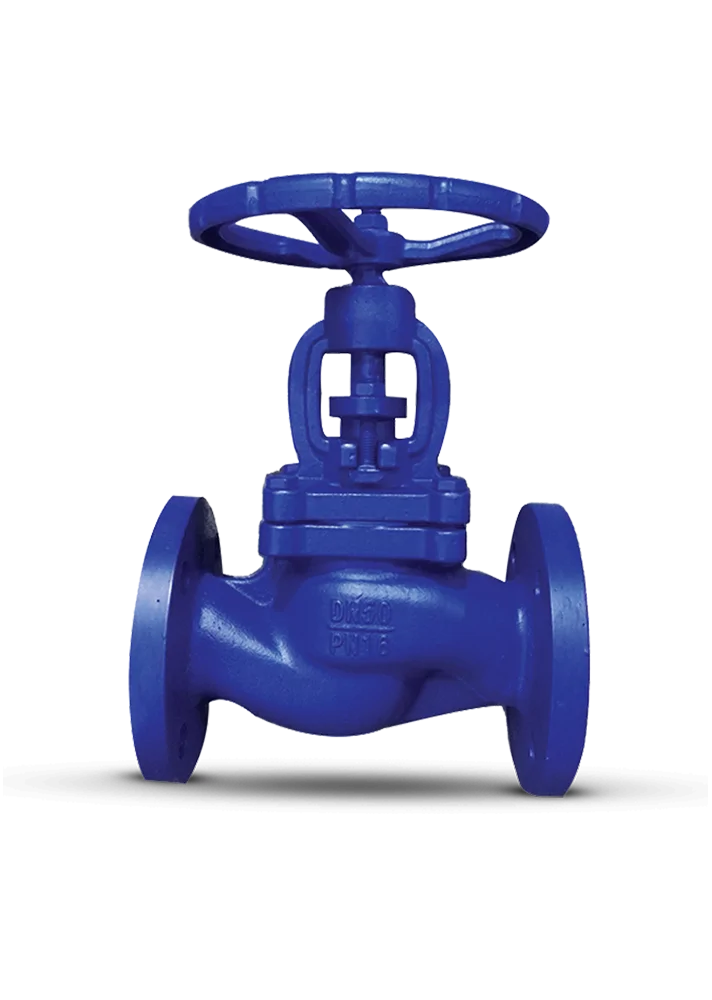
The Role of Globe Valves in Automotive Production Lines
The automotive industry is a sector that requires high-strength and reliable flow control equipment due to continuously operating production lines, precise testing systems, and energy-intensive processes. In this context, globe valves play a critical role, especially in managing temperature control, pressure balance, and chemical flow mechanisms. Used at many points from paint lines to metal surface treatment tunnels, from engine test chambers to industrial boiler and compressor lines, globe valves ensure that the flow of steam, hot water, compressed air, and various chemical solutions is precisely adjusted.
In automotive paint shops, surface preparation lines are precise systems that control pH balance and chemical flow density. The reliable sealing provided by globe valves in these processes reduces chemical losses and potential corrosion risks while also contributing to the preservation of paint quality. The steam, hot water, and air lines operating under high temperature and pressure are also critical areas where globe valves come into play. High-temperature resistance, long-lasting structure, and precise flow management are key to ensuring operational continuity in automotive production lines.
Moreover, globe valves play an important role in heat exchange systems, cooling circuits, and oil line applications involved in performance testing of vehicle engines. In these areas where quick open-close features are required, the robustness of the valve's internal structure directly affects process stability. In addition to standard globe valve models, metal bellows designs provide extra safety for stem sealing in critical areas, ensuring a safe working environment. This extends maintenance intervals, minimizes potential failures, and ensures the production line continues as planned.
In today's automotive industry, sustainable production and energy efficiency are becoming increasingly important. The high-pressure and high-temperature resistant structure of globe valves ensures proper flow management, preventing energy losses and contributing to process optimization. In this respect, globe valves are not only flow control equipment but also an essential part of efficiency strategies. Offering strong advantages in terms of facility safety, product quality, and energy savings, globe valves continue to maintain their critical importance by adapting to the evolving production technologies of the automotive sector.
Globe Valves in Marine and Ship Systems
The maritime sector faces extremely challenging environmental conditions such as continuous vibration, high salinity, and variable pressure and temperature conditions. It is critical that the equipment used in this environment is durable, corrosion-resistant, and reliable. Globe valves are one of the essential components that ensure the safe and efficient operation of ship systems. Thanks to their precise flow control, high sealing capability, and robust body structure, they are widely preferred in engine rooms, auxiliary systems, and heating-cooling circuits. Safety and continuity are essential in maritime transport; therefore, globe valves provide reliable performance, especially in continuously operating pumps, thermal circuits, and pressurized lines.
In the cooling circuits of ship engines, the flow of seawater, fresh water, and oil must be managed with precision. Incorrect flow adjustments can not only reduce engine performance but also lead to serious system failures. Globe valves provide stable flow control in these circuits, helping to keep the engine at its ideal operating temperature. They also come into play in critical processes such as steam boilers, hot water systems, and fuel circuits. Their high-pressure resistant structure and sealing success of shut-off elements make it possible to operate these systems safely.
The corrosion risk posed by salty water is one of the most important factors determining material selection in maritime applications. Therefore, stainless steel-bodied and bellows globe valve solutions are particularly preferred in tankers, passenger ships, fishing boats, and industrial marine platforms. The bellows globe valve structure provides high-level stem sealing, preventing fluid leakage to the external environment and minimizing maintenance needs. This is a significant advantage, especially for ships in continuous navigation, as unplanned downtimes and maintenance costs create serious burdens operationally.
In maritime operations, energy efficiency and fuel savings are fundamental goals in terms of both environmental sustainability and operational costs. Globe valves contribute to the optimized functioning of fluid lines, enhancing system efficiency. Thanks to their reliable shut-off mechanism, they reduce energy losses and strengthen the stability and safety of onboard processes. Thus, a continuous and reliable operational regime is ensured both during long voyages and port operations. With their durable structure, ease of maintenance, and high performance, globe valves are positioned as one of the most suitable solutions for the challenging conditions of the maritime industry.
Applications of Globe Valves in HVAC and Building Plumbing Systems
HVAC systems are among the most critical technical infrastructures for the comfort, energy efficiency, and indoor climate control of modern buildings. The proper management of hot water, cooling water, steam, and various fluids in these systems directly affects both system performance and user comfort. Globe valves stand out as one of the most reliable components of HVAC circuits due to their structures that provide precise flow control. Particularly, ensuring smooth flow adjustment in heating and cooling lines is crucial for reducing energy consumption, ensuring the efficient operation of equipment such as boilers and chillers, and maintaining thermal balance throughout the facility. The linear motion shut-off mechanism of globe valves allows for controlled flow management in these applications and enhances system stability.
Globe valves used in areas such as central heating systems, radiator circuits, fan-coil lines, boiler rooms, and cooling towers offer a safe and long-lasting solution thanks to their high pressure resistance and sealing capabilities. The balanced distribution of hot water in heating systems and optimal water flow in cooling lines play a fundamental role in maintaining indoor comfort conditions. Additionally, globe valves, which are also effectively used in steam boilers and hot water lines, provide reliability due to their bodies that withstand high temperatures and robust sealing surfaces. The cast iron or ductile iron body options used in this range offer flexibility suitable for different building infrastructures.
Energy savings in modern buildings can only be achieved not only through user habits but also by correctly selecting the mechanical components used in infrastructure systems. Globe valves prevent unnecessary loading of pumps by providing precise flow and pressure control, thus contributing to reduced energy consumption. They also ensure that maintenance processes are kept to a minimum; their sealing structure and durable design offer facility operators the advantage of long-term and uninterrupted use. Their ease of servicing when needed also provides great convenience in the field, which is a significant advantage, especially in buildings that need to operate continuously, such as high-rise buildings, hospitals, hotels, and commercial centers.
One of the most important requirements of HVAC systems is safety. Problems such as water leaks, line pressure imbalances, or steam leaks can lead to serious costs and loss of comfort. Globe valves prevent these risks by combining both shut-off and regulation functions in a single body. Safe flow control with high temperature and pressure resistance supports sustainable system design in modern building technologies. Therefore, globe valves continue to be an indispensable part of HVAC solutions across a wide scale, from industrial facilities to living spaces.
Reasons for Choosing Globe Valves in the Petrochemical and Pharmaceutical Industries
The petrochemical and pharmaceutical industries are characterized by production environments that require precise process control, high safety standards, and chemical resistance. Every piece of equipment used in these sectors must be resistant to high temperatures and pressures, maintain structural integrity when interacting with aggressive chemicals, and provide maximum reliability in process flow. Globe valves play a critical role in petrochemical and pharmaceutical production thanks to their robust structures that meet all these requirements. The ability to perform precise flow control directly affects product quality and process safety in these systems. Globe valves, which provide precise modulation with their linear shut-off mechanism, are frequently preferred in reactor lines, distillation columns, solvent circuits, steam lines, and heat exchange systems.
Petrochemical processes often involve highly corrosive environments, flammable fluids, and volatile gases. Therefore, the valve materials used must possess superior durability characteristics, such as stainless steel, alloy steel, or high-quality ductile iron. The metal-bodied models of globe valves maintain high-level sealing in the shaft area, preventing hazardous gas and liquid leaks. This structure is critical for both environmental safety and the health of workers. In the pharmaceutical industry, hygiene and sterility are essential. Any external contamination mixing into the process line or leakage of the product into the external environment is unacceptable. The complete sealing capability and easily cleanable internal structure of globe valves are among the most important reasons for their preference in pharmaceutical production lines.
In these industries, process continuity is vital for both economic efficiency and safety. Unexpected downtimes can lead to production loss as well as serious risks. Globe valves reduce maintenance needs with their durable bodies and long service life, supporting system continuity. Additionally, thanks to their resistance to high temperatures and pressures, they can be safely used even in challenging conditions such as steam and hot oil lines. Precise pressure and flow control provide energy savings, extend equipment life, and enhance process efficiency.
Maintaining the stability of chemical reactions, preserving temperature balance, and keeping process flow under control are fundamental dynamics of both the petrochemical and pharmaceutical sectors. Therefore, globe valves offer a reliable and sustainable solution in process control. Their structures that meet both safety criteria and industrial standards place these valves at the forefront of strategic equipment. The combination of long-term performance, easy maintenance, and high safety makes globe valves indispensable in chemical and pharmaceutical production.
Use of Globe Valves in Metal and Steel Production Facilities
The metal and steel industry is known for its production processes dominated by high temperatures, intense pressure, corrosive environments, and heavy-duty conditions. All types of flow control equipment used in these facilities must possess mechanical robustness capable of withstanding extreme conditions. Globe valves play a critical role in metal and steel facilities with their durable body design, superior performance against high temperatures and pressures, and structure that provides precise flow adjustment. They ensure reliable control in lines working with hot water, steam, oil, inert gases, and various chemical specialties, maintaining process continuity. Especially preferred in rolling mills, foundries, heat treatment furnaces, and energy recovery systems, globe valves do not disrupt flow balance even under high heat and maintain system safety.
The furnaces and heating systems used in metal production lines are highly dependent on temperature stability. The steam and hot water lines used in these systems cannot operate stably without the precise control capability of globe valves. The linear motion mechanism inside the valve allows for gradual and controlled adjustment of the flow rate, directly contributing to the preservation of product quality in thermal processes. Additionally, lubrication circuits and cooling lines used in the facilities are vital for the lifespan of production equipment. Globe valves provide reliable shut-off and flow management in these lines, preventing overheating and equipment damage. Since any system failure in metal production processes can lead to significant economic losses, the durability and continuity offered by globe valves is a strategic advantage.
The risk of corrosion is a common issue encountered in metal facilities. Surface treatment lines and acid baths that use various chemicals necessitate the selection of high-quality valve materials. Globe valves made from high-alloy materials such as AISI 304 and AISI 316 stainless steel exhibit excellent resistance to aggressive environments. In some applications, metal bellows models are preferred to maximize stem sealing; thus, both fluid losses are prevented, and operator safety is ensured at the highest level. When this structural strength is combined with long operating periods and minimal maintenance needs, globe valves become a sustainable and economical solution for the metal and steel industry.
In these energy-intensive facilities, efficiency is one of the key criteria that determine competitive power. The ability of globe valves to optimize flow provides energy savings in processes, helping to reduce costs in many facilities. Additionally, advanced sealing mechanisms prevent leaks and maintain stable system pressure. Thanks to these features, globe valves are positioned as indispensable equipment that meets the high performance and reliability expectations of metal production facilities. With long life, low maintenance costs, and safe operation advantages, globe valves continue to offer the most suitable flow control solutions for the challenging conditions of the metal industry.
Globe Valves in Energy Production and Cogeneration Systems
Energy production facilities are complex structures that extensively use high-pressure steam lines, hot water circuits, condensation systems, and chemical processing lines. The most critical requirement in these facilities is the uninterrupted and safe execution of processes. Globe valves stand out as one of the most reliable valve solutions providing both shut-off and precise flow control in energy production. These valves, which open and close with linear motion by their operating principles, ensure stable fluid management even under high temperatures and pressures. Because of these features, they hold strategic importance in steam turbines, boiler systems, heat recovery units, and cogeneration lines.
In cogeneration and trigeneration systems, since energy and heat are produced together, establishing the correct flow balance plays a critical role in terms of efficiency. Globe valves contribute to the ideal operation of equipment by precisely adjusting the steam and hot water flow in these systems. Especially in high-capacity boilers and steam lines used in industrial facilities, the robust body structure and high sealing capability of these valves are fundamental to maintaining safe operating standards. Additionally, their resistance to pressure changes prevents system fluctuations, thereby increasing energy production efficiency and extending equipment lifetimes.
In the energy sector, safety is as important as performance. Steam leaks, sudden pressure changes, or irregularities in flow control can lead to serious failures, job losses, and safety risks. Metal bellows globe valve options provide excellent solutions in lines requiring high safety by maximizing sealing around the stem. Additionally, stainless and high-alloy steel bodies offer extra durability against corrosive environments and chemical additives. This enables energy production facility operators to achieve maximum efficiency with minimal maintenance during long operational cycles.
Process optimization in energy businesses is one of the most decisive factors for competitive advantage. Globe valves help balance fuel consumption and reduce energy losses by ensuring stable flow. Especially in systems that recover waste heat, precise flow control directly affects the overall performance of the facility. All these advantages make globe valves not just a valve but a key component of energy efficiency and process safety strategies. With high durability, precise control, and long service life, globe valves stand out as indispensable flow control solutions in modern energy infrastructures.
Globe Valves for Heat and Flow Control in the Textile Industry
The textile sector has a wide variety of processes that require high temperatures, chemical usage, pressurized steam, and precise temperature control during production processes. Each stage, such as fabric dyeing, finishing, washing, drying, and steaming, is carried out efficiently with the correct heat and flow management. Globe valves are among the most reliable flow control equipment in these processes. Thanks to their linear motion mechanism, they regulate the flow gradually and precisely, thus maintaining the process balance of textile machines and ensuring the continuity of production quality. Particularly in steam lines, the high sealing capability they provide in hot water systems and chemical feed lines is one of the most important reasons why globe valves have become indispensable in textile facilities.
The dyes, chemical specifications, and additives used in textile production must progress in precise proportions within the line. Otherwise, quality problems such as color imbalances, surface defects, or deformations in the fabric structure may occur. Globe valves standardize production quality by providing precise flow regulation in chemical feed and steam stabilization lines. Especially, piston globe valve systems supported by elastomeric seals provide long-lasting use in processes that come into contact with aggressive substances by increasing chemical resistance. Additionally, their high-temperature resistant material structure offers stable performance in heat-intensive systems such as textile dyeing boilers and drying tunnels.
A significant portion of energy use in the textile industry comes from steam systems. Therefore, ensuring energy efficiency is one of the most important factors that enhance competitive power. Globe valves prevent energy loss by minimizing leaks in steam lines and ensure that system pressure is managed correctly. The secure shut-off they provide in boiler rooms, steam distribution systems, and condensate lines contributes to reducing energy costs and optimizing maintenance continuity for businesses. Alternatives with metal bellows in globe valves offer sealing advantages that enhance user safety in lines with high temperature and pressure.
Textile production operates on the principle of uninterrupted operation; unplanned downtimes negatively affect both production efficiency and product quality. Therefore, the durability and serviceability of the equipment used are quite important. Globe valves provide a reliable working environment in textile facilities with their compact structure, high durability, and long service life. Globe valves, which offer stable performance at every stage from CNC dyeing machines to steam tunnels, from large-scale drying lines to chemical preparation systems, sustainably support the efficiency and quality standards of textile businesses. Thus, while stability is ensured at every step of the production processes, low maintenance costs and high process control provide significant advantages to businesses in the long term.
Conclusion
Globe valves are one of the essential components of the reliable operational infrastructure of industrial facilities due to their robust mechanical structure, high sealing performance, and precise flow control capabilities. Their wide range of applications, from food to automotive, petrochemicals to energy and the textile sector, demonstrates how critical these products are from an engineering perspective. Superior material structure, high temperature and pressure resistance, ease of maintenance, and long service life make globe valves both an economical and safe solution.
In today's industrial processes, energy efficiency, process stability, and sustainable operational performance have become more important than ever. At this point, globe valves provide businesses with both operational smoothness and cost advantages by ensuring that systems are operated at optimum levels. These valves, which provide reliable shut-off and control in critical process lines, continue to be a strategic component that enhances the production quality of modern facilities and supports uninterrupted operational order.
In conclusion, whether in power plants with high thermal values or in food production facilities requiring precise hygiene, globe valves offer an indispensable flow control solution in industrial applications at every scale. With the right valve selection, regular maintenance, and appropriate facility design, globe valves are a technology that businesses can use safely, efficiently, and durably for many years.