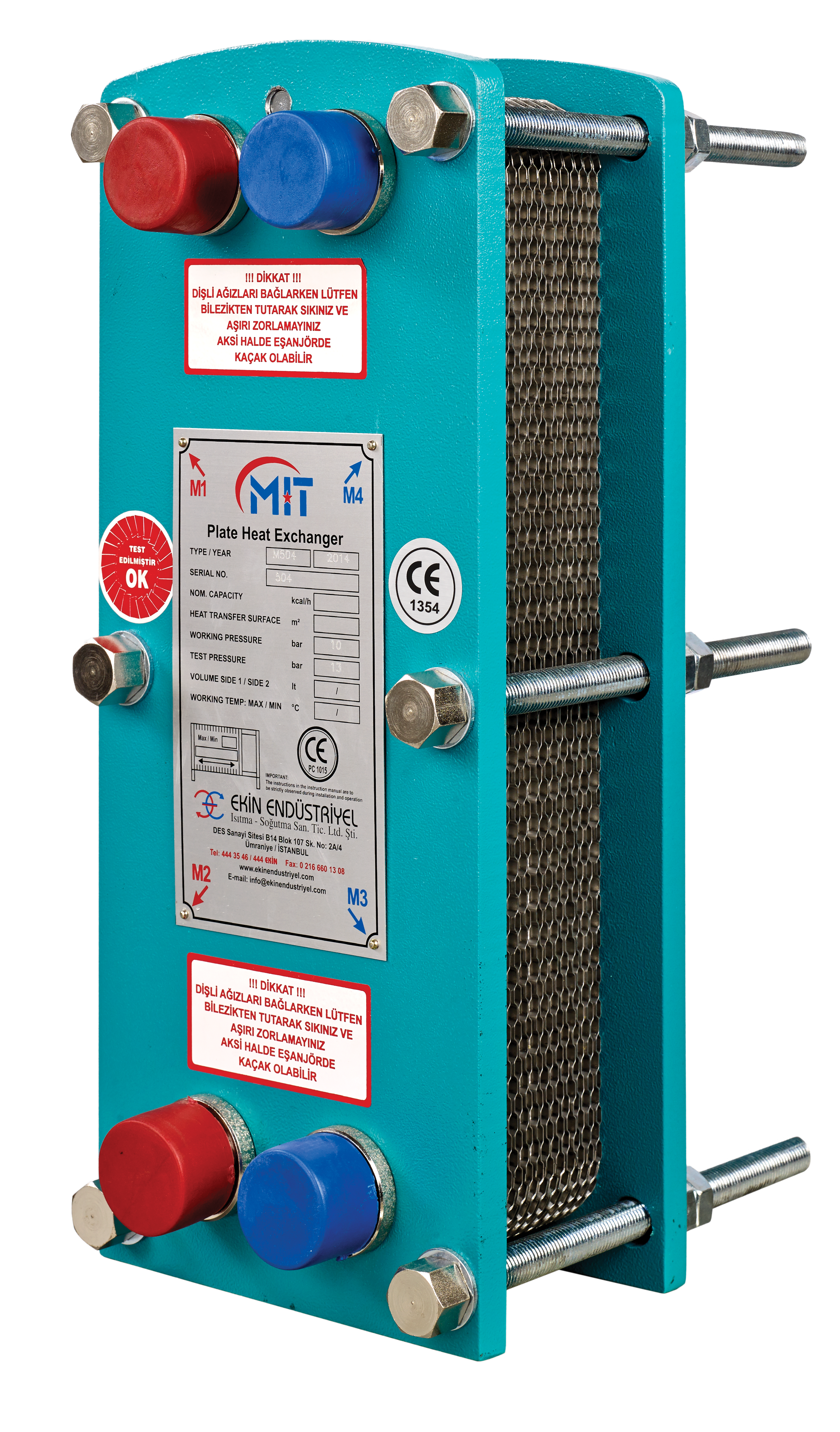
The efficiency of industrial processes, energy savings, and system reliability are among the most important criteria determining the competitiveness of modern facilities. At this point, heat transfer technologies play a strategic role. Plate heat exchangers are critical equipment preferred in various sectors due to their compact structures, high heat transfer efficiency, and ease of maintenance.
These devices enable the transfer of thermal energy from one fluid to another with minimal loss; they have a wide range of applications from production lines to air conditioning systems, from food processes to the chemical industry. The modular structure of plate exchangers offers rapid adaptation to variable process conditions and can be customized according to the different capacities and needs of facilities.
Thanks to various design options such as standard, wide range, semi-welded, and double-plate, they can be safely used in every application from high-viscosity fluids to aggressive chemical environments, from precise heating-cooling processes to hygienic production areas. Additionally, the high efficiency they offer in energy recovery projects contributes to reducing the carbon footprint of businesses while supporting sustainability goals.
Use of Plate Heat Exchangers in HVAC and Air Conditioning Systems
HVAC (Heating, Ventilation, and Air Conditioning) systems are among the most critical infrastructures of modern living spaces. In these systems, which are used to ensure the comfort conditions and increase energy efficiency of buildings, plate heat exchangers serve as a fundamental component. Their compact designs, high heat transfer efficiency, and ease of maintenance make them widely preferred in both residential and commercial and industrial facilities.
In central heating systems, heat transfer is provided between different circuits while preserving the system water and achieving hydraulic separation. This protects main equipment such as boilers, heat pumps, or chillers, increases system efficiency, and extends equipment lifespan. At the same time, plate exchangers provide a reliable and stable working environment by balancing pressure differences in the installation.
In cooling applications, they provide complete isolation between the chiller and the user circuit. Especially in high-rise buildings, they support the safe operation of the system by being used for pressure breaking. They also work together with heat pumps to provide high performance in both heating and cooling modes. They play an important role in chiller by-pass systems, free cooling, and energy recovery applications.
In HVAC systems used in hospitals, hotels, shopping malls, residences, and industrial facilities, hygienic and reliable working conditions are of great importance. Thanks to the design of plate exchangers, system water does not mix with potable water, which allows for the provision of clean and safe drinking water. For example, in hot water preparation systems, heat transfer is performed before the boiler, resulting in more efficient and safer usage.
Energy savings, sustainability, and reducing operating costs are fundamental goals in today’s building technologies. Plate heat exchangers play a strategic role in achieving these goals. With low energy consumption, minimal maintenance needs, and long service life, they offer an optimum solution both technically and economically in HVAC projects.
Use of Plate Heat Exchangers in the Food and Beverage Industry
The food and beverage industry is one of the sectors where hygiene standards are maintained at the highest level, and process quality and safety are critical. In sensitive production lines such as dairy products, fruit juices, beer, drinking water, and similar products, temperature control directly determines product quality. Therefore, plate heat exchangers are indispensable solutions in food processes due to their hygienic designs, efficient heat transfer, and easy-to-clean structures.
In pasteurization systems, it is essential to reach the correct temperature values quickly to eliminate microorganisms from the product and extend shelf life. The large surface area and turbulent flow structure of plate exchangers provide high heat transfer in a short time. This both increases process efficiency and preserves the structural properties of the product. At the same time, they contribute to the sustainability of the process by providing energy recovery during cooling operations.
In the production of fruit juices, beer, and beverages, temperature stability is crucial for the homogeneity of raw materials and flavor balance. Plate heat exchangers offer high precision in this process, supporting the preservation of the product's taste, color, and nutritional value. They are compatible with CIP (Clean in Place) systems used in production lines, minimizing contamination and bacterial buildup. Thus, both hygiene standards are maintained, and maintenance times are reduced.
In hot water preparation, fermentation, yogurt production, cheese processing, and beverage pasteurization processes, plate exchangers provide a durable and long-lasting solution suitable for food contact due to their stainless steel material structure. Additionally, they can be easily expanded in facilities requiring capacity increases due to their modular structure.
Energy efficiency is an important factor that directly affects costs in the food industry. Plate exchangers reduce energy consumption through heat recovery and provide significant savings for businesses. The simultaneous provision of food safety, hygiene, and process efficiency further enhances the importance of these devices in the industry.
Use of Plate Heat Exchangers in Energy and Cogeneration Systems
Energy production and cogeneration (simultaneous heat and electricity production) systems are at the center of efficiency and sustainability-focused processes. In these areas, the performance of heat transfer equipment directly determines both energy costs and environmental impact. Plate heat exchangers are positioned as a critical solution in the energy sector due to their compact designs, high heat transfer coefficients, and flexible structural features.
In cogeneration and trigeneration systems, different processes such as engine cooling water, oil cooling circuits, and exhaust gas heat recovery are optimized through exchangers. The waste heat generated during operation is recovered through plate exchangers and used to heat hot water, steam, or different process fluids. This approach reduces energy consumption, increases system efficiency, and lowers operating costs.
In geothermal energy applications, the direct use of high mineral content hot water extracted from underground poses risks of corrosion and scaling. Plate heat exchangers provide protection for equipment by isolating the geothermal water from the usage circuit while efficiently transferring heat. They also play an effective role in energy plants, in boiler feed water heating, condenser systems, and heat recovery equipment.
In refineries, power plants, biogas facilities, and industrial heat production lines, plate heat exchangers are designed to withstand high temperature, high flow, and continuous operation conditions. Thanks to advanced sealing technologies and materials like stainless steel and titanium, they ensure long-lasting and reliable use. At the same time, ease of maintenance and modular structure minimize downtime.
Plate heat exchangers play a strategic role in achieving energy efficiency, reducing carbon emissions, and reaching environmentally friendly production goals. When applied with the right engineering solutions in the energy sector, they provide high added value both economically and environmentally for businesses.
Use of Plate Heat Exchangers in Marine and Offshore Applications
The maritime sector requires the use of durable, reliable, and highly efficient equipment due to challenging environmental conditions and continuous operation requirements. In ships, offshore platforms, and systems serving the maritime industry, plate heat exchangers play a significant role with their compact structures, high heat transfer capacity, and material options suitable for marine environments.
In ship machinery and auxiliary systems, many critical processes such as engine cooling water, oil cooling, fresh water production, and exhaust heat recovery require precise temperature control. In these systems, plate heat exchangers contribute to the safe and efficient operation of machinery by providing heat transfer between seawater and fresh water circuits. Especially in diesel engine cooling circuits, they protect the system from the corrosive effects of saltwater and ensure a longer lifespan for the engine's internal circuit.
The high salinity, chemical content, and biological contamination of seawater make it abrasive. Therefore, titanium, duplex stainless steel, or specially coated plates are often preferred in marine applications. These materials provide superior protection against corrosion, offering long service life and low maintenance costs.
During natural gas, oil, and energy production processes on offshore platforms, significant heat exchange occurs. Plate heat exchangers provide high performance in limited spaces due to their compact structures in these processes. Additionally, their modular design and easy serviceability give a minimum downtime advantage in platform operations.
Plate heat exchangers, which are also widely used in shipyards, fish processing vessels, LNG/LPG terminals, and seawater treatment systems, contribute to reducing operational costs by increasing energy efficiency. With low energy consumption and sustainable use features, they comply with the environmental goals of the maritime industry.
Reliability, continuity, and corrosion resistance are the most critical factors in the maritime and offshore sector. Plate heat exchangers are among the indispensable heat transfer equipment in the industry with their durable designs and high performance that meet these requirements.
Use of Plate Heat Exchangers in the Automotive Industry
The automotive industry is one of the sectors where temperature control is critically important due to high precision manufacturing processes, continuously operating test systems, and energy-intensive processes. Plate heat exchangers provide reliable and efficient solutions across a wide range, from assembly lines to paint facilities, test laboratories to component manufacturing processes.
In painting applications, thermal balance must be maintained in surface preparation, drying lines, and coating processes. Plate heat exchangers enhance paint quality by precisely controlling the temperature of process fluids in these applications, improving surface homogeneity and ensuring that chemical reactions occur under ideal conditions. This situation increases product quality and reduces defects and waste rates.
In engine and transmission test systems, components operating at high power and speed generate intense heat. In these test environments, plate heat exchangers contribute to the safe operation of equipment by providing effective heat control in oil and cooling water circuits. Thus, the accuracy of test processes is ensured, and the performance measurements of the tested systems become reliable.
Temperature management is of great importance in hydraulic press lines, plastic injection machines, and aluminum casting processes used in automotive manufacturing. Plate heat exchangers extend equipment life and enhance operational efficiency by providing precise cooling performance in these systems. Additionally, through heat recovery systems, waste heat generated in processes is reused, reducing energy costs.
With the rise of Industry 4.0 and smart manufacturing applications, energy management and sustainability goals are becoming prominent in automotive factories. Plate heat exchangers play a strategic role in achieving these goals thanks to their highly efficient designs, low maintenance needs, and modular structures. Their compact structures also contribute to the efficient use of limited spaces in modern production lines.
In conclusion, plate heat exchangers in automotive production lines and support processes provide a critical solution with high durability, precise control, and energy efficiency advantages. These features significantly contribute to ensuring process stability and maintaining quality standards in the automotive sector.
Use of Plate Heat Exchangers in the Petrochemical and Pharmaceutical Industries
The petrochemical and pharmaceutical industries are two critical production areas where process control and safety standards are at the highest level. In these sectors, the stable progression of chemical reactions, precise temperature management, corrosion resistance, and production continuity are vital. Plate heat exchangers offer effective solutions to these requirements with high heat transfer efficiency, material options resistant to aggressive fluids, and reliable sealing structures.
In petrochemical facilities, processes such as refining, heating and cooling circuits, solvent recovery, and liquid-liquid heat exchange often prefer plate exchangers. The chemical composition of the fluids used in processes, as well as temperature and pressure values, are generally high. To meet these needs, maximum corrosion resistance is achieved by using titanium, duplex stainless steel, and special alloy plates. At the same time, modular design offers operational advantages such as maintenance and capacity increase.
In the pharmaceutical industry, processes require high hygiene levels, chemical stability, and temperature accuracy. Plate exchangers play a significant role in applications such as reactor jacket heating-cooling, fermentation tanks, pure water systems, CIP processes, and solvent concentration. With hygienic design and food and pharmaceutical compliant plate models, product safety is ensured. Low contact area gasket structures and smooth surfaces help prevent microbial adhesion and provide ease of cleaning.
Process safety is one of the most important criteria in these industries. The risk of fluid mixing is eliminated thanks to the double-walled or double-circuit safety solutions of plate exchangers. At the same time, leakage control channels and advanced gasket technologies minimize potential process risks. This structure offers critical safety advantages, especially in lines containing toxic or explosive chemicals.
In today's production world, where energy efficiency and environmental sustainability goals are prominent, plate heat exchangers provide significant contributions through waste heat recovery and process optimization. Lower energy consumption, reduced maintenance costs, and long equipment life are reasons for preference in the petrochemical and pharmaceutical sectors.
Use of Plate Heat Exchangers in the Metal and Steel Industry
The metal and steel industry is a production area dominated by high-temperature processes, intense energy use, and harsh working conditions. The equipment used in this field must provide both high durability and efficient heat management. Plate heat exchangers play an important role in metal and steel processing plants with their compact structures, high heat transfer performance, and engineering solutions resistant to harsh process conditions.
In steel production lines, rolling, heat treatment, cold forming, and melting processes generate intense heat. Maintaining hydraulic oils, cooling water circuits, and process fluids at the correct temperature is critical for production quality and equipment life. Plate heat exchangers ensure rapid and effective heat transfer in these circuits, maintaining process balance, reducing equipment wear, and minimizing the risk of failure.
Wide range plate exchanger models are preferred in applications working with high flow rates and high particulate content fluids. These models reduce the risk of clogging, lower flow resistance, and provide high-performance cooling. Additionally, the quick disassembly and cleanable structure of the exchanger shortens maintenance times in heavy industrial environments and minimizes production line downtime.
In continuous casting lines, temperature control in ladle cooling and furnace cooling systems is one of the fundamental elements of production safety. Plate exchangers used in these areas offer long-lasting and reliable performance with gasket and material structures resistant to high temperature fluctuations. In energy recovery projects, waste heat is evaluated to reduce the total energy consumption of the facility.
The competitive environment in the metal sector has made production efficiency and sustainability criteria more important than ever. Plate heat exchangers provide businesses with a strategic advantage in achieving these goals. With reduced fuel consumption, low carbon emissions, and decreased operating costs, they offer a strong solution from both environmental and economic perspectives.
Use of Plate Heat Exchangers in the Textile Industry
The textile industry is a sector with production stages that require high energy, such as dyeing, finishing, washing, drying, and steaming processes. Temperature control in these processes is a critical variable that directly affects product quality. Plate heat exchangers are widely used in textile facilities for high-efficiency heat transfer, low energy consumption, and reliable operational performance.
In dyeing and finishing processes, the use of hot water and steam is intense, and maintaining the process fluids at the correct temperature ensures high color stability and fabric quality. Plate exchangers provide high-efficiency heat transfer between the process water and heating source in these systems, offering homogeneous temperature control. This prevents color differences, tone shifts, or imbalances in chemical reactions.
In textile washing lines, recovering the outgoing water temperature and preheating fresh feed water is one of the decisive points for energy efficiency. Heat recovery with plate heat exchangers provides significant natural gas and electricity savings for businesses. This approach not only offers cost advantages but also contributes to reducing carbon emissions, supporting sustainable production goals.
In drying and steam ironing lines, special gaskets and plate materials resistant to high temperatures are used. Wide range plates allow fluids that may contain fibers, particles, or chemical residues to circulate smoothly in the system. Thus, the risk of clogging is reduced, and maintenance times are shortened.
Competition in the textile industry is determined not only by production capacity but also by indicators of efficiency, energy management, and environmental compliance. Plate heat exchangers provide both operational excellence and sustainability in textile facilities due to their low energy cost, quick maintenance capability, modular design advantages, and long-lasting usage features.
Use of Plate Heat Exchangers in the Paper and Pulp Industry
The paper and pulp industry is an extremely dynamic production area in terms of energy and heat management, characterized by high-temperature steam use, intense water consumption, and continuously operating process lines. Temperature control in processes such as fiber preparation, pulp processing, drying, and coating directly affects product quality, production speed, and energy costs. Plate heat exchangers stand out in these processes with high-efficiency heat transfer, low energy consumption, and compact design advantages.
Maintaining the process water at the appropriate temperature in dough preparation lines is critical for the proper dissolution of fibers and ensuring homogeneous distribution. Plate heat exchangers play a key role at this stage by providing controlled heating and cooling functions, ensuring the stability of dough quality. Additionally, they optimize steam usage by providing high-efficiency heat transfer in the condensation and condenser systems used in paper machines.
In drying cylinders and coating lines, stable temperature control determines both surface quality and drying time. Plate heat exchangers minimize energy losses and prevent unnecessary steam consumption. The wide-range plate models used in these systems reduce the risk of clogging caused by cellulose and fiber residues, ensuring uninterrupted operation.
Since paper production is a process that intensively uses water, heat recovery is of great importance. Plate heat exchangers allow for the recovery of energy from waste hot water, preheating fresh feed water. This reduces energy costs while also minimizing environmental impacts. Energy recovery, which is one of the fundamental elements of sustainability goals in modern paper mills, is effectively achieved with these devices.
Thanks to their durability against challenging process conditions, strong performance against high temperatures and pressures, ease of maintenance, and long lifespan, plate heat exchangers are a reliable engineering solution for the paper and cellulose industry. These devices are among the essential support equipment in terms of providing production efficiency, product quality, and cost optimization.
Use of Plate Heat Exchangers in Renewable Energy Systems
Renewable energy systems are at the center of sustainable production approaches and hold a significant position in terms of energy efficiency, low carbon emissions, and environmental sensitivity criteria. In various renewable energy technologies such as solar energy, biogas, biomass, and geothermal, plate heat exchangers play a key role with their reliable heat transfer, compact design, and high efficiency features.
In solar energy systems, plate exchangers come into play when transferring the heated fluid from the collectors to the storage system or for use. While solar-generated heat typically circulates in a closed loop, the usage water is in a separate loop. Plate exchangers enable safe and hygienic operation of the system by providing high-efficiency heat transfer between these two circuits. Moreover, their effective performance even at low temperature differences enhances energy efficiency in these systems.
In biomass and biogas facilities, controlling the reactor temperature is critical for production efficiency. The stability of microorganism activities and the maintenance of temperature balance are essential for optimal biogas formation. Plate heat exchangers provide high efficiency in reactor heating and sludge heat exchange processes in such systems. Additionally, corrosion-resistant material options offer reliable operation with aggressive organic content fluids.
In geothermal applications, the high-temperature water and fluids that emerge from underground sources often contain minerals and chemicals. Plate exchangers prevent equipment corrosion by ensuring that the geothermal fluid does not come into contact with the usage circuit while providing heat transfer in these systems. Thus, both energy efficiency is increased, and the system lifespan is extended.
In renewable energy projects, optimizing land use and preferring cost-effective solutions are important. Plate heat exchangers provide high performance even in limited spaces due to their compact structures. Additionally, their modular design allows for easy expansion of the system when capacity increases are needed.
Minimizing losses during energy conversion processes is an indispensable part of environmental sustainability goals. In this context, plate heat exchangers stand out as durable, long-lasting, and highly energy-efficient solutions that support clean energy technologies.
Use of Plate Heat Exchangers in Heat Pumps and Geothermal Systems
Heat pumps and geothermal systems are among the most efficient solutions in modern heating and cooling technologies. These systems utilize the low-temperature energy available in the environment to achieve high-efficiency heat transfer and support sustainable energy use. Plate heat exchangers are one of the key components of these technologies, providing high performance, reliability, and energy savings.
In heat pump systems, a strong heat transfer surface is required for the efficient performance of the evaporator and condenser functions. Plate exchangers, with their compact structures and designs that promote turbulent flow, offer maximum heat transfer performance in heat pumps. In these systems, they play an active role in both extracting heat from low-temperature sources and transferring energy to the heating circuit at high temperatures.
In geothermal applications, the hot water or heat source fluids obtained from underground sources often contain minerals and sediments. Plate heat exchangers minimize corrosion and scaling effects by separating geothermal water from the secondary circuit in the primary circuit. This extends the equipment lifespan, reduces maintenance costs, and preserves efficiency. Durable materials such as titanium, stainless steel, and special alloys are selected to accommodate the chemical structure of geothermal fluids.
Plate exchangers, which provide a high heat transfer coefficient even at low temperature differences, maximize energy efficiency. They also demonstrate stable performance even under varying flow and pressure conditions. Due to these features, they have a wide range of applications, from residential buildings to commercial structures, industrial facilities, and regional heating networks.
The modular structure allows for the expansion of the exchanger according to capacity requirements while minimizing the need for installation space due to its compact form. The ease of maintenance reduces service times in the field, supporting system continuity.
In heat pumps and geothermal systems, sustainability, energy savings, and long-lasting operation are targeted. Plate heat exchangers emerge as a reliable and high-performance engineering solution that contributes to these goals.
Plate heat exchangers are strategic equipment that offer high efficiency, compact design, easy maintenance, and energy savings in modern industrial processes. This technology has a wide range of applications, from HVAC systems to food production, energy facilities, petrochemicals, maritime, metal, textiles, and renewable energy applications, and it has a flexible structure that can adapt to the operational requirements of different sectors.
Thanks to their high surface area, turbulent flow design, and modular structure, plate heat exchangers provide both low energy consumption and high heat transfer efficiency. These features help businesses reduce energy costs while supporting their sustainability goals. Additionally, advanced material options and hygienic design alternatives offer safe usage possibilities, from aggressive chemical environments to sensitive food and pharmaceutical processes.
Today, efficiency, reliability, and environmental responsibility are at the forefront in manufacturing facilities. Plate heat exchangers stand out as a solution that enhances operational performance while providing long-term cost advantages, positioned at the intersection of these requirements. With the right engineering choice, quality equipment use, and regular maintenance, plate exchangers deliver maximum performance and long service life in industrial systems.