Pasteurizers are machines that heat and cool food products through controlled processing principles, rendering harmful microorganisms ineffective. As one of the most critical process equipment used in the food industry, pasteurizers are preferred especially for safe consumption and extending shelf life in perishable products. Pasteurization can be applied to hundreds of different food products, including milk, whey, cream, fruit juice, cider, beer, wine, rose water, sauces, and similar items.
Pasteurization is based on heating the product to a specific temperature and holding it at that temperature for a certain period. This process ensures the inactivation of harmful bacteria, yeasts, and mold spores while preserving the nutritional value of the product. This method, which directly affects food safety, has become a standard practice in modern production facilities. Especially since raw materials in milk and dairy products have a high microbial load when pasteurization is not applied, it is indispensable both as a legal requirement and for quality control.
One of the biggest advantages of pasteurization in the food industry is that it extends shelf life without altering the product's structure. When the appropriate temperature-time combination is applied, losses in the product's taste, color, or consistency are kept to a minimum. Additionally, rapid cooling after pasteurization prevents the regrowth of microorganisms, thereby increasing the stability of the product.
In food businesses where hygiene standards must be maintained at the highest level, pasteurizers provide a reliable and controlled process. Modern pasteurizers enhance production efficiency and reduce operating costs with features such as automatic temperature control, energy recovery, CIP (clean-in-place) compatibility, and stainless steel hygienic designs. Therefore, pasteurizers have become an indispensable component of today's food production lines.
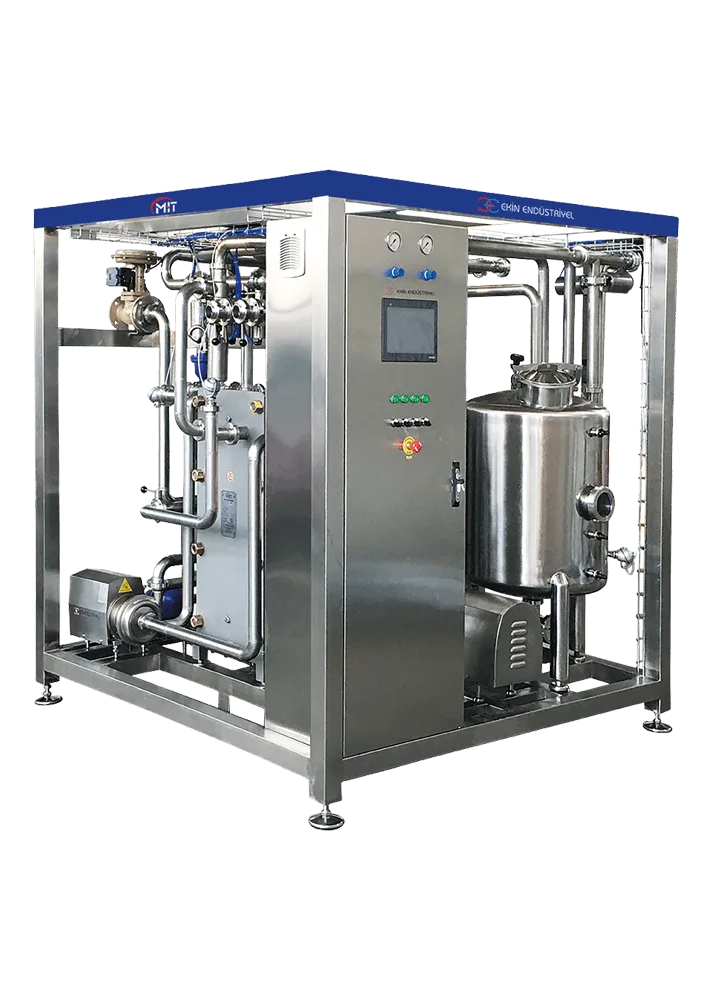
The pasteurization process in the food industry relies on the controlled heating of the product and holding it at a specific temperature to inactivate harmful microorganisms. However, this process is not just a heating process; it requires a multi-stage engineering approach to maintain product quality, preserve nutritional value, and maximize energy efficiency. Pasteurization parameters are specifically determined based on the type of product, its viscosity, pH level, and microbial load.
At the beginning of the pasteurization process, the raw material is usually taken to a balance tank or feeding hopper. This stage ensures that the flow on the line continues uninterrupted and stable. Throughout the process, the product is gradually heated by passing through plate or tubular pasteurizers. During this thermal treatment, temperature and time control are extremely critical; because overheating can lead to alterations in the product's taste, color, and structure.
The most commonly used pasteurization method in the food industry is the HTST (High Temperature Short Time) method. In this application, the product is brought to a high temperature in a short time and held for a specific duration in the holding tube. This method provides both microbial inactivation and helps preserve product quality.
Another critical stage of pasteurization is rapid cooling. After the product has been held at the target temperature for a sufficient time, it is quickly cooled to prevent the resumption of microbial activity. The faster the cooling is done, the higher the product quality. Therefore, regeneration and cooling stages are of great importance in modern pasteurizers.
In conclusion, the pasteurization process is a multi-stage process that increases both product safety and production efficiency in the food industry. The application of correct temperature-time combinations ensures that the product reaches the consumer safely and at a high quality.
The Role of Plate Pasteurizers in Food Production
Plate pasteurizers are among the most common pasteurization equipment that provide fast and efficient thermal processing in food production. These systems, consisting of stainless steel plates, seals, and flow channels, offer high efficiency especially in milk, fruit juice, beverages, sauces, cider, and low-viscosity food products. Thanks to the special design of the plate structure, the product reaches the target temperature in a short time, thus ensuring both food safety and product quality.
The main reason for the importance of plate pasteurizers in the food sector is their high heat transfer efficiency. The special groove structures on the plate surface allow for turbulent flow of the liquid. Turbulence increases the heat transfer surface area and enables the product to come into contact with hot water or steam more homogeneously. This situation allows the product to reach the desired temperature quickly, thereby reducing energy costs.
Hygienic design is another indispensable advantage of plate pasteurizers in food production. All surfaces in contact with food are made of stainless steel and are fully compatible with CIP (Clean in Place) systems. This allows cleaning to be done without stopping the production line, minimizes the risk of contamination, and increases operational efficiency.
Another reason for the preference of plate pasteurizers in the food industry is their flexible usage features. Since the plates can be easily removed and installed according to need, capacity increases or transitions between different products can be made quickly. This makes production processes more flexible and scalable.
In conclusion, plate pasteurizers are essential equipment in modern food production facilities due to their high efficiency, hygienic structure, low energy consumption, and flexible usage advantages. They provide significant added value to businesses in terms of maintaining product quality and ensuring process safety.
Working Principle of Pasteurizers: Stages in Milk and Juice Production
The principle of operation of pasteurizers is based on a process of heating food products in a controlled manner and then rapidly cooling them. The aim is to eliminate harmful microorganisms that may be present in the product while preserving its nutritional value, natural structure, and sensory properties. This principle ensures standard quality and safety in sensitive food products such as milk and fruit juice.
The process begins with the transfer of the product to the balance tank. The balance tank allows the system to be fed with a continuous and regular flow, enabling the uninterrupted progress of the pasteurization process. The product taken from here is passed through heat recovery sections known as regeneration. At this stage, the product is subjected to pre-heating by comparing it with the hot product in the system. This ensures energy savings and allows the product to approach the pasteurization temperature more evenly.
In milk processes, there is a separator stage after regeneration. This section is used to regulate the cream and fat distribution within the milk. Depending on the type of product, the system may activate such additional processes or proceed directly to the heating stage.
In the heating section, the product is brought to the required temperature range for pasteurization in a controlled manner. At this stage, the temperature is increased in a way that does not harm the product, and a precise control mechanism is in place to prevent quality loss. Then, the product is passed through a section known as the holding tube. This section ensures that the product is kept under thermal treatment for a specific period. The holding tube is one of the most critical steps in pasteurization; because for the process to be successful, the product must fill the required time at the target temperature. Sensors at the exit point automatically return the product to the system if the temperature is not appropriate.
After pasteurization is completed, the product is rapidly cooled. This cooling stage is crucial for maintaining the freshness, taste, and microbial stability of the product. Rapid cooling also extends the shelf life.
Overall, the operating principle of pasteurizers is based on hygiene, quality control, and energy efficiency. Through this multi-step process, milk, fruit juice, and other liquid foods are delivered to consumers in a safer, more durable, and higher quality manner.
Pasteurization in Milk Production: Correct Temperatures and Holding Times
Milk is one of the most sensitive food products from a microbial perspective, so the pasteurization process forms the basis of milk production processes. Properly applied pasteurization eliminates harmful microorganisms that may be present in the milk while preserving its natural structure, nutritional value, and sensory properties. Therefore, determining the correct temperature ranges and holding times is of great importance for both food safety and product quality.
The primary aim of pasteurization is to subject the milk to a short-term thermal treatment and then rapidly cool it. The temperature and holding time applied during this process are specifically determined to eliminate microorganisms in the milk and maintain the product's stability. However, these values may vary depending on the type of product, the design of the processing line, and the desired shelf life.
Modern pasteurization systems used in milk production manage temperature and time control completely automatically. The system continuously monitors whether the milk has reached the target temperature and, if necessary, reprocesses the product to ensure complete safety. These automatic control mechanisms prevent the milk from being exposed to excessive thermal treatment, thus preventing potential losses in taste, aroma, and nutritional components.
The holding time is one of the critical stages for the success of pasteurization. After the milk reaches the specified temperature, it is held at this temperature for a short period in a specially designed pipeline. This ensures that the process is effective not only on the surface but also throughout the entire volume of the product. This section, called the holding tube, is optimized according to the flow rate of the milk and the design of the system, ensuring that the same standard process is applied in each flow.
Rapid cooling after pasteurization is also as important as the thermal treatment itself. Immediately after completing pasteurization, the milk is lowered to low temperatures to prevent the resumption of microbial growth. This rapid cooling stage plays a critical role in maintaining the freshness, flavor, and shelf life of the milk.
In conclusion, pasteurization in milk production is a comprehensive process consisting of interconnected stages such as determining correct temperature ranges, appropriate holding times, precise automation control, and rapid cooling. When this process is applied correctly, it results in both safe and high-quality milk products.
Pasteurization Techniques in Fruit Juice, Beer, Wine, and Sauce Production
Fruit juices, beer, wine, and various sauces are quite different product groups in terms of their composition and acidity levels. Therefore, the pasteurization process should be designed according to the chemical structure, viscosity, and microbial load of each product. When the correct techniques are applied, pasteurization ensures safe consumption of the product while helping to preserve the desired aroma, color, and consistency characteristics.
The primary aim of pasteurization in fruit juice production is to eliminate microorganisms without damaging the product's natural structure. Due to its structure, fruit juice is sensitive to enzyme activity and oxidation, so pasteurization must be applied in a controlled manner. It is critically important for the thermal treatment to be carried out in a way that preserves the product's color, freshness, and fruit aroma.
In fermented beverages such as beer and wine, pasteurization is applied to enhance the stability of the product and stop unwanted microbial growth. Due to the sensitivity of aroma components in these products, the pasteurization process is based on a softer and more balanced profile. Producers often use special process steps to both preserve the characteristic flavor structure of the product and extend its shelf life. In these beverages, the pasteurization stage not only ensures safety but also guarantees the stability of the product after bottling.
The pasteurization technique in sauce production requires a different approach due to the consistency of the product and the particle structure in its content. Since sauces have a more viscous flow behavior, heat transfer must be distributed evenly throughout the entire volume of the product. Therefore, in addition to plate pasteurizers, different pasteurization technologies suitable for the product structure may also be preferred. The aim is to ensure that the sauce undergoes thermal processing safely without altering its consistency, color, and spice profile.
The common point in all these product groups is that pasteurization serves not only a safety purpose; it is also a process step that preserves the product's shelf life, stability, and quality. The appropriate techniques determined according to the type of product enhance both microbial safety and help maintain the taste, aroma, and appearance characteristics expected by the consumer.
Energy Recovery in Food Facilities: The Efficiency Contribution of Pasteurizers
Energy management in food production facilities is strategically important in terms of cost control and sustainable production goals. Pasteurizers significantly increase efficiency in food processes due to their thermal processing capability and energy recovery structures. Energy savings in the design of modern pasteurization systems have become a necessity rather than just an advantage.
The fundamental principle of energy recovery during the pasteurization process is to preheat the incoming cold product by utilizing the temperature of the previously heated product. This process occurs in special sections called regeneration. Thanks to the plate structure, heat transfer is provided between the hot and cold products; however, the two products never come into contact with each other. Thus, both hygiene is preserved, and significant energy savings are achieved.
Energy recovery not only offers cost advantages but also optimizes the thermal balance in the production line. The system provides a more controlled process by preventing unnecessary high-temperature usage or excessive steam consumption. This situation positively affects quality stability, especially in the production of milk, fruit juice, and sensitive beverages. The product reaches pasteurization temperature more evenly without being exposed to thermal shocks.
Energy efficiency in food production facilities is a critical factor in terms of both operational sustainability and environmental impact. The regeneration section in pasteurizers provides greater advantages as production volume increases. This is because the system continuously reuses its own heat, resulting in reduced operating costs. Additionally, lower energy consumption contributes to a decrease in the carbon footprint.
Modern pasteurizer designs are supported by advanced automation systems to enhance energy efficiency. These technologies optimize temperature transitions, prevent unnecessary heat losses, and ensure consistent performance in every product flow. Thus, businesses achieve both a more reliable process management and minimize resource usage.
As a result, pasteurizers are not just thermal processing equipment in food facilities; they are a strategic component in terms of energy gain, production efficiency, and sustainability. A well-designed pasteurization system offers long-term economic advantages to the business while significantly contributing to the preservation of product quality.
The Importance of Hygiene and CIP Compliant Design in Food Production
Hygiene standards in food production are among the most critical elements that directly affect product safety. Therefore, the design of all process equipment, including pasteurizers, must fully comply with hygienic norms. Hygienic design is crucial not only for the cleanliness of surfaces that come into contact with food but also for preventing cross-contamination, preserving product stability, and enhancing operational efficiency.
All surfaces used in modern pasteurizers are made of food-contact compliant stainless steel and have a smooth structure. This structure prevents product residues from adhering to the surface, thereby preventing bacterial load formation. Additionally, during the process, the flow direction of the product, contact time, and internal geometry of the equipment are designed in accordance with hygienic standards. This ensures both product safety and prevents quality fluctuations.
CIP (Clean in Place) compliant design is one of the most important requirements from a hygiene perspective. Thanks to the CIP system, all cleaning processes are carried out automatically without the need to disassemble the equipment. Cleaning liquids are passed through the system in a controlled manner, effectively cleaning all surfaces. This method is much safer, faster, and more cost-effective compared to traditional cleaning methods.
Another benefit of CIP compliance is the reduction of production downtime. Since time loss in food businesses directly leads to capacity loss, quick and effective cleaning provides a significant increase in efficiency. Additionally, the CIP system contributes to sustainable production processes by helping to optimize water, chemical, and energy usage.
Hygienic design also supports the longevity of the equipment. Proper material selection, appropriate welding techniques, prevention of dead spots, and optimization of flow lines make the equipment more durable and reduce maintenance needs.
In conclusion, hygiene and CIP compliance are not only a necessity in food production but also one of the fundamental criteria that determine overall process quality. Designing pasteurizers in accordance with hygienic standards enhances both product safety and operational efficiency. Therefore, modern food businesses consider hygienic design and CIP compliance as an indispensable part of quality management systems.
Criteria for Selecting the Right Pasteurizer for Food Producers
Selecting the right pasteurizer for food producers is a critical decision in terms of product quality, process safety, and operational efficiency. Since each facility's production capacity, product variety, processing conditions, and hygiene requirements differ, the selection of a pasteurizer should be made in accordance with these factors. A well-chosen pasteurization system directly affects both the stability of the product and the sustainability of the business.
The first criterion to consider in the selection of a pasteurizer is the characteristics of the product to be processed. Milk, fruit juice, must, sauces, or different types of beverages vary in terms of viscosity, acidity, particle structure, and thermal sensitivity. Therefore, the plate structure, flow channels, and process design of the pasteurizer must be suitable for the product's needs.
Capacity requirements are also one of the important points in the selection process. The daily processing amount of the production line determines the size of the pasteurizer and the number of plates. Additionally, the future capacity increase plans of the business should also be taken into account. Systems with modular designs offer flexibility to businesses by allowing easy capacity increases when needed.
Energy efficiency is a fundamental selection criterion in modern food production. Pasteurizers with high regeneration efficiency significantly reduce operating costs by reusing a large portion of the heat. Energy savings not only provide economic benefits but also contribute to reducing the business's carbon footprint in terms of environmental sustainability.
Hygiene and ease of cleaning also play a decisive role in the selection of a pasteurizer. CIP-compliant systems with smooth surfaces and components made entirely of stainless steel that come into contact with food shorten cleaning times and minimize contamination risks. These features are particularly important for sensitive products like milk and fruit juice.
Finally, the automation and control infrastructure directly affects the performance of the pasteurizer. When temperature control, flow arrangement, valve management, and safety mechanisms are provided by fully automated systems, both process stability increases and operator errors can be prevented.
When all these criteria are evaluated together, the right pasteurizer selection provides businesses not only with an equipment investment but also with a long-term advantage in terms of quality, safety, efficiency, and sustainability.
Safe and Efficient Food Production with Ekin Industrial Pasteurizers
Ekin Industrial offers modern pasteurization solutions that prioritize high hygiene standards and process efficiency in food production. The MIT pasteurizers, designed to meet the needs of the food industry, provide a reliable production flow with their durable structure, high heat transfer performance, and advanced automation features. Each component of the pasteurizers is selected to fully comply with food safety criteria and is produced with durability to ensure trouble-free use for many years.
One of the most important elements that stands out in Ekin Industrial's pasteurization systems is the hygienic design approach. The production of all surfaces that come into contact with food from stainless steel, the preference for smooth internal structures, and the standard provision of CIP compliance accelerates cleaning processes while minimizing contamination risks for businesses. These features provide significant advantages, especially in the processing of sensitive products like milk and fruit juice.
In terms of energy efficiency, Ekin Industrial pasteurizers also make a significant difference. Thanks to their advanced regeneration structure, the system allows for the reuse of heat within, reducing operating costs. With this feature, it supports sustainable production goals and contributes to more efficient energy use in daily operations.
Modern automation and control systems are among the most important components of Ekin Industrial pasteurizers. Temperature, flow, valve management, and safety components are automatically monitored and optimized. These control mechanisms ensure that the product is processed correctly at every stage, guaranteeing both quality and process safety.
Ekin Industrial is not just a company that provides equipment; it is also a comprehensive solution partner that offers process design, product optimization, and after-sales technical support to businesses. With pasteurization systems that can be customized according to the needs of each production facility, businesses can have a food production line that is both safe and highly efficient.
As a result, Ekin Industrial pasteurizers provide a robust production infrastructure that meets the hygiene, quality, and efficiency standards required by the modern food industry. Their reliable performance, energy savings, and long-lasting structure add value to businesses' current and future production goals.