Globe valves and ball valves are the two most commonly used types of valves for fluid control in industrial facilities. Although both are designed to manage the direction, flow rate, and transition state of the fluid, they differ significantly in terms of their structural architectures, operating principles, and performance characteristics. Therefore, when selecting a valve, it is essential to consider not only the opening and closing of the fluid but also the process requirements, safety expectations, and long-term operational costs.
Globe valves allow the flow to change direction within the body, enabling precise flow adjustments. The closing element within the valve, known as the disc, moves up and down along the stem to gradually reduce or completely stop the flow. This operating principle makes globe valves particularly preferred in lines that take on a regulating function, meaning they need to control the flow precisely between fully open and fully closed positions. Due to their metal-to-metal, metal-to-bellows, or metal-to-elastic contact surfaces, they provide reliable performance even under high pressure and temperature.
Ball valves, on the other hand, derive their name from the spherical closing element with a hole in it. This sphere is rotated 90 degrees using a valve handle or actuator to open and close the valve. When the hole of the sphere aligns with the pipeline, the flow continues uninterrupted; when the hole is turned perpendicular to the flow, the valve closes completely. For this reason, ball valves are preferred in applications requiring low pressure loss and high sealing performance. The simple body design and the use of elastic seals like PTFE offer a long-lasting solution that reduces operational costs.
Both types of valves play critical roles in industrial processes, but they differ in terms of their applications, maintenance requirements, and performance expectations. While globe valves primarily serve as control valves, ball valves come into play in lines with frequent open-close operations. Therefore, selecting the right valve is one of the fundamental steps to enhancing process efficiency and ensuring long-term operational safety.
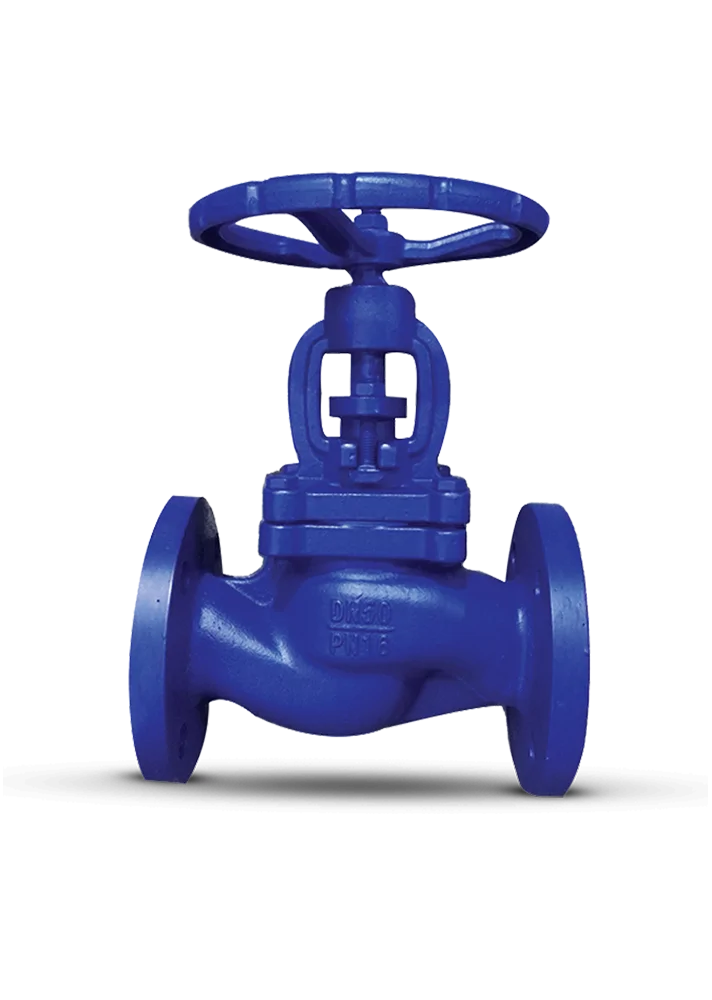
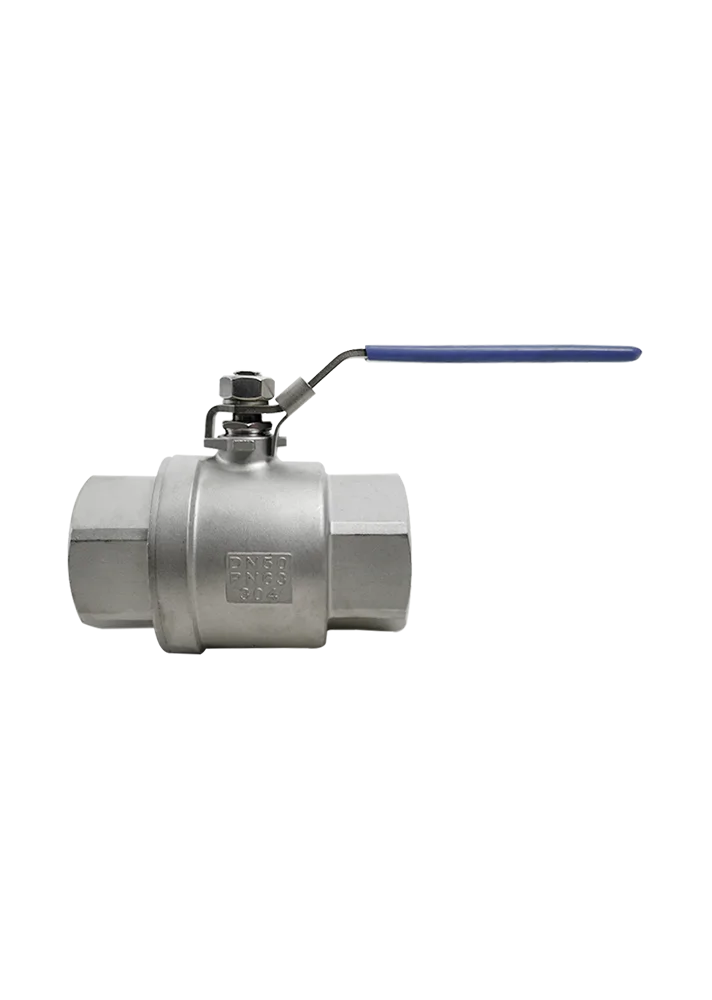
The most apparent distinction between globe valves and ball valves lies in the movement of the fluid within the valve and how this movement is controlled. Both valves manage the passage of fluid; however, they do so through entirely different mechanisms. This difference not only affects valve performance but also directly impacts pressure loss, control accuracy, maintenance needs, and areas of application.
In globe valves, the flow progresses by changing direction within the body. The disc inside the valve moves up and down along the stem to gradually reduce or completely block the flow. This mode of operation allows the globe valve to behave like a control valve. Since the flow is not linear and changes direction along the way, a higher dominance over the flow characteristics is established. This structure provides significant advantages, especially in processes where specific pressure or flow rates need to be maintained. Therefore, globe valves are preferred in all lines involving steam, hot water, chemical fluids, and requiring precise adjustments. Additionally, thanks to metal bellows designs, they exhibit reliable performance in applications where stem sealing is critical.
In ball valves, however, the flow is managed in a completely different manner. The sphere located in the valve body contains a hole. When this sphere is rotated 90 degrees, the hole aligns with the flow direction, allowing the flow to continue unobstructed. When the perforated surface of the sphere is turned perpendicular to the flow, the valve closes completely. For this reason, ball valves operate on a fully open-fully closed principle. Since the fluid does not change direction within the body, the pressure loss is extremely low, and system efficiency is maintained. This feature makes ball valves particularly suitable for lines with frequent open-close operations. They are highly preferred in environments where operational continuity is crucial in industrial facilities due to their minimum friction, low energy loss, and rapid operation.
This fundamental difference in the operating principles of both types of valves clearly illustrates why engineers use these two products for different purposes when designing projects and processes. While globe valves offer an ideal solution for controlled and gradual flow, ball valves enhance operational efficiency with a simple, fast, and safe open-close mechanism. Therefore, the correct valve selection directly determines process performance, energy consumption, and maintenance costs.
Sealing Performance: Which Valve is More Effective?
Sealing is one of the most critical criteria for valve selection in industrial facilities. Because uncontrolled leakage of fluid outside the system can lead to energy losses, process instability, equipment failures, and safety risks. Therefore, sealing design in both globe valves and ball valves is the fundamental element that directly determines valve performance. However, the sealing structures and advantages offered by both types of valves are quite different.
In globe valves, sealing is achieved at three fundamental points. The first stage occurs when the closing element, the disc, seats against the disc surface. The disc and seat have metal-to-metal contact in most designs. This structure provides reliable sealing performance, especially under high temperature and high pressure. Because they are not affected by thermal expansion or chemical attacks like elastomer seals. In printed, piston, or metal bellows globe valve options, this closing mechanism is reinforced with different material combinations to adapt to various process conditions.
The second sealing point is the junction between the body and the cover. High-strength seals are typically used in this area. These seals provide stable sealing even in processes where temperature changes frequently occur. The body-cover junction is particularly important in systems where sealing is critical, such as steam lines, hot water applications, and chemical processes.
The third and most important sealing point is the stem area. The stem is the moving part that opens and closes the valve and forms the connection point with the external atmosphere. For this reason, it is the area with the highest risk of leakage. In globe valves, stem sealing is typically achieved with packing rings. However, since this system may be insufficient in some processes, metal bellows globe valves have been developed. The metal bellows is placed between the stem and the bonnet to absorb movement and completely prevent contact with the external environment. This design offers maximum safety in critical applications such as high temperature, toxic fluids, and explosive gas lines.
In ball valves, the sealing principle is different from that of globe valves. The gasket between the outer surface of the ball and the body is usually made of elastic materials such as PTFE or its derivatives. These gaskets provide a low leakage rate by applying equal pressure to the surface of the ball. Especially since there is a clear mechanical transition between fully open and fully closed positions, ball valves practically offer near-zero leakage. PTFE gaskets can be safely used in a wide range of fluids due to their resistance to chemicals. Additionally, the elastic structure of the gasket facilitates the rotational movement of the ball and extends the valve's lifespan.
Another advantage of ball valves is that the body design is simpler. Stem sealing is typically achieved with o-rings or similar gaskets and does not require packing maintenance. This reduces maintenance costs and provides quick solutions in the field. However, in processes with very high temperatures or abrasive fluids, the durability of PTFE gaskets may be limited. In such applications, metal bellows globe valves become a more reliable option.
When all these structural differences are considered, it is seen that ball valves operate with a lower leakage rate in processes that require frequent opening and closing; while globe valves are more reliable in sensitive lines that require long-term sealing under high pressure and temperature. Therefore, the type of valve that is "better" in terms of sealing varies according to the operating conditions. When the right material, the right gasket structure, and the appropriate valve type are selected, both valves can successfully meet operational safety.
Flow Control Sensitivity Comparison
Flow control sensitivity is one of the most decisive criteria in valve selection for industrial facilities. Many processes require the fluid to be maintained at a specific flow rate rather than being fully open or fully closed. At this point, the working logic between globe valves and ball valves creates significant differences in terms of control sensitivity. If the correct valve selection is not made, process stability can be disrupted, energy consumption can increase, and equipment lifespan can shorten.
Globe valves are designed to provide superior performance in flow control. The flow within the valve progresses by changing direction inside the body, and this change in direction creates a natural damping effect on the flow characteristics. The closure element, the disc, moves up and down along the stem to gradually decrease or increase the flow. This linear movement allows even small adjustments made by the user to have a significant effect on the flow. Therefore, globe valves are the preferred type of valve in applications where process control needs to be precise. The control capability provided by globe valves in steam lines, heat exchanger feeds, chemical dosing lines, and power plant equipment offers a critical advantage.
In ball valves, however, control sensitivity is more limited. Aligning the hole inside the ball parallel or perpendicular to the flow directly opens or closes the flow. While a specific flow adjustment can be made in intermediate positions, the design of ball valves is primarily oriented towards fully open–fully closed operating principles. Since the passage hole inside the ball allows the flow to progress along a short and direct route, the valve cannot provide precise control in partial positions. Therefore, ball valves are not considered control valves. Choosing an inappropriate valve type for control purposes can lead to vibrations, cavitation, unnecessary energy loss, and process imbalances.
However, the low pressure loss and rapid opening-closing advantage of ball valves make them ideal for flow direction, safety shut-off points, and lines that require frequent maneuvers rather than process control. Especially when used with electric or pneumatic actuators in automation systems, ball valves offer an extremely fast reaction time. This is a critical advantage in lines that require emergency shut-off or sudden intervention.
The structure of the globe valve that provides control sensitivity can be supported by metal-metal, piston, or metal bellows sealing options depending on its design. This allows for stable flow control even under high temperature, high pressure, or aggressive fluid conditions. The ability to remain reliable at partial opening levels makes the globe valve indispensable in process engineering.
As a result, when we compare the two types of valves in terms of flow control sensitivity, the globe valve has a distinct advantage. The ball valve, on the other hand, is a more suitable solution for applications requiring quick and clear open-close actions. The correct decision from an engineering perspective is to clearly determine the flow control level required by the process and select the appropriate valve type accordingly.
Pressure and Temperature Resistance
Pressure and temperature resistance is one of the most critical determinants in industrial valve selection. The ability of a valve to accurately meet the environmental conditions in which it will operate is extremely important for facility safety, process continuity, and equipment lifespan. Globe valves and ball valves have different advantages in this regard, and their performance varies significantly depending on the materials used, sealing design, and body structure.
Globe valves are designed to operate stably under high pressure and temperature. The change in direction of the flow within the valve, the metal-metal or metal-elastic contact surfaces of the closure element, and the packing or metal bellows structures that provide stem sealing make globe valves suitable for challenging process conditions. Especially metal bellows globe valves provide safe sealing in environments where elastomer gaskets cannot be used at extreme temperatures. The bellows structure is resistant to thermal expansions and sudden temperature changes. Therefore, globe valves are considered a long-lasting solution in steam installations, high-temperature heat transfer lines, power plants, and chemical processes.
In terms of temperature resistance, globe valves can operate over a very wide range depending on the choice of material. Cast body materials such as GGG40 and GG25 provide reliable performance in medium temperature ranges, while globe valves with stainless steel bodies offer additional resistance to aggressive fluids and high temperatures. In this respect, globe valves are a preferred type of valve in both mechanical and chemical challenging environments.
In globe valves, pressure and temperature resistance are determined by the material of the gasket and the design of the body. Generally, gaskets with PTFE or similar polymer structures can operate over a wide temperature range but may experience performance loss at very high temperatures. Therefore, in processes that are continuously exposed to high temperatures, globe valves may not offer as wide a range of resistance as globe valves. However, when the appropriate body material and high-quality gaskets are used, globe valves can reliably operate in many industrial applications.
In terms of pressure resistance, globe valves are quite successful. The compact body design and the ability of the globe to completely close provide a low leakage risk in systems under high pressure. Especially, globe valves with stainless steel bodies offer a long-lasting solution in high-pressure lines with frequent opening and closing. Options such as threaded, flanged, two-piece, three-piece, or monoblock wafer-type designs create alternatives that can be used in different pressure classes and make the globe valve suitable for a wide industrial range.
When all these comparisons are evaluated, globe valves stand out significantly in processes where the temperature is excessively high and environments where the resistance limits of elastomer gaskets are challenged. In lines where pressure is high and rapid maneuvering is required, globe valves are a more suitable option. Since the resistance of both types of valves depends on the materials used, the quality of the gaskets, and the production technology, the correct product selection is critically important for process safety.
Maintenance Requirements and Longevity
In the selection of valves in industrial facilities, not only performance but also ease of maintenance and the lifespan of the equipment are important criteria. Because the maintenance requirements of a valve directly affect operating costs; they can also cause unexpected downtimes in critical processes. When comparing globe valves and ball valves in this regard, significant differences in maintenance processes are observed due to design differences.
Globe valves generally have a more complex body and internal mechanism. The interaction of parts such as the seat, disc, stem, packing, or metal bellows ensures the longevity of the valve while also requiring periodic checks. Especially the packing area requires regular maintenance as it can wear and jam over time. Since sealing materials can be affected by temperature and pressure changes, monitoring this area is critical for process safety. However, when the right material is selected and installed according to system requirements, globe valves can operate smoothly for years.
In globe valves with metal bellows, the need for maintenance is lower. Since the bellows structure mechanically provides stem sealing, the need for the packing group decreases and the risk of leakage is minimized. These types of valves are particularly preferred in processes working with toxic, flammable, or high-temperature fluids. The longevity of the bellows significantly reduces the maintenance requirements in the stem area. Still, over time, periodic checks of the gaskets, connection surfaces, or moving parts are necessary throughout the valve.
Ball valves are more advantageous than globe valves in terms of ease of maintenance. The simpler structure of the body, the fewer moving parts, and the use of durable gaskets such as PTFE allow ball valves to operate for longer periods without requiring maintenance. Additionally, since the friction between the surface of the ball and the gasket is low, the wear rate is minimal. This makes the ball valve a long-lasting and reliable option in lines with frequent opening and closing.
Three-piece ball valve designs take maintenance ease a step further. In this model, the middle part of the body can be removed for internal valve maintenance. This process does not require complete disassembly of the pipeline, thus providing significant time savings for businesses. This feature is a great advantage, especially in the food, chemical, and process industries. Threaded or flanged connection options allow for quick service in the field.
Of course, the longevity of both types of valves varies according to the materials used, the quality of the gaskets, the chemical composition of the fluid, temperature, and pressure. While stainless steel body valves are more durable in corrosive environments, cast body models offer more economical solutions. Choosing the right type of valve for the right process naturally reduces maintenance needs and extends equipment lifespan.
In conclusion, while globe valves offer control sensitivity and high-temperature resistance advantages, they may require more frequent maintenance. Ball valves, on the other hand, have lower maintenance costs due to their simple designs and demonstrate longer-lasting performance in lines with frequent opening and closing. Therefore, when selecting a valve, not only the process requirements but also the maintenance budget and operational continuity should be taken into account.
Performance Differences in Industrial Applications
Although globe valves and ball valves are used to manage many different fluids in industrial facilities, their working mechanisms and technical features create significant performance differences in certain sectors. Therefore, understanding under which conditions each type of valve operates more efficiently is critically important for correct product selection. Industrial lines exhibit great diversity in terms of temperature, pressure, fluid viscosity, chemical structure, and hygiene requirements, and thus the sectoral performances of the valves also vary depending on these variables.
Hygiene and cleanability are paramount in the food industry. The internal surfaces of the valves used in this sector must not allow fluid accumulation, be easily sterilized, and have a stainless steel body structure. Ball valves have a wide range of applications in food production facilities due to their simple and flow-friendly designs that meet these requirements. The ease of maintenance and practical seal replacement of three-piece ball valves reduces production downtime and ensures process continuity. Globe valves, on the other hand, find more limited use in food applications due to excessive flow disruption.
In the automotive and metal processing industries, temperature control, test lines, and pressurized fluid management play a critical role. In such applications, ball valves that offer fast opening and closing capabilities and low pressure loss are often the preferred solution. Stainless steel ball valves with high durability classes are compatible with various fluids such as hydraulic oil, test fluids, and cooling water. However, globe valves can also be used in special processes that require precise flow control.
In the maritime industry, the risk of corrosion caused by saltwater and challenging conditions such as continuous vibration are significant concerns. These environments directly affect the material selection of valves. Stainless steel-bodied ball valves are widely used in ship systems due to their low maintenance requirements and quick closure advantages. Globe valves with metal bellows provide a more suitable solution for critical points requiring fuel lines, hot steam systems, and high temperatures.
HVAC systems have a wide range of applications in building climate control and hot water applications. In these systems, it is essential to maintain energy efficiency and minimize pressure drops within the line. Ball valves provide ideal performance in HVAC lines due to their low pressure loss. Globe valves are preferred in heat transfer applications that require mixing lines, bypass circuits, and precise flow adjustments.
Industries such as petrochemicals, pharmaceuticals, energy production, and chemical processes are environments where high pressure, high temperature, and aggressive fluids are common. In these sectors, metal bellows globe valves stand out due to critical safety requirements. The sealing of the stem with a metal bellows provides maximum protection against toxic or explosive gases. Therefore, globe valves have become standard safety equipment in such processes. Ball valves can also be an effective solution in lines requiring chemical resistance when selected with appropriate seal materials.
In textiles, energy recovery systems, and heat transfer circuits, temperature control and energy efficiency are important, so both globe and ball valves are used in different roles. While ball valves ensure fast flow management in main lines, globe valves are utilized in sections that require process-focused and precise control.
When evaluating all these usage scenarios, it becomes evident that globe valves perform better in control and safety-focused applications, while ball valves excel in processes requiring quick maneuvering, low pressure loss, and ease of maintenance. Selecting the right valve type in industrial facilities reduces energy costs, increases system efficiency, and minimizes maintenance frequency.
Which Valve Should Be Preferred in Which Situation?
When selecting a valve in industrial facilities, not only the technical specifications of the product but also various variables such as the operating conditions of the process, fluid structure, pressure-temperature values, and control sensitivity must be evaluated together. Globe valves and ball valves provide advantages in different scenarios due to their different operating principles and design features. Therefore, the correct valve selection is vital for both process efficiency and operational safety.
In systems requiring precise flow control, globe valves are a standout solution. The up-and-down movement of the valve-disc mechanism allows for gradual adjustment of flow, enabling these valves to be used as control valves. Globe valves are the right choice in lines requiring precise adjustments, such as steam lines in power plants, chemical dosing systems, heat exchanger feeds, laboratory, and process control applications. The gradual control capability offered by globe valves directly improves process performance in circuits where flow stability must be maintained.
In environments with high temperatures and aggressive chemical fluids, metal bellows globe valves should be preferred. This design minimizes leakage risk by providing stem sealing with a metal bellows instead of elastomer. In facilities working with flammable, toxic, or hazardous fluids, these types of valves become almost mandatory from a safety perspective.
In lines with frequent opening and closing, ball valves are a more suitable solution. The ability to quickly switch to fully open or fully closed positions by rotating the ball 90 degrees makes these valves ideal in circuits where operational continuity is crucial. Ball valves stand out in water systems, food lines, HVAC systems, automation infrastructures, and general process lines due to their low pressure loss, high sealing, and practical usage advantages.
In facilities where maintenance costs need to be kept low, ball valves are also more advantageous. The simple design of the body, the long lifespan of the seal structure, and the ability to perform maintenance operations without removing three-piece models from the line reduce operational costs. Ball valves offer a high-wear resistance solution in systems requiring frequent maneuvers.
In automation systems, electrically or pneumatically actuated ball valves are preferred for remote and rapid process control. The connection structure of these valves compliant with the ISO5211 standard ensures seamless integration with modern industrial control mechanisms. This feature provides a critical advantage that saves time across many sectors, from power plants to chemical facilities.
On the other hand, while globe valves have high control sensitivity, they are not suitable for systems requiring rapid opening and closing. In applications that need to operate in intermediate positions, ball valves should not be preferred; otherwise, vibrations, wear, and seal deformation may occur on the internal surface of the ball valve. Therefore, in control-oriented systems, globe valves and in open-close oriented systems, ball valves are the technically correct approach.
In Summary;
• If flow adjustment and precise control are needed: Globe Valve
• If frequent open-close, quick maneuvering, and low pressure loss are required: Ball Valve
• If there are high temperatures, pressure, or hazardous fluids: Metal Sealed Globe Valve
• If automation and remote control are required: Actuated Ball Valve
• In processes focused on ease of maintenance and long life: Ball Valve
• In systems where process stability is critical: Globe Valve
This comparison demonstrates how effective the selection of the right valve type in industrial facilities is on process efficiency, safety, and long-term operating costs.
Conclusion: The Importance of Choosing the Right Valve in Industrial Processes
Choosing a valve in industrial facilities is not just a simple equipment preference for directing fluid flow. An improperly selected valve can not only reduce process efficiency; it can also lead to energy losses, unexpected failures, shortened equipment lifespans, and, most importantly, increased safety risks. Therefore, the comparison between globe valves and ball valves constitutes a strategic engineering decision that directly affects the operational success of a facility.
Globe valves become an indispensable solution in critical applications due to their linear adjustment capability, high-temperature and pressure resistance features, and especially the superior sealing assurance provided in metal-sealed models, which are prominent in processes where flow control precision is prioritized. In energy facilities where process balance must be maintained, chemical production lines, or steam systems, globe valves are among the most accurate choices for businesses in terms of both safety and performance.
On the other hand, ball valves are a powerful alternative that enhances operational efficiency with low pressure loss, rapid opening-closing capability, simple body design, and ease of maintenance. Ball valves used in food, HVAC, plumbing, automotive, textile, and automation lines offer a wide range of industrial applications thanks to their long-lasting seals and durable stainless body options. The durability and practicality they provide in systems with frequent opening and closing make ball valves one of the essential components of modern facilities.
The compatibility of both valve types with Truevalve product groups offers great flexibility in process design by providing the variety and quality that engineers need. Truevalve's extensive product range offers comprehensive solutions to meet sectoral requirements in both globe and ball valve categories with different pressure classes, material options, and connection types. This allows businesses to manage both technical requirements and budget goals in a balanced manner.
As a result, the correct valve selection in a system has a decisive impact on energy efficiency, process safety, and the long-term operating costs of the facility. While globe valves stand out in circuits requiring precise control, ball valves are a more suitable solution in lines that require fast and reliable open-close performance. Therefore, valve selection in engineering projects should be made with a holistic approach, considering fluid type, operating temperature and pressure values, maintenance budget, and the intended use of the process.
The right valve means a more stable process, a safer facility, and lower operating costs. Selections made with this awareness contribute to the efficient, reliable, and sustainable operation of the business for many years.